Shandong (Lu) · Braised & Slow-Cooked
Four-Joy Meatballs (四喜丸子)
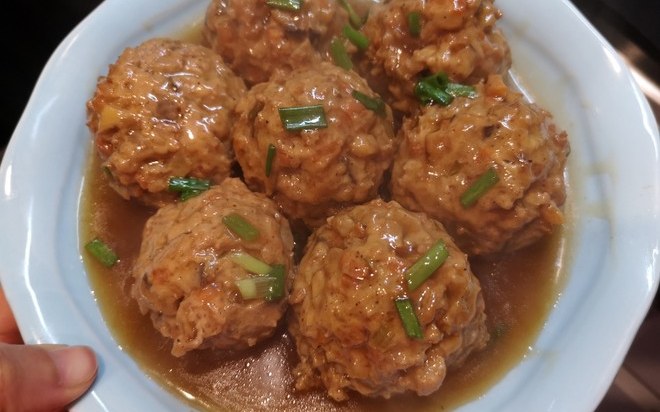
Four golden banquet meatballs (si xi wan zi) with lotus root and shiitake, fried crisp and simmered in clay-pot brown sauce — the Chinese New Year good-luck dish.
Instructions
-
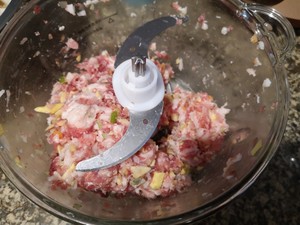 Mince the pork and ginger together in a food processor to a coarse mince — or chop by hand. Stop at coarse: too fine and the balls lose their chewy bite, too coarse and they won't hold together.
-
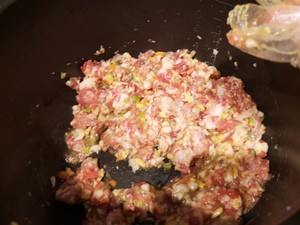 In a deep bowl (a tall one spatters less), combine the pork, egg, salt, white pepper, Shaoxing wine, light soy sauce and oyster sauce.
-
 Add the mashed tofu and squeeze-crush it into the meat with your hand until no lumps remain — it lightens the interior the way breadcrumbs never do.
-
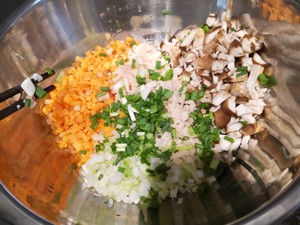
 Mince the fillings: carrot, lotus root, shiitake and scallion whites, small but visible, from rice-grain to pea size.
-
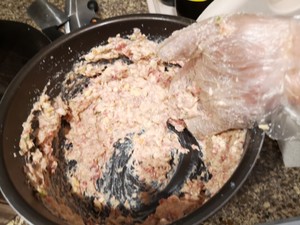
 Stir the meat hard in one direction for 3–5 minutes until it turns stringy and sticky — the visible strands are the sign it's ready. Add the filling dices and the cornstarch, and mix 3 more minutes.
-
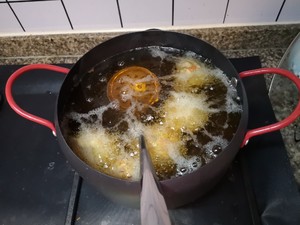
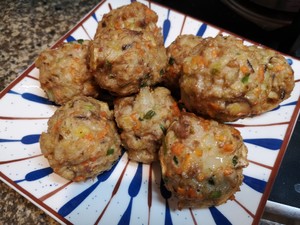 Fry: heat 4 cups (1 L) oil to about 320°F (160°C) — drop in the ginger slice; if it sizzles, floats immediately and streams small bubbles, the temperature is right. Shape 4 large balls (or 8 egg-size ones).
-
 Lower the balls into the oil on a large dry spoon to protect your hands, and don't stir for the first minute — moving them early breaks the crust. Fry 8–10 minutes over medium-low heat, turning occasionally, until deep golden all over. Drain.
-
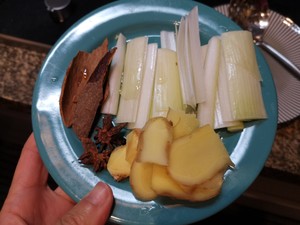
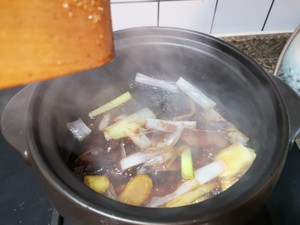 Braise: in a clay pot or Dutch oven, dry-fry the scallion, ginger, star anise and cassia over low heat until fragrant, about 1 minute. Stir in the oyster sauce, then the water, light soy, dark soy, salt, pepper, sugar, bouillon and wine.
-
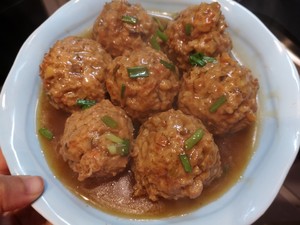 Bring to a boil and add the meatballs — the liquid should come almost to their tops. Cover and simmer on medium-low: 30 minutes for egg-size balls, 50 minutes for fist-size.
-
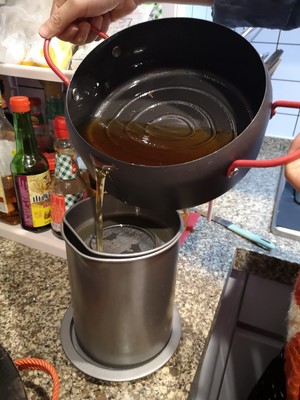
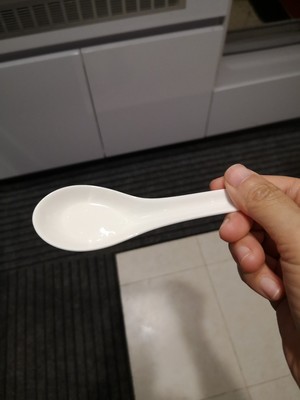 Lift the meatballs out and keep warm. Strain the solids from the liquid, return the liquid to the pot, and stir in the cornstarch slurry; simmer until the sauce thickens enough to coat a spoon, 1–2 minutes.
-
 Spoon the sauce over the meatballs, scatter scallion greens, and serve four to a plate with plenty of steamed rice.
Why this recipe works
Four-joy meatballs are the banquet workhorse of Shandong tables, and the recipe is built for both flavor and logistics. 1. Whip until stringy. Five minutes of hard one-direction stirring pulls the pork proteins into visible strands — that is the moment the paste becomes self-binding, which is why there's no egg overload and no dense breadcrumb filler. 2. Tofu as the lightener. Mashed firm tofu, squeezed and crushed into the meat, keeps the interior loose and airy the way steamed bun crumbs do in other versions; fried crust outside, almost soufflé inside. 3. Fry ahead, braise to serve. The full golden fry (8–10 minutes for balls this size) cooks them most of the way and locks the shape, which is exactly why these freeze so well: the holiday strategy is to fry a big batch, then simmer them in the spiced clay-pot sauce for 30–50 minutes and finish with a quick cornstarch glaze poured over. The lotus root and shiitake dices survive both stages and stay crisp, which is what separates these from a plain meatball. That same self-binding paste is the answer to the classic fear of Chinese meatballs falling apart in the gravy — whip it long enough and the balls hold through any braise.
About the dish
Si xi wan zi — "four-joy meatballs" — is a Shandong (Lu cuisine) banquet classic, the province whose cooking also gave China its foundational techniques for braising and clear soups. The name comes from serving exactly four large meatballs per plate, matching life's four blessings: fortune, career, longevity and happiness. That symbolism makes it a fixture at weddings, birthday banquets and especially Chinese New Year dinners, when a round, golden, meaty dish on the table is a wish in edible form.
It travels closely with its southern cousin, the Jiangsu lion's head — same spirit of the giant pampered pork ball, slightly different personality. Four-joy meatballs run heartier: bigger filler dices, a sweeter brown glaze, and the make-ahead habit that suits festival cooking, when the stove is already crowded.
What to serve with it
One big meatball per person over steamed rice, with the glossy sauce poured generously — the glaze is half the dish. A bright vinegar-dressed salad from the cold dishes page balances the richness, and if you want a second braise on the table for a feast, scan the rest of the braised collection. They are the make-ahead Chinese New Year meatballs par excellence — fried days in advance, then braised in gravy while guests arrive. Leftover sauce over tomorrow's rice is a perk, not an accident.
Pro tips
- Four balls to a plate is the point of the name — si xi, "four joys" — so shape exactly four big ones for the banquet look; the egg-size version is the weeknight shortcut.
- Tofu (or steamed bun crumbs) is the classic Chinese meatball lightener: it makes the interior fluffy where Western breadcrumbs would make it dense. Squeeze it first or the paste goes loose.
- The ginger-slice bubble test is a reliable low-tech thermometer: immediate small bubbles and the slice floats means about 320°F (160°C), right for balls this thick.
- Fry in advance for holidays — once golden and drained, the balls keep 3 days in the fridge or 2 months frozen. Simmer them straight from frozen, adding 10 minutes to the braise.
- Want a little tingle? The source cook suggests frying 1 tsp green Sichuan peppercorns and 5 dried chilies along with the spices — the banquet version stays mild, but this is a common home variation.
Storage & leftovers
- Refrigerate fried, unbraised meatballs up to 3 days or freeze up to 2 months — this is the traditional make-ahead for Chinese New Year.
- Braised meatballs keep 3 days refrigerated in their sauce; reheat by simmering 8–10 minutes with a splash of water.
- Freeze braised meatballs up to 1 month; thaw overnight and reheat covered. The sauce thickens as it sits — loosen with 2 Tbsp water.
Frequently asked questions
What are the four joys?
The name refers to serving four big meatballs per plate, echoing life's four blessings: fortune, career, longevity and happiness (fu, lu, shou, xi). It is a Shandong banquet classic that turns up at weddings and New Year's dinners.
Is this the same as lion's head meatballs?
They're cousins: both are giant fried-then-braised pork balls. Four-joy meatballs are the Shandong banquet version — four to a plate, usually with crisp fillings like lotus root and shiitake, finished with a thickened sauce. Lion's head is the Jiangsu ancestor.
Can I skip the deep-frying?
You can poach the balls directly in the sauce, but you'll lose the golden crust and much of the flavor. A shallow fry in 1 inch (2.5 cm) of oil, turning carefully, is a fair compromise.
I don't have a clay pot.
Any Dutch oven or heavy pot works. The clay pot holds gentle, even heat for the long simmer — that's why the source uses one — but it isn't essential.
Can I use supermarket ground pork?
Yes — pick the fattest grind available (80/20) and mix by hand for the full 3–5 minutes. Hand-chopped belly has the better texture, but this is a forgiving, weekday-friendly recipe.
How spicy is it?
Mild — a savory, lightly sweet brown-sauce braise. The Sichuan peppercorn and chili variation in the tips is optional, not the base recipe.
Why did my meatballs fall apart while braising?
Almost always the paste was under-mixed. The balls bind themselves only after 3-5 minutes of hard one-direction stirring whips the pork into visible sticky strands; before that point they rely on nothing. Keep the braise at a gentle simmer, too — a rolling boil batters them before the crust has set.
Can I freeze four-joy meatballs?
Yes — they are an ideal make-ahead New Year dish. Fry the balls until golden, cool completely, and freeze; later, simmer them in the spiced sauce for 30-50 minutes and finish with the cornstarch glaze. Fried-ahead balls hold their shape better than raw ones ever could.