Chinese home style · Braised & Slow-Cooked
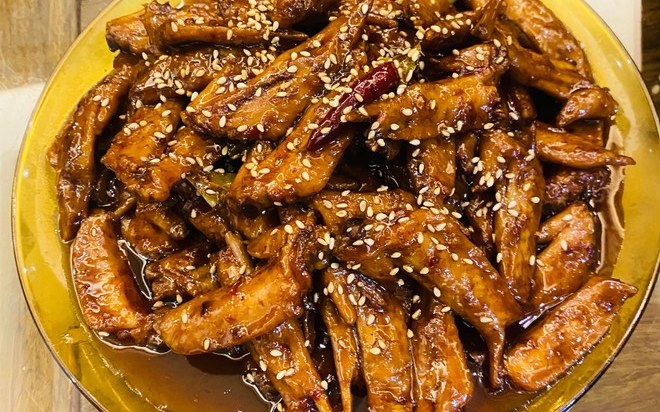
Rice Cooker Braised Pork Belly with Dried Eggplant (茄子干红烧肉)
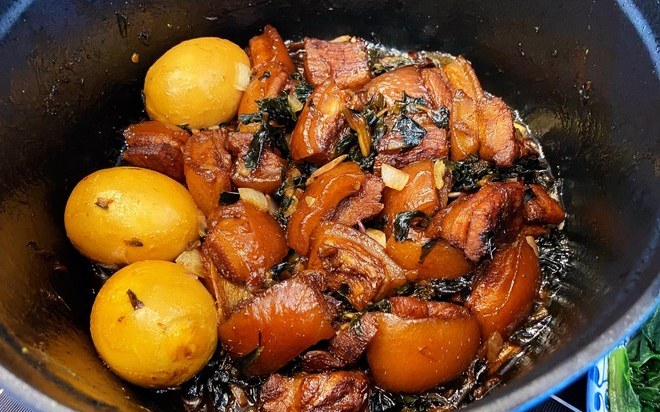
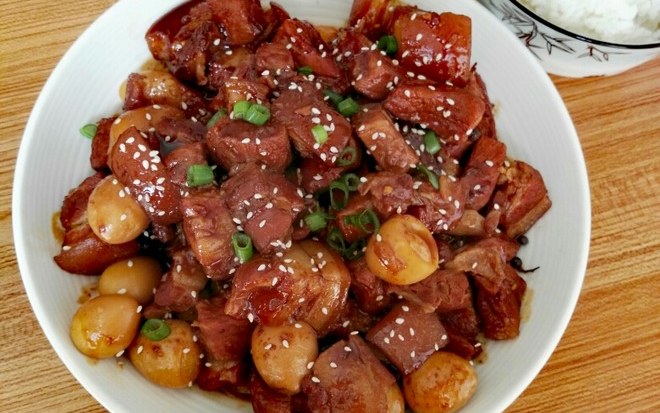
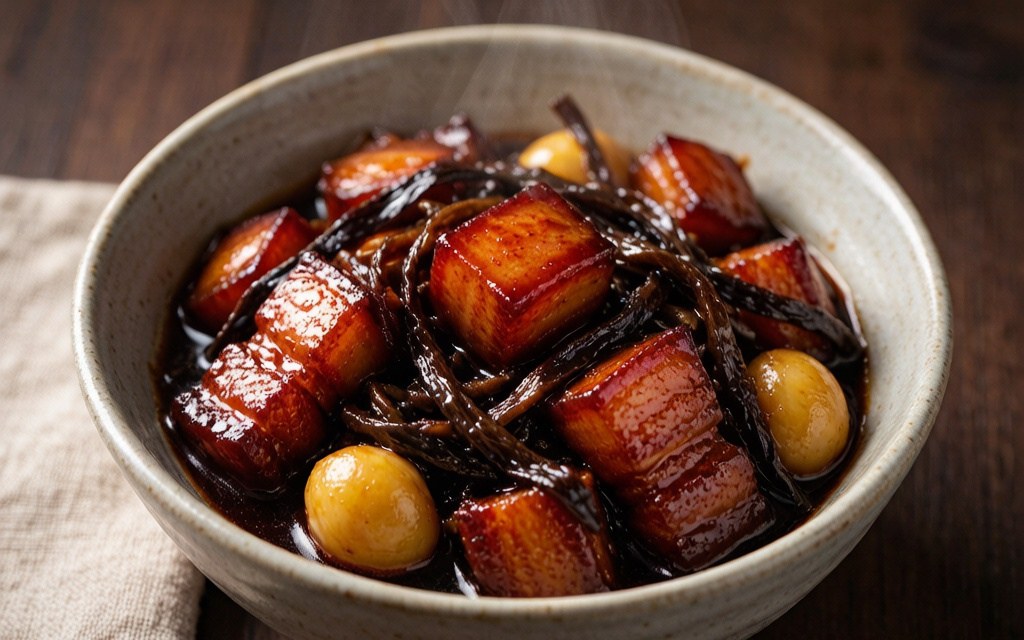
A set-and-forget rice cooker braise: pork belly browned in rock-sugar caramel, then smothered with chewy dried eggplant and sweet chestnuts until the sauce soaks in.
Instructions
-
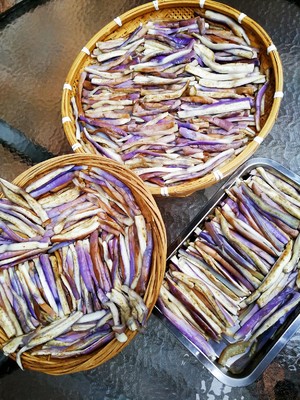 Rinse the dried eggplant in warm water 2–3 times, rubbing gently to wash off any dust, then squeeze it dry. If the strips feel hard like leather, soak them in warm water for 15 minutes first, then squeeze. Set aside.
-
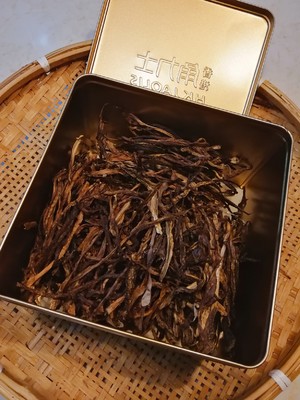 Peel the chestnuts if using: snip a cross into each shell with scissors, boil 2 minutes, keep them in the hot water, and peel shell and bitter skin off while warm — they come away easily.
-
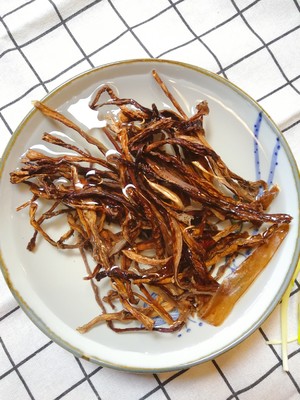 Press the rice cooker's cook button and let it warm for 1–2 minutes. Add the oil and rock sugar and stir with a wooden spoon until the sugar melts, foams, and turns the color of weak tea — pull it the moment it does, before it darkens.
-
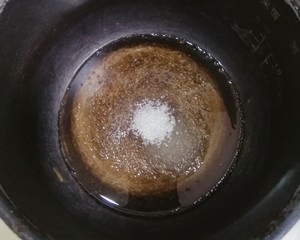 Add the ginger, garlic and scallion whites and stir for 30 seconds until fragrant. Add the pork chunks, spread them flat in one layer, and let them brown undisturbed for about 3 minutes until golden.
-
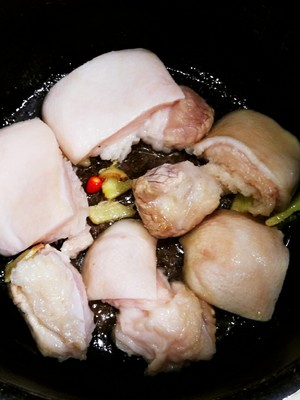 Flip every piece, flatten again, and brown the second side another 3 minutes — the pork should render some of its fat into the pot and smell toasty.
-
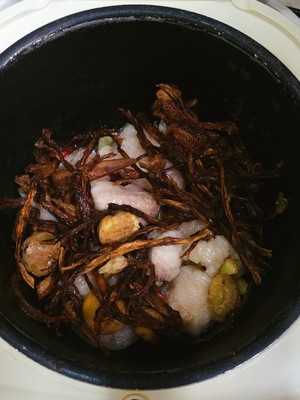 Add the dried eggplant, chestnuts and whole chilies and toss a few times with the pork so everything picks up some caramel.
-
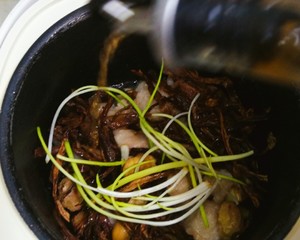 Pour the Shaoxing wine down the side, add the dark and light soy sauces, then the hot water — enough to come halfway up the pork, not cover it. A rice cooker barely evaporates liquid, so more water means watery sauce.
-
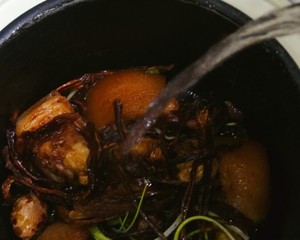 Close the lid and press the cook button. When it jumps to keep-warm, open up, flip the pork pieces, and press cook once more for a second cycle.
-
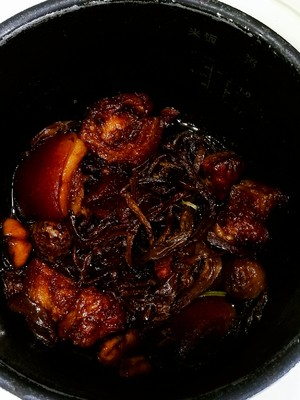 After the second jump, the pork should be soft and the sauce thick enough to cling to a spoon; if it looks thin, stir on keep-warm with the lid off for 5 minutes. Serve over steamed rice.
Why this recipe works
A rice cooker sounds like a gimmick for braising, but it is quietly the most forgiving pot in the kitchen — if you understand what it is doing.
1. The cook button is a low, cycling heat source. A rice cooker at "cook" holds just under a boil and eases off as things thicken, so pork belly renders slowly without ever tightening up. That is why two full cycles produce meat as tender as a 90-minute stovetop braise — and why it can never burn the way a forgotten pot can.
2. Caramel in the pot, not the sauce. Melting rock sugar in oil before the pork goes in coats each chunk in a thin amber glaze. That glaze carries the mahogany color and a toasty depth that soy sauce alone never reaches, and in a sealed pot nothing boils it away.
3. Dried vegetables beat fresh ones here. Dried eggplant has had its water removed, so it absorbs rather than leaks. It drinks the rendered pork fat, the soy, the wine — rehydrating into something silky and intensely savory. Fresh eggplant would weep liquid and turn to pulp in this gentle heat; the dried version is what makes the dish.
About the dish
This is a late-summer dish from home kitchens in eastern China, where every autumn families dry vegetables in the sun — eggplant, long beans, bamboo — and tuck them into tins for the winter. Dried eggplant is exactly what it sounds like: purple eggplant sliced and sun-dried until it shrivels into dark, chewy ribbons. Cooked fresh it is watery and bland; cooked dry, it becomes one of the great sponges of the Chinese pantry.
Smothering it with pork belly in the rice cooker is the weeknight answer to a slow braise, and the chestnuts are the quiet third ingredient — sweet, starchy, and exactly what makes this pork belly with dried eggplant taste like a feast. The author of this version made it for neighbors who kept asking for it, and the method spread precisely because it is almost impossible to get wrong. The dish is a good example of how Chinese home cooking treats the rice cooker: not just for rice, but as a small, self-regulating braising pot.
What to serve with it
Steamed rice is mandatory — the sauce is basically designed for it, and the eggplant over rice is a second dish by itself. This is hong shao rou without a wok — the whole pot happens while you go do something else. Cut the richness with something cold and sharp like a smashed cucumber salad, or keep it all in one pot with a simple seaweed and egg-drop soup. Chestnuts go first at any table with kids. Leftovers reheat on the rice cooker's keep-warm or in a covered pan with a splash of water, and the eggplant is even better on day two.
Pro tips
- A rice cooker is a low, gentle, sealed braise — that is the whole point. The pork never hardens and the dried eggplant turns silky instead of leathery, with zero watching.
- Dried eggplant is a sponge: it drinks the pork fat and soy sauce and becomes the best bite in the pot. Do not skip the final squeeze of water or the sauce will be diluted.
- Caramel first, meat second — in that order. Sugar melts fast in a thin nonstick rice pot, so have the pork ready beside the cooker before you start.
- The double cook-cycle trick (flip and press again) is how rice-cooker cooks braise evenly without stirring. Trust the jump of the button like a timer.
- Buy pork belly in one slab and cut it yourself; pre-cut strips dry out. Free-range or "black" pork has firmer, sweeter fat if you can find it.
Storage & leftovers
- Refrigerate leftovers in a sealed container for up to 3 days.
- Reheat in the rice cooker on keep-warm for 20 minutes, or in a covered skillet with 1 Tbsp water over low heat.
- Freezing is not recommended — the eggplant turns mushy and the sauce separates when thawed.
Frequently asked questions
My rice cooker is digital with no cook button — what now?
Use the normal white-rice setting for each cycle; it behaves the same. If yours has no browning stage, melt the sugar and brown the pork in a skillet, then transfer everything to the rice pot with the seasonings and run one rice cycle.
Can I make this on the stovetop instead?
Yes — brown and caramelize in a Dutch oven exactly as written, add the water, cover, and simmer on the lowest heat for 50–60 minutes until fork-tender, then reduce the sauce if needed.
What can I use instead of dried eggplant?
Dried long beans or dried shiitake mushrooms work beautifully and are easier to find. Fresh eggplant will not work — it releases water and collapses in a rice cooker's gentle heat.
How spicy is it?
Mild — the whole green chilies perfume the sauce without heating it. For a gentle warmth, slit one chili open; for no heat at all, leave them out entirely.
Can I prep it ahead?
Rinse the eggplant and peel the chestnuts up to a day ahead (keep both in the fridge). The braise itself is best eaten the day it is made, though it reheats well for 2–3 days.
Why is my sauce watery?
Almost always too much water — it should only come halfway up the pork, because a rice cooker barely evaporates liquid. If the sauce is thin at the end of the second cycle, stir it on keep-warm with the lid off for 5 minutes and it will tighten up.
Do I need to blanch the pork belly first?
No — the caramel browning and two cook cycles do that work in this recipe. If your pork belly smells strongly of the shop, a quick 2-minute blanch will not hurt; just dry the pieces well so they brown instead of steaming in the sugar.