Sichuan · Sauces & Basics
Sichuan Chili Oil (红油)
Restaurant-style Sichuan red oil: spice-infused oil poured over chili powder in two stages for deep red color and toasty aroma — fragrant and layered, never harsh.
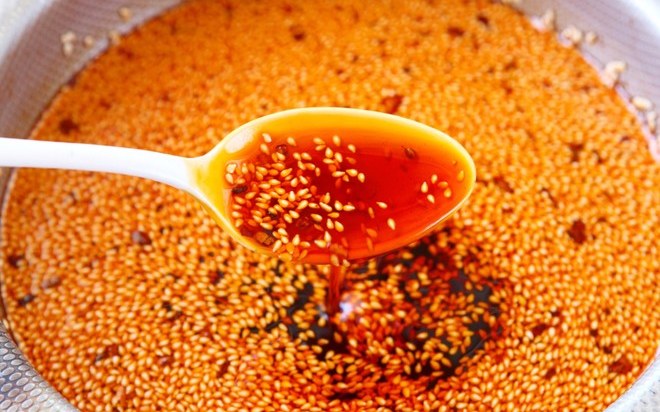
Instructions
-
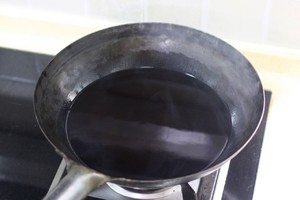 Pour the rapeseed oil into a small deep pot or wok and heat over high heat until thin white smoke curls off the surface, about 230°C/445°F. This burns off the raw, grassy edge of cold-pressed oil (if your oil is already refined, just bring it to a strong shimmer), then turn off the heat.
-
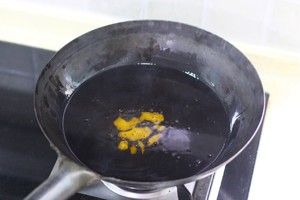 Let the oil cool for 2 minutes, then add the lard and swirl or stir until it is fully melted.
-
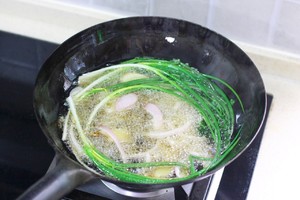 Add the onion, scallions and ginger — hold the pot lid as a shield while they go in, since any moisture will make the oil spit.
-
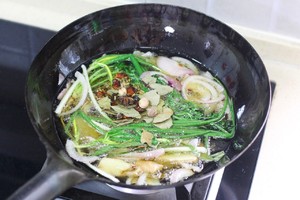 When the vegetables just start to take on color, drop in the spice sachet (tie the whole spices in cheesecloth, or add them loose and fish them out later), reduce the heat to low, and fry gently for 5–8 minutes.
-
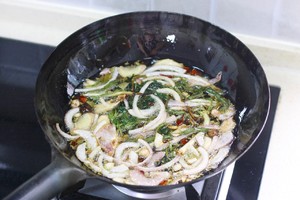 Once the onion and scallion have turned deep golden brown — not black — scoop out and discard all the solids, and turn off the heat.
-
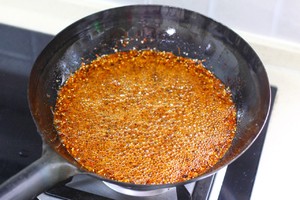 Reheat the strained oil over high heat to about 220°C/425°F: it should shimmer heavily, and a wooden chopstick dipped in it should bubble rapidly around the tip. Drop in one pinch of sesame seeds as a test — they should pop and float up instantly.
-
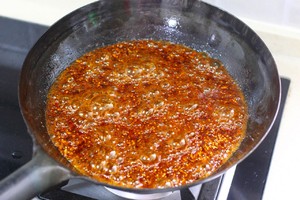 Turn off the heat and stir in the white sesame seeds; within seconds every seed should be floating. Then add half the chili powder and stir for about 10 seconds to bloom its fragrance.
-
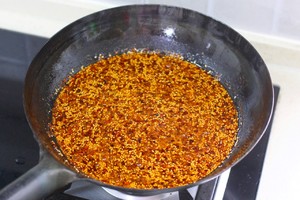 Add the remaining chili powder and stir well — the oil turns a deep, glossy red. If it hisses violently or darkens past red-brown, the oil is still too hot: pull the pot off the heat and let the cooling oil draw out color, not bitterness.
-
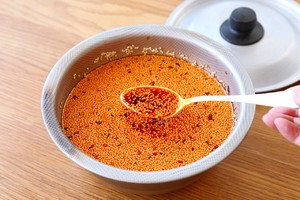 Pour the vinegar down the side of the pot — it will foam and sizzle; this splash of acid brightens the red. Once the bubbling stops, drizzle the baijiu into the center and give one final stir.
-
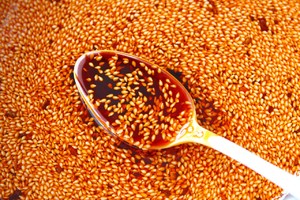 Let the pot cool undisturbed, cover it, and leave it overnight (at least 8 hours) so the spice and chili aromas fully steep into the oil.
-
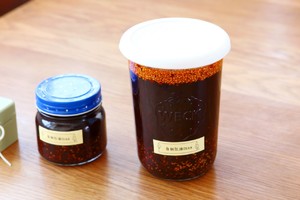 Next day, transfer everything to a clean, dry jar, scraping in the settled chili sediment too. The finished oil is slightly viscous from the lard and should smell nutty, sweet and fragrant rather than sharply hot.
Why this recipe works
Good red oil is built in layers, and each layer has a temperature and a reason.
1. An infused oil base. Before any chili appears, the oil is cooked with onion, scallion, ginger and whole spices until deep golden. This is the restaurant secret: chili contributes perfume and color, but the round, savory depth comes from fat that has already absorbed aromatics. Skip this and you get flat, one-note oil.
2. Staged chili at staged heat. Sesame seeds are the thermometer — when they pop and float instantly, the oil is around 220°C/425°F. The first half of the chili powder hits that heat and toasts out roasted aroma; the second half lands a moment later in cooling oil, where it releases its red pigment without scorching. A single addition forces you to choose between red color and good flavor; two additions give both. Cooks call this the two-stage chili oil pour — hot oil for aroma, cooling oil for color.
3. The vinegar-alcohol finish and the overnight steep. A splash of vinegar down the hot pot wall flashes and brightens the red, a little baijiu carries fat-soluble aromas out of the powder, and then the covered rest does the real marinating — by morning the sharpness has mellowed into a single warm, nutty fragrance.
About the dish
Red oil (红油, hóng yóu) is the cornerstone condiment of the Sichuan kitchen — less a sauce than a base seasoning, occupying the place olive oil holds in a Western pantry. Chilies arrived in China in the late sixteenth century through trade, and by the Qing dynasty Sichuan had made them its own; red oil became the everyday way to put chili fragrance onto cold dishes, noodles and dipping sauces without cooking a sauce.
Every Sichuan family and noodle shop guards its own version. This one follows the source recipe's character: a scallion-and-spice-infused oil base and a fragrant-first chili powder, so the finished oil smells warm rather than merely hot. The small addition of lard is old-school — it gives the oil a soft, slightly viscous body that clings to noodles instead of pooling at the bottom of the bowl.
What to serve with it
Once the jar is in your fridge it will quietly improve everything: spoon it over dumplings and potstickers, toss it into cold noodles, or swirl a spoonful into the dressing for our smashed cucumber salad. Mixed one-to-one with soy sauce and a pinch of sugar it becomes an instant dumpling dip; on plain rice with a fried egg it is dinner. Start with one teaspoon of the sediment — it carries most of the fire and flavor.
Pro tips
- The two-stage chili addition is the whole technique: the first half hits hot oil above 200°C/390°F and toasts out roasted aroma; the second half lands a moment later in cooling oil, where it dissolves its red pigment without scorching.
- The chili powder decides everything. Qinjiao and gochugaru are fragrant-first varieties — the source recipe's whole point is an oil that smells better than it burns. All cayenne gives brutal heat and little perfume.
- Sesame seeds are your thermometer: if a test pinch does not pop and float immediately, the oil is not hot enough; if it browns within 10 seconds, let the oil cool a few minutes first.
- The vinegar and alcohol are finishing chemistry, not flavoring — the acid flash-brightens the red color, and the alcohol helps carry fat-soluble aromas out of the powder.
- The original version of this recipe grinds the whole spices into the chili powder; frying them whole in a sachet is the home-kitchen shortcut and gives you a cleaner, strainable oil.
- Keep a dedicated dry spoon in the jar — a single drop of water invites mold.
Storage & leftovers
- Store in a sterilized, airtight jar; keep the sediment in — it is the flavor.
- Cool dark cupboard for up to 1 month, or refrigerate for up to 3 months; the lard makes it cloud and semi-solid when cold, which is normal.
- Always use a dry spoon and keep the jar tightly sealed — moisture is the only real enemy.
- Freezing gains nothing; the oil is stable at fridge temperatures.
Frequently asked questions
How spicy is this chili oil?
As written, mild and aromatic — fragrant first, fiery second. With gochugaru it has only a gentle warmth; swap 2 Tbsp of the powder for cayenne if you want real heat.
Can I skip the lard?
Yes — replace it with 50 g more oil. Lard is traditional and gives the finished oil a soft, glossy body that clings to noodles, but the oil works perfectly without it.
Why add vinegar and baijiu to hot oil?
The vinegar flash-blooms the chili's red color — the foam you see is the reaction — and the alcohol extracts extra aromatics and helps the oil keep longer. You will not taste either one as vinegar.
My chili powder sank into a paste at the bottom of the jar — is that wrong?
No, that sediment is normal and much of the flavor lives there. Shake or stir the jar before each use, and scoop some of the solids onto whatever you are dressing.
What can I use this oil on?
Everything: dumpling dipping sauce, smashed cucumber salads, cold noodles, congee, or simply over steamed rice with a fried egg. It is the base seasoning of the Sichuan cold-dish pantry.
How long does homemade chili oil keep?
Up to 3 months refrigerated, or a month in a cool dark cupboard. The keys are bone-dry utensils, the splash of alcohol in the recipe, and never introducing moisture.
Why did my chili oil turn dark brown and taste bitter instead of red?
The oil was too hot when the chili powder went in — above roughly 200°C/390°F the pigment scorches rather than dissolves, giving brown color and burnt bitterness. The two-stage pour exists to prevent this: the first half toasts at high heat for aroma, the second half blooms in already-cooling oil for color. If it happens, the batch is not dangerous, just harsh — use it in cooked dishes where the bitterness fades.