Chinese home style · Cold Dishes & Salads
Steamed Egg Meat Roll (鸡蛋肉卷)
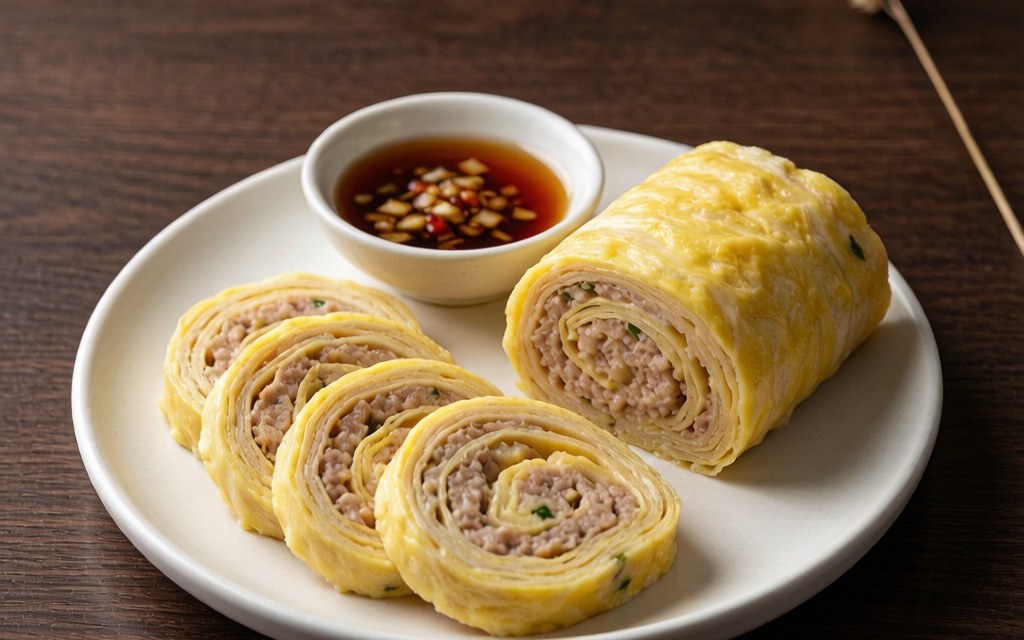
Egg crepes wrapped around seasoned pork, steamed in cheesecloth and pressed into a tight, sliceable log — the northern Chinese roll that stars on holiday platters.
Instructions
-
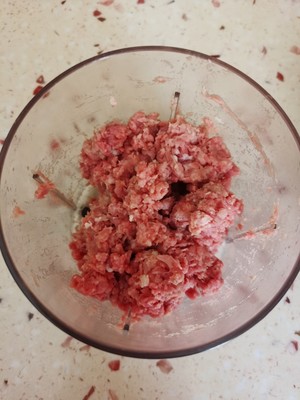 Season the pork: in a bowl, stir the ground pork with the light soy, Shaoxing wine, oyster sauce, five-spice, black pepper, sesame oil and ½ tsp of the salt. Stir in one direction for 1–2 minutes until the meat turns sticky and slightly fluffy. Rest 15 minutes (or cover and refrigerate up to overnight).
-
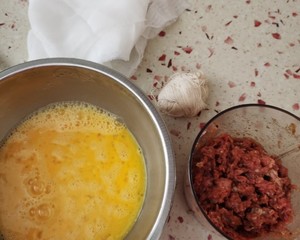 Make the crepe batter: beat the eggs with the 10 g starch slurry and the remaining ¼ tsp salt until completely uniform. Lay a paper towel on the surface for a few seconds to lift off the foam — smooth batter means smooth crepes.
-
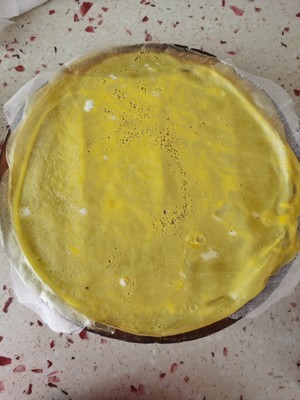 Make the crepes: heat an 8–10 inch nonstick skillet over low heat and wipe the surface once with an oil-moistened paper towel. Ladle in ¼ cup of batter, immediately swirl the pan to coat the bottom in a thin even circle, and cook 40–60 seconds, until the crepe is just set and slides loose — pale yellow, with no brown spots. Slide it onto a plate and repeat with the remaining batter; you should get 5–6 crepes. No additional oil per crepe is needed.
-
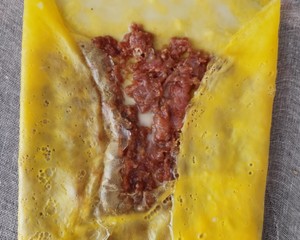 Set up the rolling station: lay one crepe flat on a 24-inch square of cheesecloth. Stir the 20 g starch slurry again (it settles fast) and brush a thin film over the entire crepe surface.
-
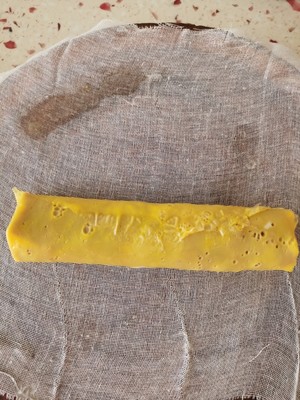 Spread one-fifth of the seasoned pork (about 1.5 oz / 40 g) in a thin, even layer, leaving a ¾-inch bare margin at the far edge. Drizzle a little more starch slurry over the meat — this layer-to-layer glue is what keeps the roll from separating when you slice it.
-
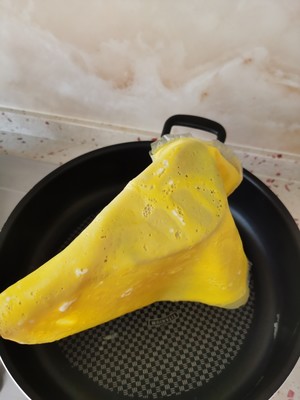 Roll it up as tightly as you can, like a sushi log, pressing gently as you go, and pinch the seam closed. Repeat with the remaining crepes and filling.
-
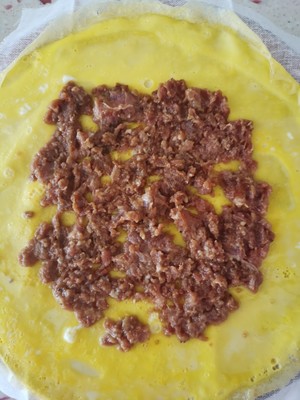 Wrap each log tightly in its cheesecloth, twisting both ends like a candy wrapper, and tie each end snugly with kitchen twine. A loose wrap lets the roll puff and round out in the steam; snug is what keeps it tight and square-ish.
-
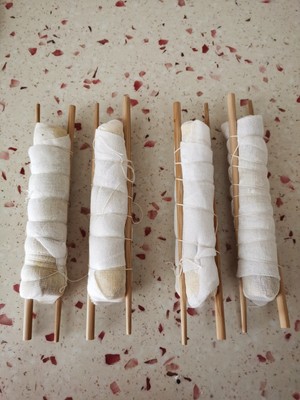 Steam over rapidly boiling water for 30 minutes, lid on, no peeking. Keep the rolls in a single layer with a little space between them.
-
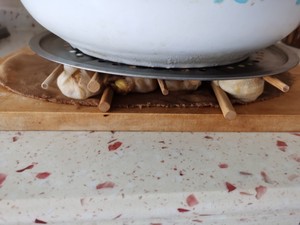 Rest the wrapped rolls 5 minutes, then place them on a tray still wrapped, set a flat board on top, and weight it with 2–3 lb — a couple of cans, or a pot half-filled with water. Press for 1–2 hours, until fully cold. This compacts the crumb so the rolls slice into clean rounds instead of crumbling.
-
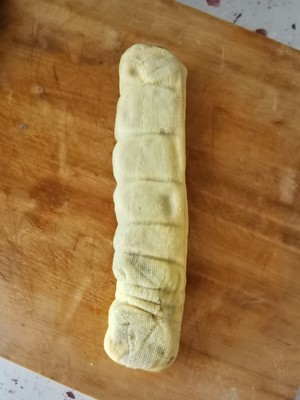 Unwrap, trim the ends, and slice ½-inch thick. Serve warm alongside noodle soup, or chilled as a cold cut with a dip of soy sauce, vinegar and chili oil.
Why this recipe works
This is a dish of small engineering decisions — each one exists to make a soft thing hold together.
1. Starch in the batter. A plain egg crepe is fragile; torn crepes mean a broken roll. The 10 g of starch in the batter sets softer and more flexibly than egg protein alone, so each crepe rolls without cracking and stays silky after steaming instead of going rubbery.
2. The double-glue slurry. The failure mode of every egg-wrapped roll is layers sliding apart on the plate. Brushing starch slurry on the crepe, again over the meat, and relying on a tight roll means that when the roll steams, the starch gelatinizes and fuses every layer into one sliceable mass. It is invisible in the finished roll and everything to the slice.
3. Steam, then press. Steaming cooks the pork gently — no searing, no squeezed juices — and the cheesecloth holds the log's shape while the filling sets. The pressing step while cooling is what pushes out air pockets and compacts the roll to deli density, so a knife goes through cleanly instead of buckling the layers. The original cook pressed hers for two hours and the slices in her photos prove it.
About the dish
Steamed egg meat rolls (鸡蛋肉卷, jīdàn ròu juǎn) are a northern Chinese home classic, the kind of dish that appears on New Year platters in Beijing, Tianjin and the northeast, sliced into coins and arranged like a prized cold cut. It belongs to the same family as egg dumplings and egg jiaozi — the clever tradition of using paper-thin egg in place of a flour wrapper for a richer, prettier protein package. Do not confuse it with the fried, cabbage-filled egg roll of takeout menus — despite the shared English name, this is a steamed terrine.
Because it steams, presses, slices and travels well, it is a make-ahead dish at heart: grandmothers roll a stack before the holidays, then pull a roll from the fridge whenever the table needs one more dish. The source cook learned it as a "derived dish" from her egg crepe practice — once you can make a smooth crepe, this is the payoff recipe, and she was right that it is addictive.
What to serve with it
Chilled slices with a soy-vinegar-chili dip make a great opener next to other cold dishes like smashed cucumber. The source cook's favorite pairing is her own: tuck warm slices into a bowl of hot noodle soup, where they soften slightly and act like the world's better luncheon meat.
Whole rolls keep a few days in the fridge and slice cleanly when chilled, which is why holiday cooks make several at once. For a Chinese New Year cold cuts platter, this is the roll that slices into the most coins. For a children's table, re-steam and slice one fresh — warm coins disappear fastest; adults get the cold slices with the chili dip.
Pro tips
- The starch does two separate jobs: 10 g in the batter makes the crepes tender and tear-proof, and the brushed slurry between layers is the glue. If your finished roll separates at the seam, you under-glued — be generous with the slurry, it is invisible once cooked.
- Keep the crepe pan on low and never let the crepes brown. Brown spots mean the pan was too hot, and browned crepes turn leathery when steamed.
- The cheesecloth is not decoration: it wicks a little moisture, gives the rolls their characteristic ridged surface, and — as the original cook notes — makes them look like a dried tofu sheet roll. Parchment or foil work in a pinch, but the texture is better with cloth.
- Pressing is the step home cooks skip and professionals don't. Two hours under a modest weight while cooling makes the difference between a roll that slices like a deli loaf and one that squashes under the knife.
- Work ahead: rolls keep 3 days in the fridge and freeze beautifully, so make a double batch before a holiday and slice on demand.
- Half-freeze the filling if you want neater layers — 15 minutes in the freezer firms the pork just enough to spread in an even, thin sheet.
Storage & leftovers
- Refrigerate the whole, wrapped rolls for up to 3 days; slice only what you serve to keep the rest from drying out.
- Freeze wrapped rolls up to 1 month. Thaw overnight in the fridge, then re-steam 8 minutes or pan-fry the slices until the edges crisp.
- Slices are excellent briefly pan-fried in a dry skillet until golden at the edges — 1 minute per side.
Frequently asked questions
I don't have cheesecloth. What can I use?
Parchment paper or heavy foil wrapped tightly around each roll works — oil the paper lightly first. You lose the subtle cloth-ridged texture, but the roll holds shape and slices just as well.
Why did my roll separate between the egg and the meat when sliced?
The starch slurry layer was skipped or too thin, or the roll was sliced before it was pressed cold. Brush slurry on both sides of every layer — crepe and meat — and always press the steamed roll under a weight until cold.
Can I bake this instead of steaming?
Steaming is what keeps the egg layer tender and the filling juicy; baking dries the egg into an omelet texture. If you have no steamer, poach the wrapped rolls in barely simmering water, fully submerged, for 25 minutes instead.
Can I add vegetables to the filling?
Yes — 2 Tbsp finely diced carrot, chopped water chestnuts or rehydrated wood ear per roll are classic. Keep additions under a quarter of the filling weight, or the layers slip and the roll cracks.
How do I serve it — hot or cold?
Both are traditional. Chilled, it slices cleanest and eats like a Chinese cold cut on a holiday platter. Warm, thin slices are folded into bowls of noodle soup, which is exactly how the source family serves it.
My crepes keep tearing. What am I doing wrong?
The batter needs the starch slurry fully mixed in, the pan needs to be on low with only a wiped film of oil, and each crepe needs to be thin — a full ¼ cup ladle in an 8-inch pan, swirled immediately. Thick crepes steam unevenly and crack when rolled.
Is this the same as the fried egg roll?
No — the shared English name is where the resemblance ends. Takeout egg rolls are deep-fried, cabbage-filled wrappers; this is the northern Chinese steamed log, an egg crepe wrapped around seasoned pork, pressed cold and sliced like a deli meat.