Chinese home style · Soups
Amaranth Greens Egg Drop Soup (苋菜蛋花汤)
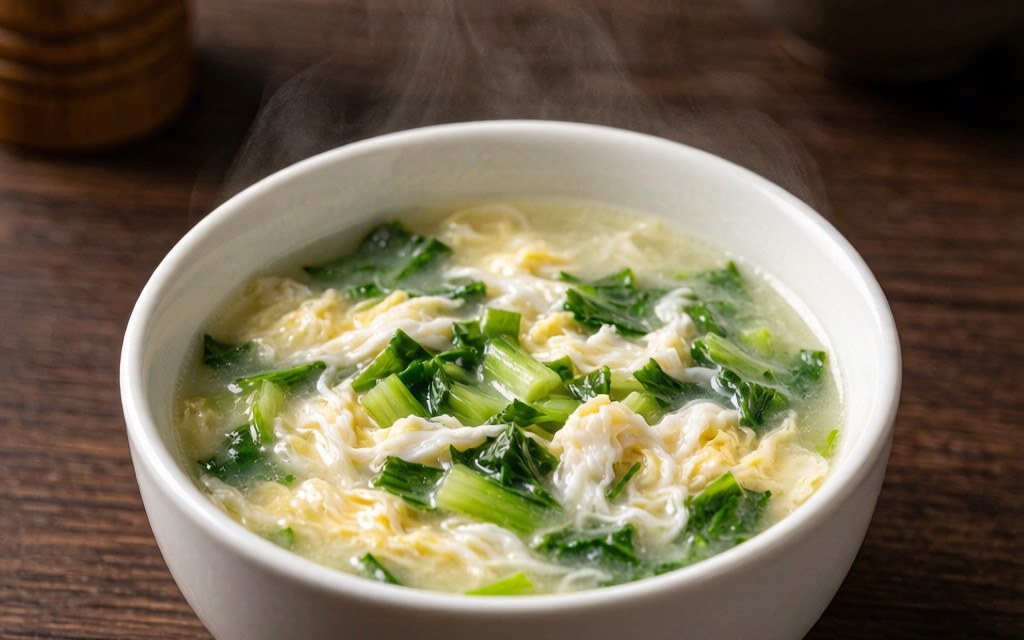
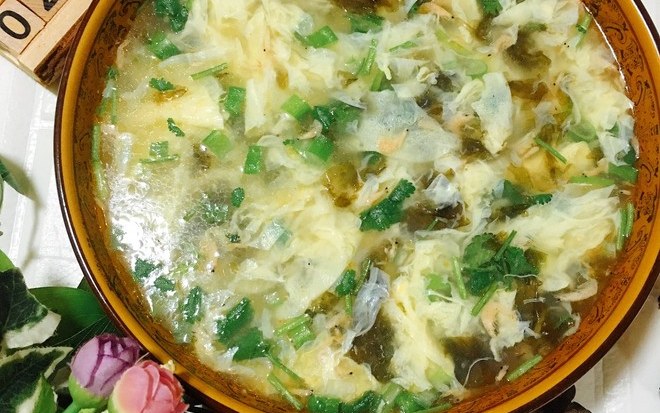
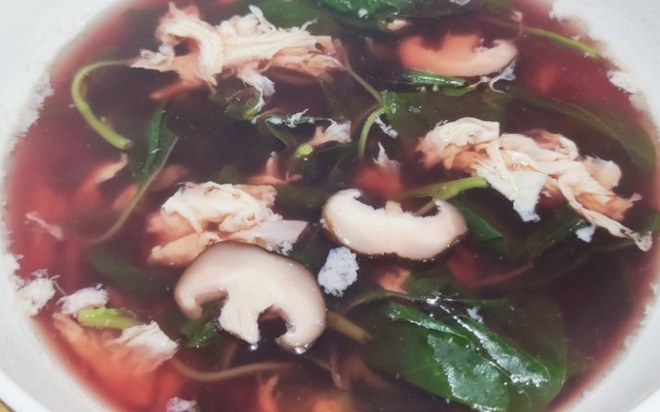
A 10-minute autumn soup from Chinese home kitchens: silky egg ribbons and tender amaranth greens in a lightly thickened broth that turns rosy pink with red amaranth.
Instructions
-
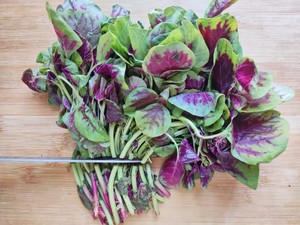
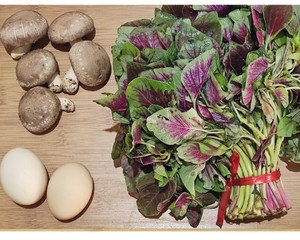 Prep the amaranth: cut off the tough root ends, pick the tender leaves and young stems, and wash twice — grit hides where the stems branch, so a second rinse is worth it.
-
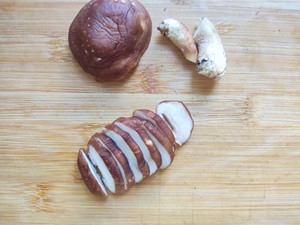
 Slice the shiitake caps about ½ cm thick. Beat the egg with 2–3 drops of white vinegar — the drops neutralize the sulfurous eggy edge and help the ribbons stay tender.
-
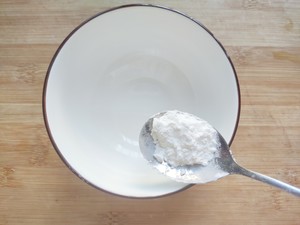
 Stir the cornstarch slurry once more just before using (it settles fast), and keep it within reach of the stove.
-
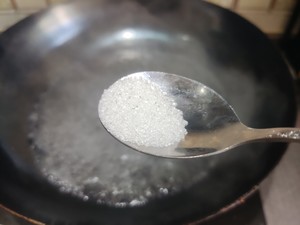
 Bring the water to a boil in a pot over high heat. Season with the salt, sugar, and bouillon powder.
-
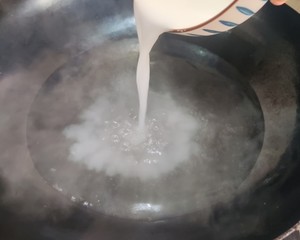
 Stir the broth so it swirls, pour in the cornstarch slurry, and keep stirring for about 30 seconds as the soup thickens slightly and returns to a boil.
-
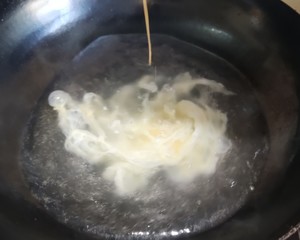
 Now the egg: keep the broth moving in a slow, continuous circle and drizzle the beaten egg in a thin stream — and whatever you do, do not stop stirring. In flowing water the egg forms long silky ribbons; in still water it clumps into one ragged mass.
-
 Add the shiitake slices, let the soup return to a boil, and cook 1–2 minutes — that is all thin raw shiitake needs.
-
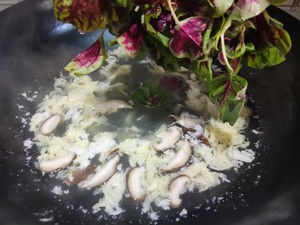 Add the amaranth, press the leaves down into the broth, and bring the soup back to a boil — 30–60 seconds is enough. The greens are done the moment they wilt and turn glossy.
-
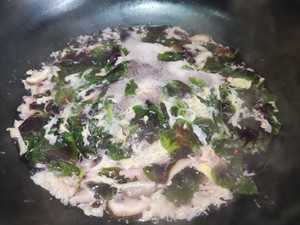 Take the pot off the heat, add the sesame oil, taste and adjust the salt, and ladle into bowls immediately.
Why this recipe works
A 10-minute soup with only a handful of ingredients has nowhere to hide — its small techniques carry everything.
1. The never-stopping stir. Egg ribbons are physics, not luck. When the beaten egg hits moving liquid, the flow instantly tears it into thin sheets that set as silky flowers; in still liquid the same egg sets into one solid clump. The source author underlines it in the original: your hand must not stop. Stir in one direction, drizzle slowly, and the prettiest egg drop you have ever made takes ten seconds.
2. A slurry before the egg. Slightly thickening the water with cornstarch does two jobs: it gives the soup a silky body that carries the mushroom and green flavors, and it suspends the egg ribbons evenly through the bowl instead of letting them sink to the bottom. One tablespoon is enough — this should be a soup, not a gravy.
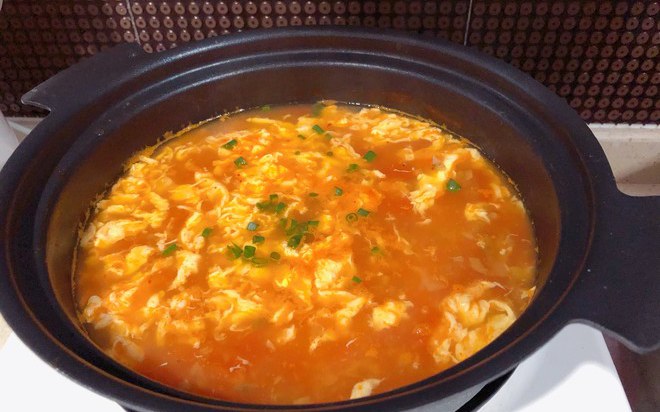
3. Late-stage greens. Amaranth goes in for barely a minute at the end. Its leaves are among the most tender of Chinese greens; the brief boil leaves them glossy and intact while the stems keep a pleasant snap, and the natural pigment turns a red-amaranth broth a joyful rose pink.
About the dish
Amaranth has been grown in China for centuries as a summer and autumn green, and the saying that opens the source recipe — eat autumn vegetables when autumn comes — is exactly the logic of this soup: a seasonal green, a couple of mushrooms, an egg, and dinner's soup course is done. The dish belongs to the everyday repertoire, the kind of pot a parent makes while the rice steams, and its regional charm is the color: in much of China the red-stemmed variety is the default, so a proper home version often arrives at the table blushing pink.
Western markets have discovered amaranth only recently, usually under the names yin choy or Chinese spinach. Treat it as what it is — a green that cooks faster than spinach wilts in a pan — and it slots into the egg-drop technique perfectly. In the source recipe the cook also stirs a few drops of vinegar into the egg, a tiny home-kitchen correction for the eggy smell that hot soup can amplify; it is the kind of inherited detail recipes almost never write down.
What to serve with it
This soup is the quiet member of a Chinese dinner table: set it beside egg fried rice or one of the heartier stir-fries, and its lightness is exactly the point. A small bowl before a richer meal is also how Chinese families drink it — an appetizer that needs no bread. If you find good amaranth, save the rest of the bunch for a simple garlic stir-fry; the green earns two meals from one bunch. Reheat gently, never at a rolling boil, and the ribbons stay silky. Expect questions when you set down a pink egg drop soup — it starts the table talking before the first spoonful.
Pro tips
- Red-stemmed amaranth (the common kind at Chinese markets) bleeds a deep rose color into the broth. That pink soup is not a mistake — it is the plant's pigment, and children find it delightful.
- The single rule of this recipe is that your hand never stops moving while the egg goes in. Decide your direction (clockwise is traditional) and commit.
- Re-stir the cornstarch slurry right before pouring — cornstarch sinks into a hard puck within a minute of mixing.
- If you prefer the shiitake softer, add them a minute before the egg instead of after; the source author adds them late, which keeps their bite.
- Amaranth overcooks fast: past a minute at a boil the leaves turn khaki and the charm is gone. Stage everything before the pot goes on the heat.
Storage & leftovers
- Refrigerate leftovers in a sealed container up to 1 day; the greens dull but the soup stays good.
- Reheat gently on the stove until steaming — do not boil hard, or the egg ribbons toughen and the greens go gray.
- Freezing is not recommended: leafy greens break down completely when thawed and the broth separates.
Frequently asked questions
What is amaranth and where do I find it?
Amaranth (yin choy or Chinese spinach) is a leafy green with soft leaves and juicy stems, a staple of summer and autumn cooking in China. Asian markets carry it in bunches; farmers markets increasingly do too. Regular spinach is the closest substitute — cook it even more briefly.
Why is my soup pink?
You bought red amaranth, and its natural pigment dissolves into the broth as it cooks. It is completely safe and, honestly, part of the dish's appeal — green-stemmed amaranth makes a pale green soup instead.
Can I skip the cornstarch slurry?
Yes, and the soup will be a clear, lighter broth — the slurry just gives it a silky, restaurant-style body that helps the egg ribbons float. If you skip it, drizzle the egg a little slower.
Why did my egg clump instead of forming ribbons?
The broth stopped moving while you poured, or you poured it all in at once. Keep a slow one-directional stir going, drizzle in a thin stream from a low height, and wait for the set before your next stir.
What do the drops of vinegar do?
Two or three drops of white vinegar in the beaten egg tame the sulfurous note that eggs release in hot soup, and keep the ribbons tender. You will not taste sourness at this quantity — but you will taste it if you skip it and the soup sits.
Can I make it ahead?
It is a 10-minute soup best made to order. Amaranth wilts and discolors as it sits; if you must prep early, keep the cooked broth (through step 5) refrigerated for a day and finish with egg and greens at serving.
My soup turned gritty. How do I wash amaranth properly?
Rinse twice — grit hides where the stems branch, so one quick pass is never enough. Cut off the root ends, separate the leaves, and lift them out of the rinse water rather than pouring the bowl out, so any sand stays behind at the bottom.