Cantonese · Rice & One-Bowl Meals
Cantonese Claypot Rice (腊味煲仔饭)
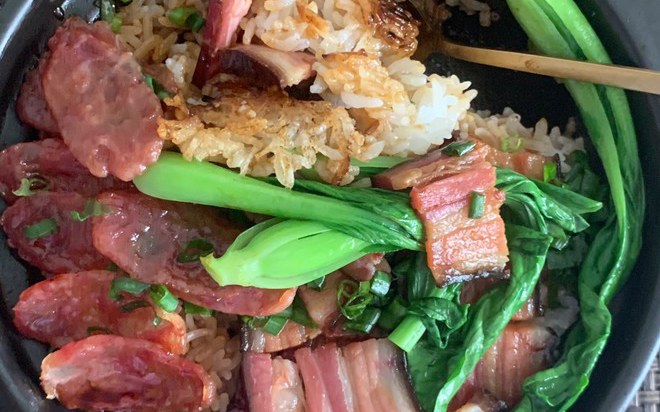
Cantonese claypot rice: lard-brushed pot, soaked rice steamed with cured sausage and pork belly, finished with a crackling crust — exact quantities, no guesswork.
Instructions
-
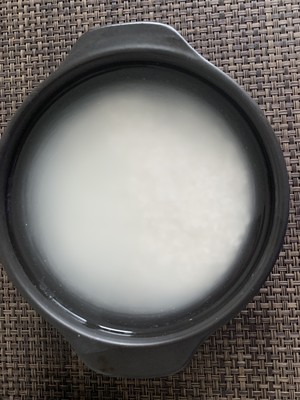
 Soak the rice: rinse it 3–4 times, then cover with cold water and soak for 1 hour (or up to overnight, refrigerated). Soaking hydrates the grains so they cook evenly in the shallow pot. Drain before using.
-
 Make the sauce: combine the light soy sauce, oyster sauce, dark soy sauce, sugar, sesame oil and water in a small saucepan. Simmer over low heat for 1 minute, until the sugar dissolves and the sauce turns glossy. Set aside — a brief simmer rounds out the raw edge of the soy sauce.
-
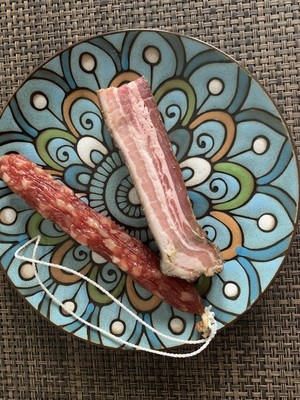
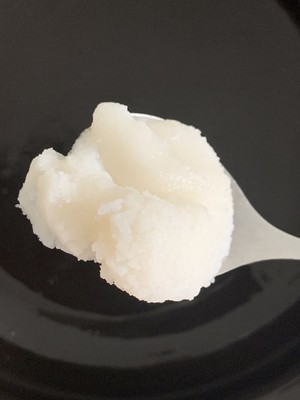 Fry the cured meats: heat a small skillet over medium heat and dry-fry the sliced lap cheong and lap yuk for about 2 minutes, until the fat renders and the edges curl and turn translucent. Reserve — this pre-frying blooms their sweetness and keeps the rice from tasting flat.
-
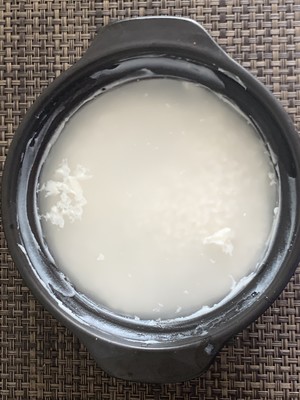 Rub the inside of a 9-inch clay pot (or small Dutch oven) all over the bottom and lower sides with the lard. Do not skip this: the fat is what releases the crust at the end.
-
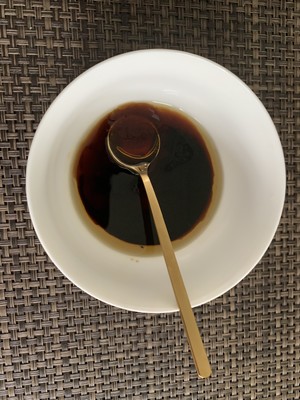 Add the drained rice, 2¼ cups water, the ginger slices and the scallion whites to the pot.
-
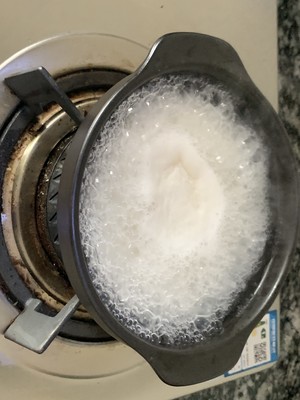
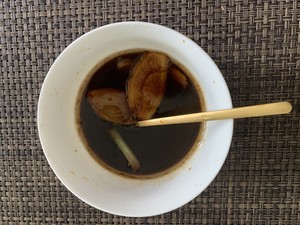 Bring to a boil over high heat, uncovered. When the surface is bubbling vigorously and the water level has dropped to just below the rice, cover, turn the heat to the lowest setting and simmer for 8–10 minutes, until the surface looks dry with a few small steam holes.
-
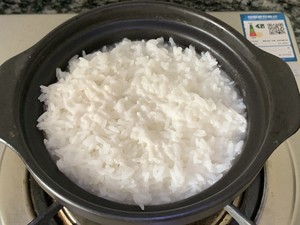
 Turn off the heat. Uncover and poke a dozen small holes through the rice with a chopstick or skewer — these steam channels help the center finish cooking.
-
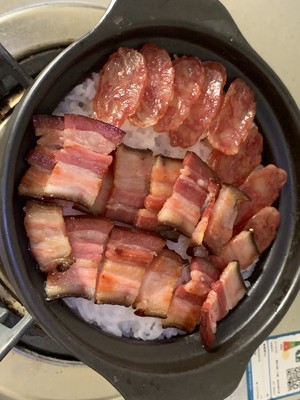
 Lay the fried cured meats over the rice, cover, and cook over medium-low heat for 3 minutes.
-
 Drizzle 1 Tbsp oil around the inside rim of the pot so it runs down between the rice and the clay — this is the step that builds a crackling crust. Cover and cook 3 minutes more; you should hear gentle crackling and smell toasty rice.
-
 Crank the heat to high for exactly 3 seconds, then turn it off and let the pot sit, covered and undisturbed, for 10 minutes. No peeking — the trapped steam finishes the grains and softens the topping.
-
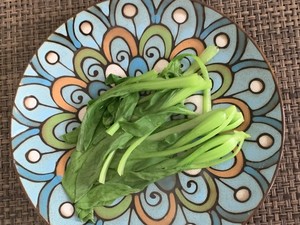
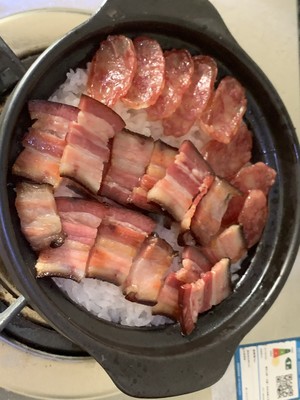 Meanwhile, blanch the bok choy in a pot of salted boiling water for 1 minute, until vivid green and just tender. Drain well.
-
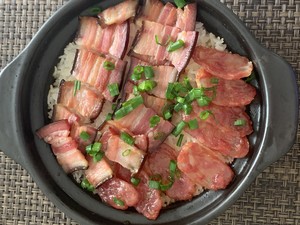 Open the pot, discard the ginger and scallion whites, and scatter the scallion greens over the rice. Arrange the bok choy on top, drizzle about half the sauce over everything, and serve the pot at the table with the remaining sauce on the side.
-
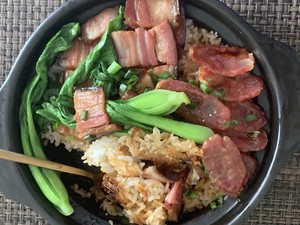 To serve properly, scrape the bottom with a spoon right at the table so every bowl gets shards of toasted crust mixed through the rice.
Why this recipe works
Claypot rice looks like plain rice with meat on top, but three details separate a real one from a sad pot of mush.
1. Soaking the rice. A clay pot is shallow and wide, so the water evaporates fast and unevenly. An hour of soaking pre-hydrates every grain to the same starting point, which means the center and the edge finish at the same moment instead of the center staying chalky while you wait for it.
2. The rim of oil. The famous crust — guoba (锅巴) — is not an accident. Drizzling oil around the inside rim lets it run down between the rice and the pot wall, where direct heat turns that thin layer of starch and fat into a deep-golden, cracker-crisp sheet. You pour it on the rice, you get greasy rice; you pour it at the rim, you get the prize.
3. Resting off the heat. Ten covered minutes after the flame goes off feels like doing nothing, but the trapped steam equalizes: the top grains finish, the cured meats soften and leak their sweetness downward, and the crust loosens just enough to release in shards instead of welding to the pot.
About the dish
Claypot rice (bo zai fan, 煲仔饭 — literally "little pot rice") is a Cantonese cold-weather institution, cooked to order in rows of clay pots over charcoal at Hong Kong and Guangdong street stalls. The classic build is cured meats: lap cheong, the sweet rose-pink pork sausage, and lap yuk, soy-cured pork belly, layered onto the rice so their rendered fat seasons every grain as the pot steams.
The dish is a study in restraint — no sauce in the pot, just rice, fat and salt — with a soy-based dressing added only at the table. And the crust is not a byproduct; in Guangdong it is openly the best part, fought over with a spoon. Home versions once required charcoal and judgment; this one needs only a stovetop and your ears.
What to serve with it
The pot is a full meal on its own — the dressing and the crust carry it. Still, a cool, crunchy smashed cucumber salad cuts the richness of the cured meats, and a clear soup like the ones in the soups collection rounds out a Hong Kong style dinner. Drink hot tea alongside; it is the traditional pairing and it genuinely helps. Once you have the method down, variations open up — chicken and mushroom versions are common — but the classic lap cheong claypot rice with a crackling crust is the one to master first. Leftovers reheat best in the same pot over low heat, crust side up.
Pro tips
- The 1:1.5 rice-to-water ratio (by volume) is tuned for soaked jasmine rice in a wide clay pot. If you skipped the soak, add 2 extra Tbsp water.
- The crust speaks: a quiet pot means no crust is forming, frantic spitting means it is burning. Gentle, even crackling is what you want in the last 3 minutes.
- Lard is the authentic choice and it genuinely tastes better here — it fries the bottom of the rice the way cured pork fat would. Butter is not a substitute; neutral oil works but is one note short.
- No clay pot? A small cast-iron pot or a heavy 2-quart Dutch oven works. Avoid nonstick — it never builds a proper crust.
- The 10-minute rest is not idle time: carryover steam cooks the grains all the way through. Opening early gives you chalky centers.
- Leftover crust sticks to the pot. Do not scrub — soak with hot water for 20 minutes and it slides off.
Storage & leftovers
- Refrigerate leftovers in a sealed container for up to 2 days.
- Reheat in a covered skillet over low heat with 1 Tbsp water sprinkled on top for 4–5 minutes — the steam re-softens the rice while the pan re-crisps any leftover crust.
- Microwave reheating works (90 seconds at full power, covered) but sacrifices the crust texture.
- Freezing is not recommended — cooked rice goes hard and the cured meat fat turns waxy when thawed.
Frequently asked questions
Can I make this without a clay pot?
Yes. Any small heavy pot with a tight lid works — a 2-quart Dutch oven or cast-iron pot is ideal. The pot needs to hold heat evenly and tolerate a brief blast of high heat, so thin nonstick pans are the only real no.
Where do I find lap cheong and lap yuk?
Asian grocery stores stock both, usually near the tofu or in vacuum packs on a shelf. If you can only find lap cheong, use two sausages — the dish will be slightly less smoky but still completely authentic in spirit.
Why is my crust bitter or burnt?
Your last heat burst ran too long. The high-heat moment is 3 seconds — just enough to re-boil the oil film — and everything else happens over low or medium-low heat. Also make sure the oil is drizzled around the rim, not poured onto the rice.
Can I prep anything ahead?
Yes. The sauce keeps in a jar in the fridge for a week. You can soak the rice the night before and fry the cured meats in the morning; the final assembly takes 30 minutes.
My rice came out mushy. What went wrong?
The ratio only works if the rice was soaked and drained. Unsoaked rice holds surface water and tips the pot into porridge territory. Also check your lid — heavy condensation dripping back in adds water you did not count on.
What greens can I use besides bok choy?
Gai lan, choy sum or even frozen-defrosted spinach squeezed dry all work. Blanch whatever you use for 1–2 minutes in salted water so it stays bright green and never waters down the pot.
How do I get the crispy bottom every time?
Three conditions: lard rubbed on the pot before the rice goes in, 1 Tbsp of oil drizzled around the rim (never poured onto the rice), and the 3-second high-heat burst after the final covered cook. Then use your ears — gentle, even crackling means the crust is building; silence means it is not.