Northern Chinese · Sauces & Basics
Colorful Spring Pancakes (彩色春饼)
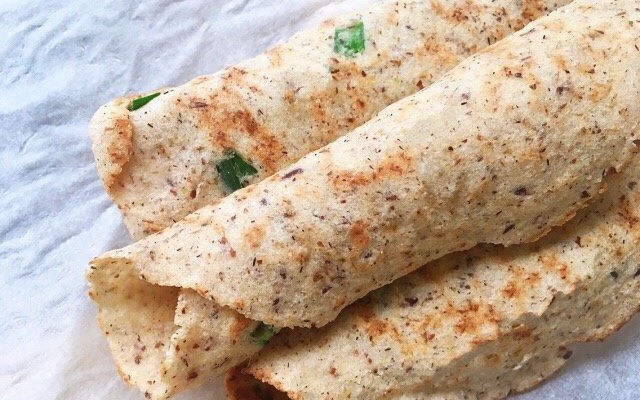
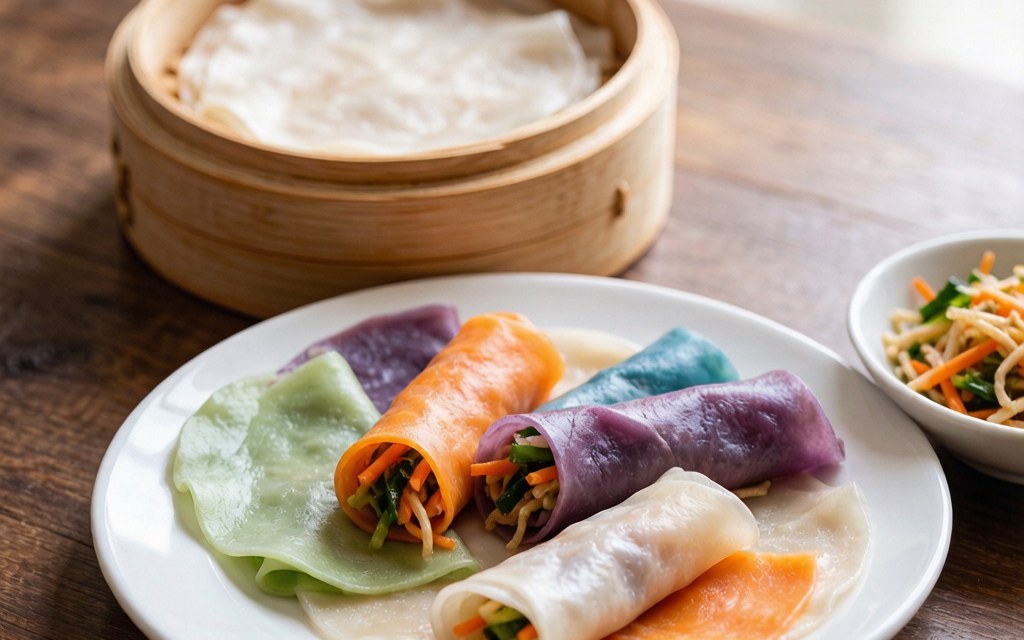
Paper-thin steamed spring pancakes in five natural colors — spinach green, carrot orange, butterfly-pea blue, purple and plain — soft, chewy and made for wrapping.
Instructions
-
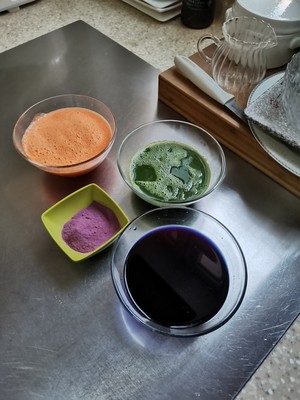 Make the color liquids first. For blue: rinse the butterfly pea flowers, steep in the boiling water for 10 minutes, then squeeze and strain, pressing every drop of blue out. For green: blanch the spinach leaves for 10 seconds, blend with the water and a pinch of baking soda (it locks in the green), and strain. For orange: blend the chopped carrot with water and strain. Warm all liquids until just comfortable to the touch.
-
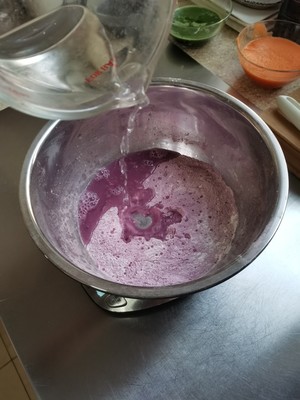
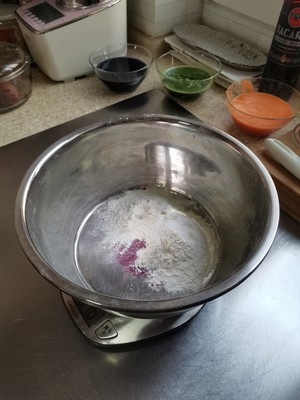 Make one dough per color: stir the flour, salt (and purple sweet potato powder for the purple batch) together, pour in the warm liquid, and mix until shaggy flakes form with no dry pockets. Knead roughly for 2 minutes, bag the dough, and rest it 15 minutes while you make the next one.
-
 Knead each dough again for 3–4 minutes, rest 10 minutes, and repeat, until every ball is smooth and supple. Keep the doughs bagged at all times when not being kneaded — a dried skin means speckled, torn pancakes.
-
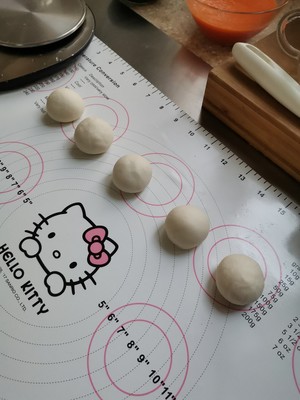 Divide each color into 5 equal balls, about 32 g each. Oil your hands and roll every ball in a thin film of oil, then cover them with plastic wrap and rest for 10 minutes. The oil film is what lets the pancakes separate later.
-
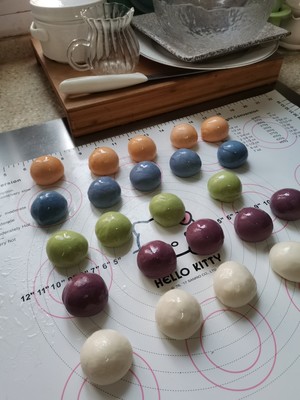 Work in pairs: flatten one oiled ball with your fingers, set a second oiled ball directly on top of it, and press the center and edges so the two discs sit tight against each other. Sized pairs also roll out to matching circles.
-
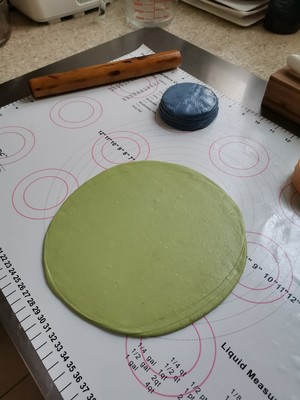
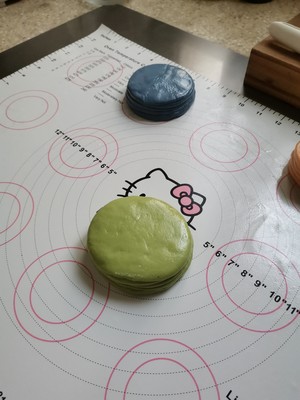 Roll the pair from the center outward — up, down, then rotate 90 degrees and repeat — flipping once, into a single paper-thin round about 9 inches (23 cm) across, slightly larger than an 8-inch plate. Even thickness matters more than perfect shape.
-
 Bring a steamer of water to a full boil. Oil the steaming liner or tray, lay in one rolled pair, and steam over high heat for 12 minutes.
-
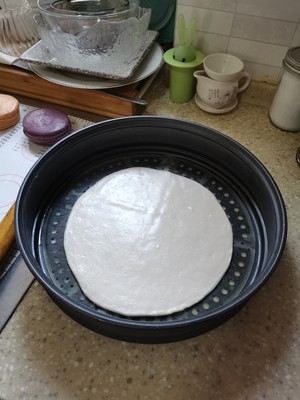 Lift the cooked round out onto a plate and let the steam flash off for a minute, then peel the two pancakes apart while still warm — the oil film between them lets them separate cleanly into two gossamer sheets. Cover the finished ones with a dry towel.
-
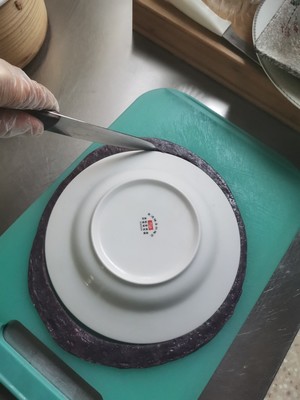 Trim each warm pancake into a perfect circle: set an 8-inch plate on top and cut around it with a paring knife. Save the scraps — torn into strips and stir-fried with egg and soy sauce, they are a snack in themselves.
-
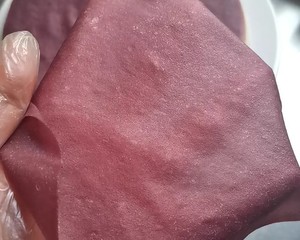 Roll and steam the remaining pairs one at a time, keeping every finished pancake covered. Stack the completed pancakes and keep them wrapped; steamed pancakes stay soft for hours.
-
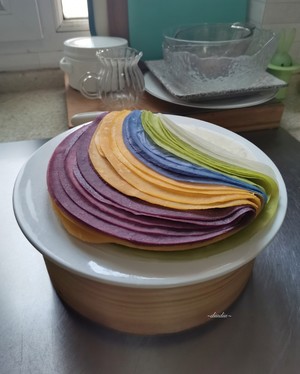 To serve, let everyone wrap their own: lay a pancake flat, add a line of fillings, fold the bottom up and roll from the side.
Why this recipe works
Spring pancakes are a dough-handling exercise, and three habits make them come out thin, whole and peelable.
1. The oiled pair. Rolling two oil-coated discs as one is the classic shortcut to paper-thin wrappers: you roll once and get two pancakes, and the oil film between them guarantees they separate after steaming. Without the oil, you get one thick, stuck-together blob; with it, each layer peels off thin as tissue. This is the same pair-and-peel trick used for steamed peking duck pancake wrappers, scaled up to a full party stack. Pressing the pair's center and edges before rolling keeps the discs registered so the final circle is even.
2. Knead-rest cycles. A 63% hydration dough cannot roll thin the moment it is mixed — the gluten is too tight and springs back. Alternating short kneads with 10-minute rests lets the flour fully hydrate and the gluten relax, which is why the source recipe insists on repeated rounds: smooth, relaxed dough rolls gossamer-thin without tearing.
3. Color that survives steaming. Each pigment gets matched handling: a pinch of baking soda keeps chlorophyll green through the 12-minute steam, butterfly pea's blue is naturally heat-stable, and purple sweet potato powder colors the dough without loosening its hydration. All three stay bright where raw beet or pureed greens would wash out.
About the dish
Eating spring pancakes on lichun — the Start of Spring, first of the twenty-four solar terms — is one of China's oldest recorded food customs. The pancake-wrapping ritual is called "biting the spring": fresh vegetables rolled into thin wrappers to welcome the season and wish for a good harvest, a tradition centuries old and still observed at family tables across northern China.
The classic 春饼 is plain white, cooked singly on a dry pan or steamed. This version comes from a home cook's Start-of-Spring spread: the same soft, chewy wrapper dough, but tinted with five natural colors and steamed so the pancakes stay moist and never greasy. The colors are pure festivity — the method underneath is the orthodox one, and each wrapper is thin enough to read a newspaper through.
What to serve with it
Set the stack in the middle of the table with 3–4 fillings and let everyone roll their own: a quick shredded-potato dish from the stir-fry collection, bean sprouts, and a smear of sauce is the northern standard. The five colors also make rainbow spring pancakes a hit with children, who happily wrap their own around mild fillings. Once you have the wrapper technique down, it also serves handmade dumpling nights and any recipe in the basics library that calls for thin skins.
Pro tips
- Equal weight per ball is the whole game: only identically sized dough balls roll into identically thin pancakes, which is why the source recipe weighs each one at 32 g.
- Roll each pair in one confident session — going back to re-roll after the dough relaxes is how you get pancakes of wildly different thickness.
- If a pair refuses to peel apart, steam-warm it for 20 seconds; cold pancakes cling, warm ones slide.
- The baking soda in the spinach juice is not optional: spinach puree turns olive-drab as it steams without it, and bright green with it.
- Purple sweet potato powder goes into the flour rather than the water on purpose — the powder colors without changing the dough's hydration, where a purple potato puree would throw the ratio off.
- Steam times vary with how many pancakes you stack per batch; if your steamer is wide, you can steam two pairs side by side and cut the session time in half.
Storage & leftovers
- Refrigerate the stack tightly wrapped for up to 2 days; re-steam 2–3 minutes to restore softness.
- Freeze for up to 1 month with parchment squares between pancakes so they do not fuse; re-steam from frozen for 4–5 minutes.
- Do not reheat in the microwave — it dries the edges and stiffens the pancakes within seconds.
Frequently asked questions
What do I wrap in spring pancakes?
Anything savory and not too wet: shredded potato stir-fry, bean sprouts with chives, shredded pork, or roast duck with scallion brushes and sweet bean sauce. Each diner builds their own roll at the table.
Why steam instead of pan-cooking the pancakes?
Steaming keeps them soft, pliable and oil-free — they fold around fillings without cracking and never turn crisp. Pan-cooked versions dry out and are really a different dish.
My pancakes tore while rolling. What went wrong?
The dough was under-rested or drying out. Knead-rest cycles build the extensibility that lets dough roll paper-thin, and every ball must stay covered when idle. Patch tears by overlapping and pressing — steaming seals them.
Can I make just one color or skip the coloring?
Yes — the basic dough (flour, salt, warm water) is the complete recipe; multiply it by five for a full stack of plain white pancakes, the classic version.
Can I make these ahead?
Yes. Stack cooled pancakes, wrap tightly, and refrigerate up to 2 days. Re-steam the whole stack for 2–3 minutes before serving and they taste freshly made.
Where do I find butterfly pea flowers?
They are common in Asian grocery stores and online tea shops under 'blue tea' or 'butterfly pea flower'. No luck? Just leave the color out — it contributes color only, no flavor.
How thin should I roll the pancakes?
About 23 cm (9 inches) across and thin enough to see light through — the two-disc pair rolling is what gets you there without tearing. If you can almost read a newspaper through the raw round, it is right.
My pancakes stuck together and will not peel. What now?
Cold pancakes cling; warm ones slide. Steam the pair for 20 seconds and peel again while hot. To prevent it, oil both balls generously and peel each steamed round as soon as it can be handled.