Cantonese · Buns & Pancakes
Crispy-Top Char Siu Bao (酥皮叉烧包)
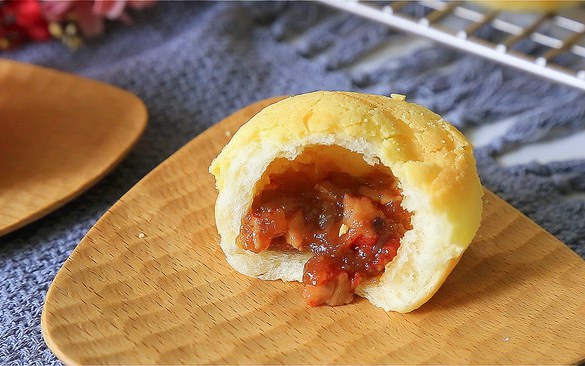
The Hong Kong dim sum legend: fluffy baked buns with char siu pork in glossy sauce, crowned with a crackly sweet cookie top — piped on, baked golden, eaten warm.
Instructions
-
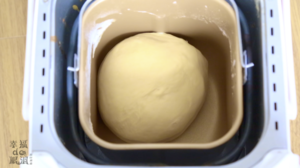
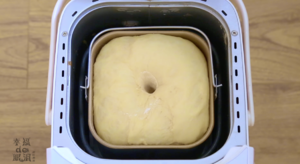
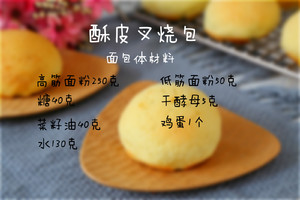 Make the dough: mix both flours, sugar, yeast, oil, egg and water, then knead about 10 minutes (or two mixer cycles) until the dough is smooth and stretchy. Cover and let it rise until doubled, about 1 hour.
-
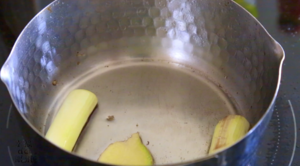
 Make the sauce: fry the ginger and scallion in the oil over medium heat until fragrant, 1 minute. Add the salt, sugar, soy sauce, oyster sauce, sesame oil, white pepper and water, and bring to a boil.
-
 Fish out the ginger and scallion, stir the cornstarch slurry once more, and pour it in while stirring constantly. The sauce will turn glossy and thick within a minute of bubbling — pull it off the heat there, scrape it into a bowl, and refrigerate until completely cold.
-
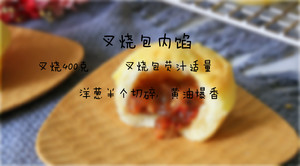
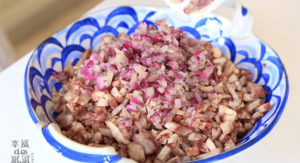
 Prepare the filling: dice the char siu small, about fingernail size. Melt the butter in a skillet and cook the minced onion until soft and sweet, 3 to 4 minutes, then tip the onion and butter over the char siu and toss together.
-
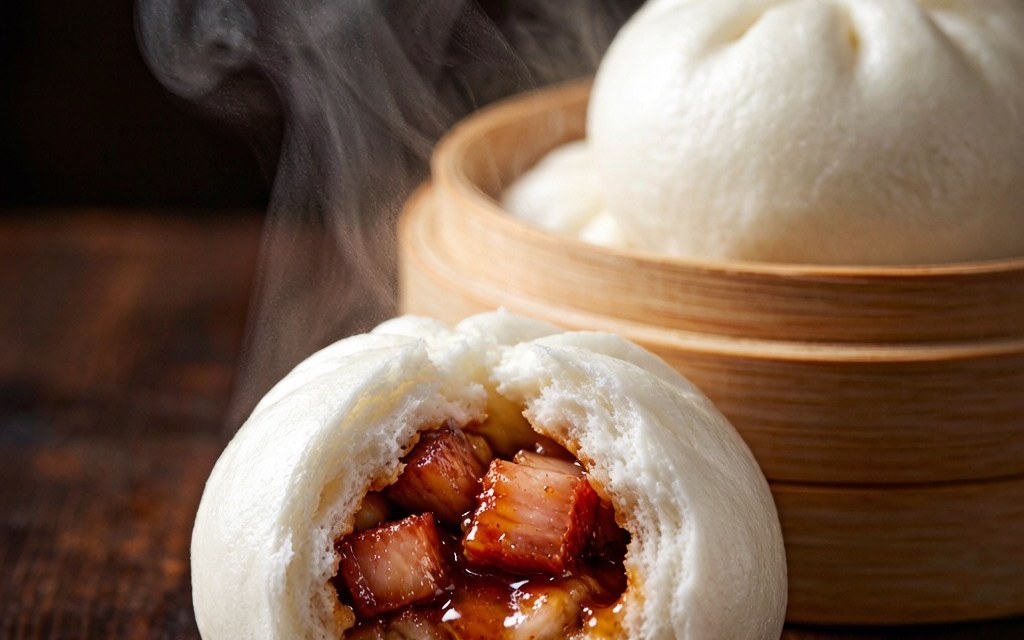
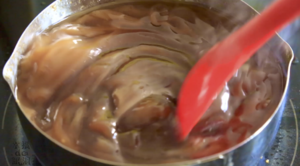 When the sauce is fully cold, combine it with the char siu and onion — the right balance is 1 part meat to 1.5 parts sauce by weight (375 g meat to 450 g sauce), which is loose and saucy, exactly like the dim sum original. Chill until needed.
-
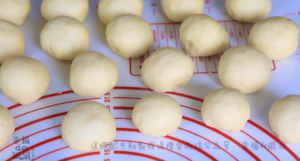
 Punch down the risen dough and divide it into 24 pieces, about 23 g each; round each one, cover, and rest 20 minutes.
-
 Flatten a ball, put a generous 2 Tbsp of filling in the center, fold the edges up, and pinch the seam completely shut — the sauce is runny and will find any gap. Place seam-side down on a lined baking sheet, spaced well apart.
-
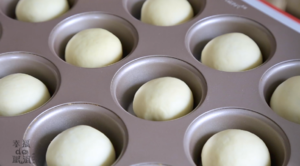
 Proof the buns in a warm, humid spot for about 40 minutes: put the sheet in the (off) oven with a large bowl of hot water at 115°F (45°C), not boiling, and leave the door closed. They are ready when visibly puffy and about doubled.
-
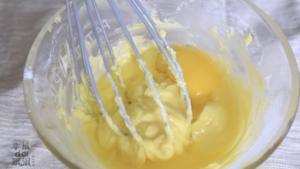
 Make the topping near the end of proofing: beat the soft butter with the powdered sugar and salt until smooth, then add the egg a teaspoon at a time, beating after each addition — rush this and it will split. Fold in the sifted cake flour just until no dry streaks remain, and scoop the paste into a piping bag.
-
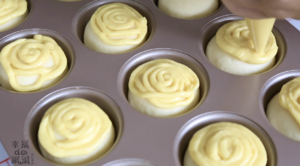
 Preheat the oven to 350°F (180°C) while the buns finish proofing, then pipe a spiral of topping over each bun, covering the crown but leaving the lower third bare so the topping has room to melt and flow.
-
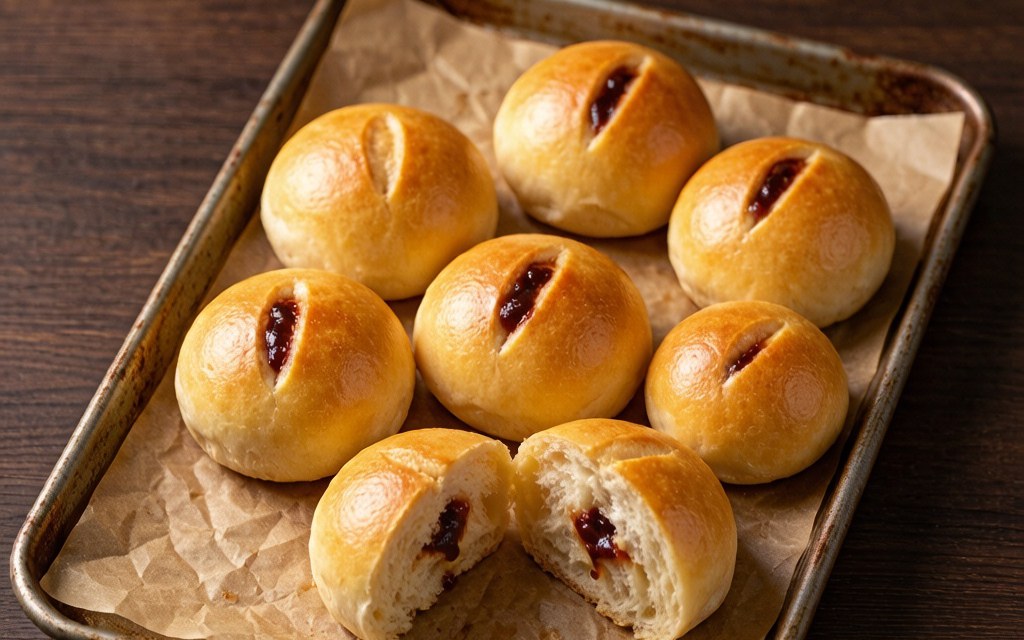
 Bake in the middle of the oven 15 minutes, until the cookie tops are crackled and golden and the buns are pale gold beneath. Cool 5 minutes and serve warm — the contrast of hot saucy filling and crisp sweet shell is the entire point.
Why this recipe works
This is the dish that makes people queue in Hong Kong, and at home it comes down to three techniques.
1. A cookie paste, not a cookie disc. Hong Kong bakeries pipe a soft butter-sugar-flour paste over the buns, which melts and crackles into that shattery crust — the same idea as a pineapple bun top. Beating the egg in gradually is what keeps the emulsion stable; a split paste slides off in the oven. Piped onto a fully proofed bun, it flows just enough to crackle into ridges without swallowing the bun.
2. A 1:1.5 meat-to-sauce filling. Western instinct says thicken a filling until it is scoopable. The dim sum version does the opposite: a loose, glossy gravy at nearly one and a half times the weight of the meat, set only by starch and cold. Inside a sealed bun it stays put; in your mouth it floods out. The butter-fried onion folded through the meat adds the sweetness that makes the sauce taste round instead of just salty-sweet.
3. Warm-water proofing. A bowl of 115°F (45°C) water in a closed oven gives both warmth and humidity, the two things enriched dough proofs fastest in. Forty minutes later the buns have doubled, which is what supports the heavy cookie cap without collapsing.
About the dish
Crispy-top char siu bao (酥皮叉烧包) is the younger sibling of the classic steamed bun: somewhere in the last few decades, Hong Kong dim sum kitchens started crowding a baked, pineapple-bun-style shell onto the beloved barbecued pork filling. The most famous version comes from a tiny Sham Shui Po shop whose buns earned a Michelin star — the story goes that people queue for hours, and declare it worth it.
The concept is pure Hong Kong: a Cantonese filling, a British-influenced bakery shell, and tea in between. Home versions spread through the city's baking blogs and then everywhere Chinese food blogs live. Search bbq pork bolo bao or bo lo bao char siu and you land on the same bun — the names blur because the shell is borrowed from the pineapple bun. This one stays faithful to the shop formula — mini size, loose saucy filling, crackled crown — because those three things together are the entire experience.
What to serve with it
Serve these the dim sum way: straight from the oven, two or three per person, with hot jasmine or pu-erh tea to cut the sweet richness. No steamer in the house? That is the point of this version — an oven is the only equipment required. They anchor a party table alongside pan-fried dumplings and something fresh like a smashed cucumber salad. For kids, split one open and let it cool a minute — the char siu centers stay hot longer than the crust. Leftovers, if any survive, are excellent split warm with a slick of butter, or revived for 6 minutes in a 150°C / 300°F oven.
Pro tips
- The topping must go on unproofed-looking paste but on well-proofed buns, and it must not reach the sides — it melts and slides, and on the sides it glues the buns to each other.
- If the topping paste splits (butter and egg separating), set the bowl over warm water for a few seconds until the outer ring of butter just melts, then beat again; repeat until smooth.
- The sauce-to-meat ratio is the signature: 1 to 1.5 feels dangerously loose when filling, but it is what makes each bite flood with sauce. Thicken only if you must transport them.
- Use a zip-top bag with a corner snipped off if you have no piping bag — the topping is loose enough that a spoon blobs work too, they just look more rustic.
- These are mini buns on purpose: 23 g of dough means one bite-sized indulgence per bun, and twenty-four of them vanish at a party. Do not be tempted to make 8 giant ones; the cookie-to-bun ratio falls apart.
- Buy char siu from a Chinese deli for this one — it is already glossy and smoky, and the filling takes 10 minutes. Homemade braised char siu also works beautifully.
Storage & leftovers
- Best eaten within 4 hours of baking, while the cookie top still crackles.
- Store leftovers uncovered at room temperature for up to 1 day; a sealed container softens the shell.
- Revive in a 300°F (150°C) oven for 6 minutes — the shell recrisps and the filling re-loosens. Avoid the microwave, which turns the topping chewy.
- Freeze baked buns up to 1 month; reheat from frozen 12 minutes at 300°F (150°C).
Frequently asked questions
How is this different from regular char siu bao?
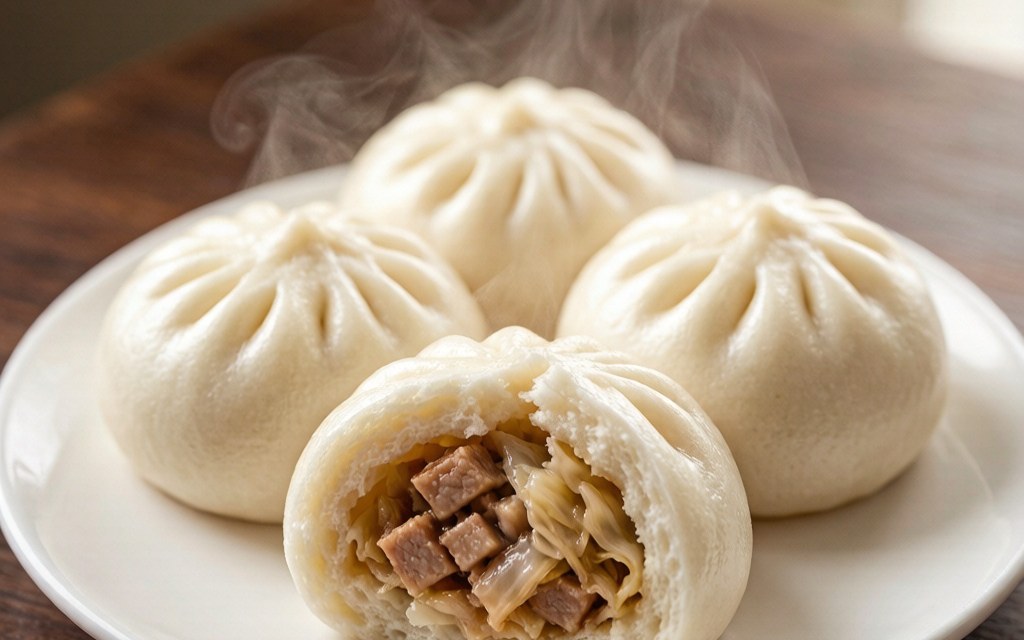
Steamed char siu bao are white, cloud-soft and split open on top. These are baked like a brioche roll with a runnier filling and a sweet crackly cookie shell — closer in texture to a pineapple bun with a porky center.
Where do I get char siu?
Any Chinese barbecue shop or well-stocked deli sells it by the pound, usually hanging in the window. Ask for the fattier end cut, or use 13 oz of homemade braised pork belly in char siu sauce.
Can I make these ahead?
Fill, shape and refrigerate the buns overnight, then proof and bake the next day; the sauce and topping also keep 2 days refrigerated. Baked buns are best within hours but revive in a 300°F (150°C) oven for 6 minutes.
How spicy are these?
Not spicy at all — sweet cookie shell, savory-sweet pork filling. This is the dim sum dish ordered for people who do not eat spicy food.
My cookie tops cracked and slid off. Why?
The buns were underproofed, so they kept rising and heaved the topping off, or the topping was piped too thin and down the sides. Proof fully, pipe a generous cap that covers only the crown, and the shell will crackle in place.
Can I skip the topping and just bake plain filled buns?
You can — brush with egg wash instead and bake as written. You will get excellent saucy pork buns, but you lose the crackly shell that makes this version famous.
How do I reheat them so the top stays crisp?
Six minutes in a 300°F (150°C) oven recrisps the shell and re-loosens the filling; from frozen, give them 12 minutes. Skip the microwave, which turns the cookie topping chewy.