Northern Chinese home style · Dumplings & Dim Sum
Handmade Dumpling Wrappers (手工饺子皮)
No machine, no marathon kneading: three minutes of work plus two rests makes soft, chewy wrappers with paper-thin edges. Gram-exact measures, step by step.
Instructions
-
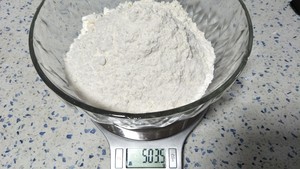 Weigh the flour into a large bowl and stir in the salt with chopsticks or a silicone spatula so it is evenly distributed before any water goes in.
-
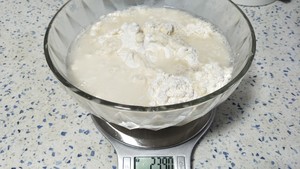 Pour in 235 g of the warm water — around 105°F / 40°C, warm like a bath but never hot. Stir until the flour comes together in loose, shaggy flocks with no dry flour left at the bottom of the bowl.
-
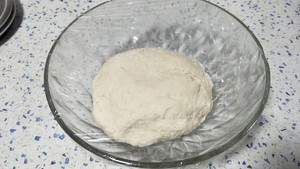 Knead for about 2 minutes, just until the flocks form a medium-firm ball. Done right, your hands come away clean and the dough feels like a soft earlobe; if it sticks, knead in extra flour 1 Tbsp at a time, and if it feels crumbly, work in the reserved 1 Tbsp water.
-
 Cover the bowl with plastic wrap and rest 20 minutes. This pause lets the flour hydrate, which is why the next knead takes almost no effort.
-
 Knead again with clean, dry hands — about 10 strokes turns the rough ball smooth and silky, leaving the dough, the bowl and your hands all clean. Stop as soon as it is smooth; more kneading only tightens the dough.
-
 Cover and rest for at least 1 hour. The dough must rest fully or the wrappers will shrink and fight back when you roll them. Make your filling during this time.
-
 Dust a large board or clean countertop generously with flour. Lift the rested dough onto it gently — no extra kneading or folding, which would re-tighten the gluten you just relaxed.
-
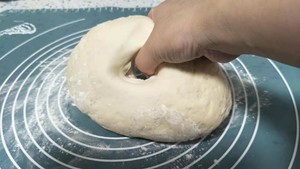
 Press your thumb through the center of the ball to open a hole, then lift the ring and turn it in your hands like a wheel, stretching gently until the ring is an even 5 cm (2 inches) thick.
-
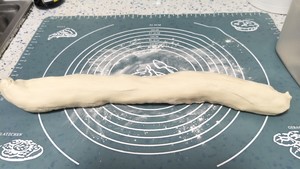
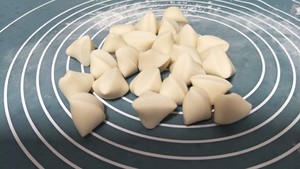 Tear the ring open at any point into one long rope, cut it into 4 equal sections, and return the sections you are not using to the bowl, covered, so they never dry out.
-
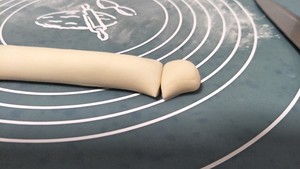
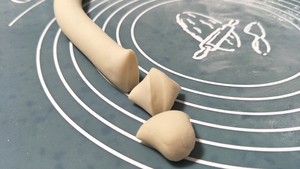
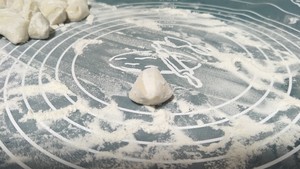 Roll one section under your palms into a rope about as thick as your thumb (2 cm / ¾ inch). Stand the rope upright and cut pieces 7–9 g each, rotating the rope a quarter turn after every cut so each piece stays a round puck instead of slumping into an oval.
-
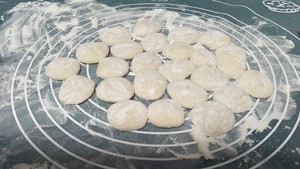 Scatter dusting flour over the cut pieces and roll them between your palms until every side is coated — this is what keeps them from welding together.
-
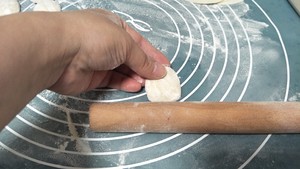 Flatten each piece with the heel of your palm into a 4 cm (1½ inch) disc, then roll with a small rolling pin: press the pin firmly into the outer edge of the disc and push away, release, rotate the disc about 30 degrees counterclockwise with your other hand, and press again. Repeat for about 20 strokes (reverse hands if you are left-handed).
-
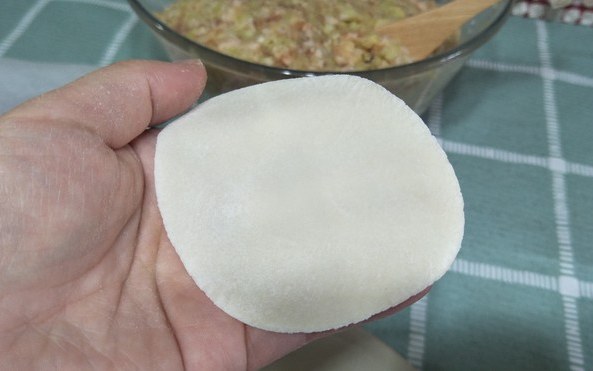
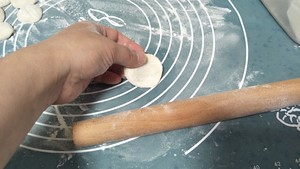 The finished wrapper is 7–8 cm (3 inches) across, with edges so thin you can see the shadow of a line beneath them and a center just slightly thicker — that thickness is what holds juicy filling without leaking.
-
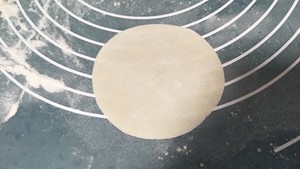 Stack finished wrappers well dusted with flour, keep them covered with plastic wrap, and fill within a few hours, or freeze for later (see Storage).
Why this recipe works
Homemade wrappers scare people because they picture a half hour of kneading. This method needs about three minutes, and the reasons are simple.
1. Rest replaces kneading. Gluten — the elastic network that makes wrappers chewy and strong — builds itself once flour is wet. Kneading accelerates it, but time does the same job: after a 20-minute rest the dough smooths out in ten strokes, and after a full hour it rolls without springing back. Kneading harder than that only tightens the network and makes the dough fight you.
2. Moderate hydration plus salt. At roughly 47% water this dough is firm enough to hold its shape while you cut and roll it, yet soft enough to roll thin without cracking. The salt is not just seasoning — it strengthens gluten so the paper-thin edges stretch around pleats instead of tearing. And warm — never hot or cold — water is what makes this warm water dumpling dough soft to roll yet sturdy in the pot.
3. Small, even pieces and one-direction rolling. Cutting 7–9 g pucks and flattening each one first means every wrapper needs the same twenty strokes. Pressing the pin outward from the edge while rotating pushes dough outward, thinning the rim while leaving the center slightly thicker — exactly where you want strength to hold juicy filling.
About the dish
In northern China, dumpling night is a family production, and the wrappers are the foundation. Store-bought skins are rolled stiff and dusted heavily with starch so they survive shipping; hand-rolled wrappers are softer, stretchier, and carry the sweet smell of fresh wheat. Once you have pleated a dumpling with a wrapper whose edge is thin as paper, the plastic packs are hard to go back to.
Jiaozi themselves are old — the story goes that the physician Zhang Zhongjing shaped the first ones around 1,800 years ago to warm villagers' frostbitten ears through a brutal winter. Nobody can prove it, but the shape has not changed much since. This dough — flour, salt, warm water, and patience — is the same one home cooks have used for generations; the three-minute kneading trick simply makes it realistic on a weeknight.
What to serve with it
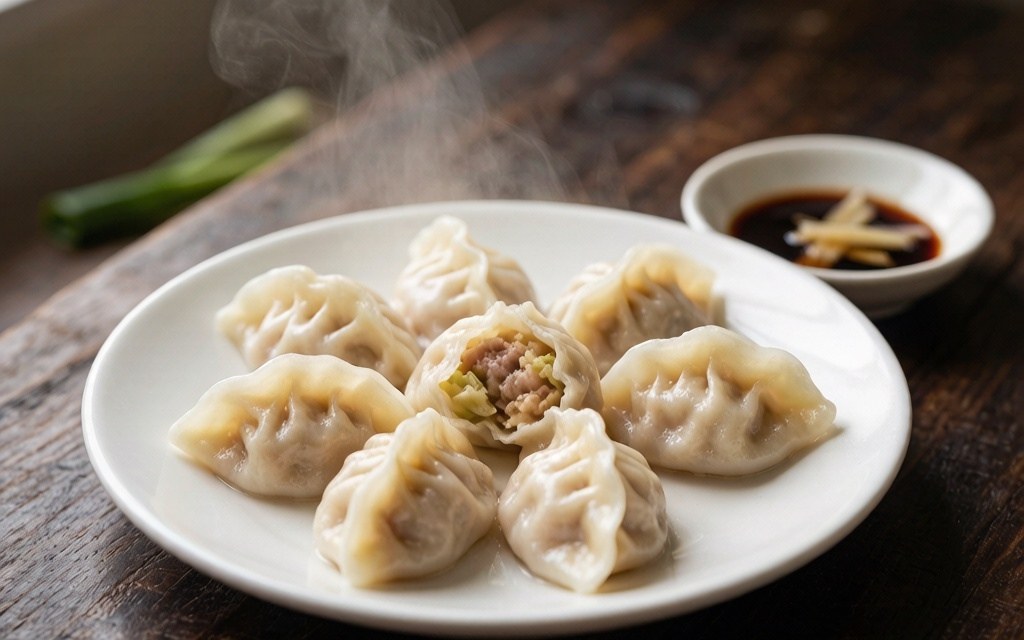
These wrappers are the start of a dumpling night: set out one or two fillings from the dumplings collection, boil in small batches so they never stick together, and put a dish of black vinegar with soy sauce and slivered ginger in the middle of the table. Round out the meal with a cool smashed cucumber salad and a pot of strong tea. Extra wrappers freeze well — dust them generously with starch, stack in pairs, wrap airtight, and thaw overnight in the fridge whenever a filling needs using up.
Pro tips
- The two rests do the work that long kneading usually does: once flour is wet, gluten builds itself over time. That is why three minutes of actual kneading is enough — kneading longer only makes the dough tighter and harder to roll.
- Warm water (never hot) is the sweet spot: hot water bursts the starch and makes a sticky, gyoza-style dough, while cold water makes wrappers that shrink back and crack at the edges.
- Never knead after the final rest. Every extra squeeze re-tightens the gluten, and your rolled wrappers will spring back instead of staying thin.
- Cutting pieces upright with a quarter turn between cuts (立剂子) keeps every puck round, so the wrappers come out even without weighing each one.
- Roll in one direction only, away from the center, rotating as you go. Sweeping the pin all over the disc at random is what causes thick, lumpy spots and off-center wrappers.
- No rolling pin? A smooth, straight-sided drinking glass or a clean wine bottle works fine — dust it with flour first so it does not stick.
Storage & leftovers
- Refrigerate wrappers well dusted with flour in a sealed bag for up to 2 days; press out the air so the edges do not dry and crack.
- Freeze in stacks with flour between every wrapper: freeze flat on a tray until firm, then transfer to a freezer bag for up to 2 months. Cook straight from frozen — no thawing needed.
- Brush excess flour off before cooking so it does not cloud your dumpling broth.
Frequently asked questions
Can I make the dough in a stand mixer?
Yes — mix on low until no dry flour remains, then knead on medium for 3–4 minutes to a smooth ball. The resting times stay exactly the same.
Why are my wrappers shrinking back as I roll?
The dough skipped its full 1-hour rest and the gluten is still tight. Re-cover the dough, wait 15 more minutes, and it will behave.
How thin is thin enough?
Edges around 1 mm: hold a wrapper up to the light and you should see a line through it, but not read text. The center stays a touch thicker so juicy filling cannot soak through.
Can I halve or double this recipe?
Both work — halve or double every ingredient and keep all the times the same. The wrappers freeze well, so big batches are worth it.
Can I use these wrappers for potstickers or wontons?
Yes for potstickers and boiled dumplings. Wontons want a much thinner, egg-enriched sheet, so buy wonton wrappers for those instead.
How do I store dumpling wrappers so they don't stick?
Dust every wrapper with flour, stack them, and press the air out of a sealed bag. They keep 2 days in the fridge; for longer, freeze flat on a tray, then bag for up to 2 months and cook straight from frozen — no thawing.