Chinese home style · Dumplings & Dim Sum
Four-Treasure Wontons with Shrimp Oil (虾油四鲜馄饨)
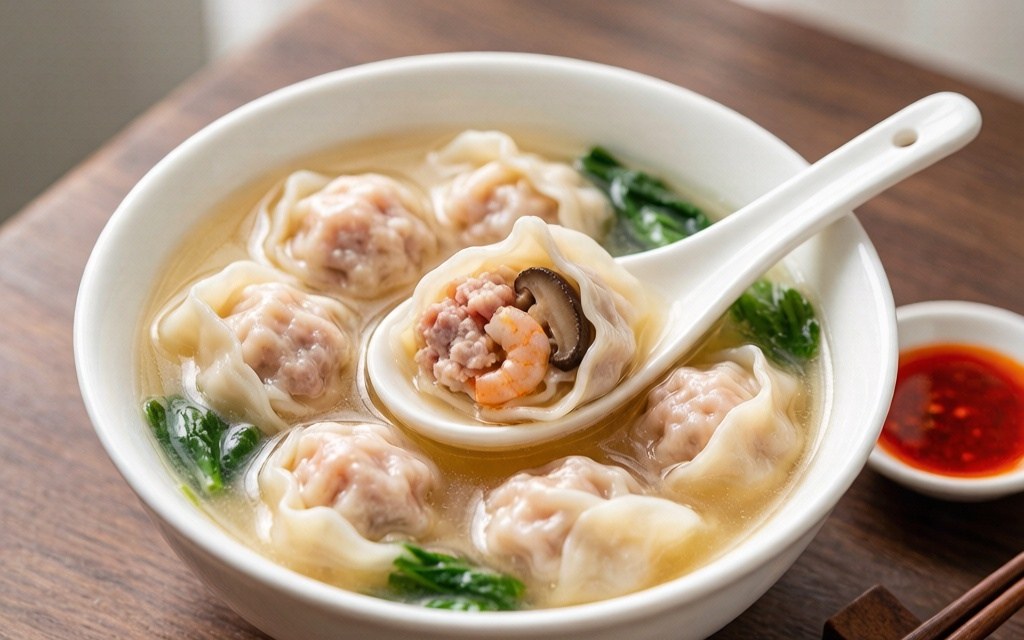
Mini pork and shrimp wontons with wood ear and cabbage, wrapped in cornstarch-dusted homemade wrappers and perfumed with fried shrimp oil — a Chinese freezer staple.
Instructions
-
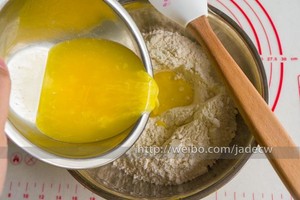 Make the wrapper dough: beat the egg with the water, then add it to the flour a little at a time, stirring until no dry flour remains. It should come together in shaggy clumps — not sticky, not crumbly.
-
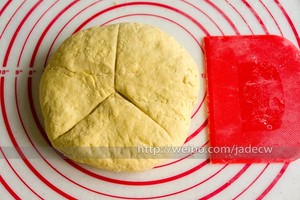 Knead just until the dough holds together, about 2 minutes, divide it in two, and set both pieces aside under an overturned bowl. They will rest while you make the filling.
-
 Dust your work surface generously with cornstarch — far more than feels reasonable. Cornstarch is what keeps these paper-thin wrappers from gluing together, so this is not the step to be shy about.
-
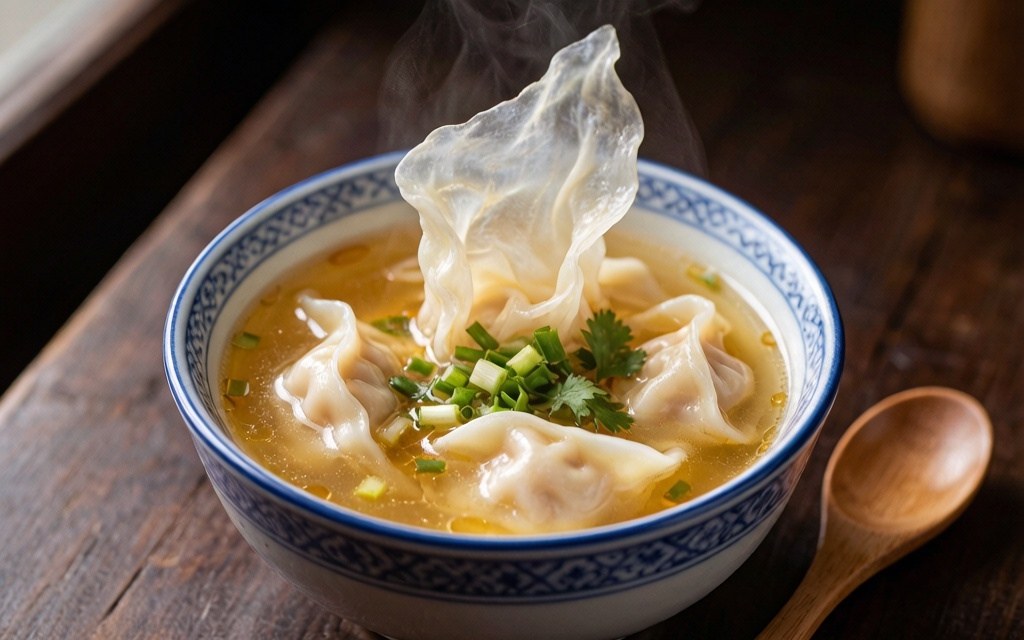
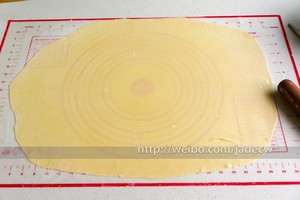 Roll one piece of dough from the center outward with a rolling pin, rotating it a quarter turn after every pass and flipping and re-dusting both sides each time. Keep going until the sheet is thin enough to read a printed page through — genuinely translucent.
-
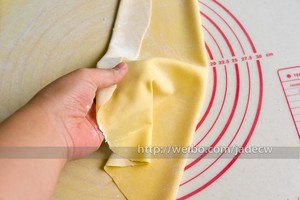 Roll the thin sheet into a loose log, slice it crosswise into 2½-inch (6 cm) sections with a bench knife, then unroll the strips.
-
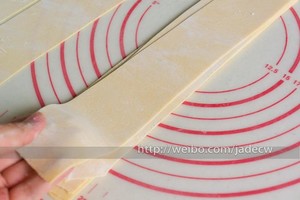 Stack the strips with their ends aligned, dust again with cornstarch, and cut across the stack into 2½-inch (6 cm) squares — your finished wrappers. Slide them straight into a plastic bag or under wrap; they dry within minutes, and cracked wrappers will not fold.
-
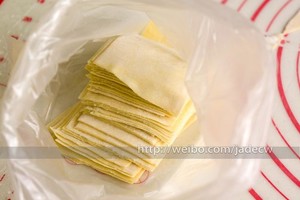 Repeat with the second piece of dough. Just before wrapping, you can lay a stack of 8-10 well-dusted squares together and give them two or three gentle passes with the rolling pin as a group — they stretch thinner and larger. Skip this if your dusting was light, or they will fuse into one sheet.
-
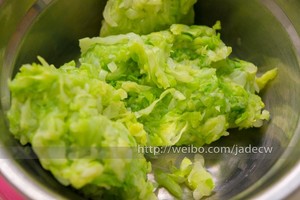
 Prep the cabbage: blanch the leaves in boiling water for 1 minute, shock in cold water, chop finely, then squeeze out the water in a towel until it stops dripping. Weigh out 1¾ oz (50 g).
-
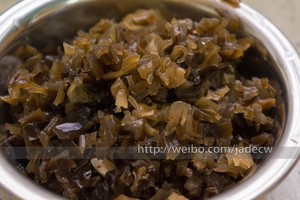
 Prep the wood ear: soak the dried mushrooms in hot water for 20-30 minutes until plump and rubbery, scrub off any grit, then simmer them in fresh water for 20 minutes. Drain, chop finely, and weigh out 1¾ oz (50 g).
-
 Prep the shrimp: peel and devein them, keeping every bit of shell, and chop the meat coarsely.
-
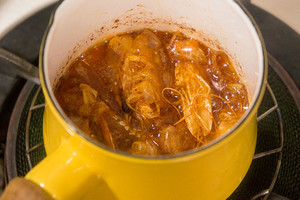
 Make the shrimp oil: fry the reserved shells in 2 Tbsp (30 ml) oil over medium heat, pressing them with a spatula, for 3-4 minutes until the shells turn orange-red and the oil turns coral. Strain and set the red oil aside; discard the shells.
-
 Make the ginger wine: stir the grated ginger into the Shaoxing wine, steep for 10 minutes, then squeeze and discard the pulp, keeping the fragrant liquid.
-
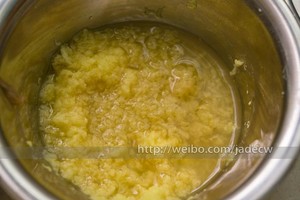 Combine the pork, shrimp, salt, sugar, white pepper, ginger wine and chicken broth in a bowl. Beat with chopsticks or a spoon in one direction, hard, for 3-4 minutes, until the mixture turns pale, sticky and elastic — it should visibly resist the spoon.
-
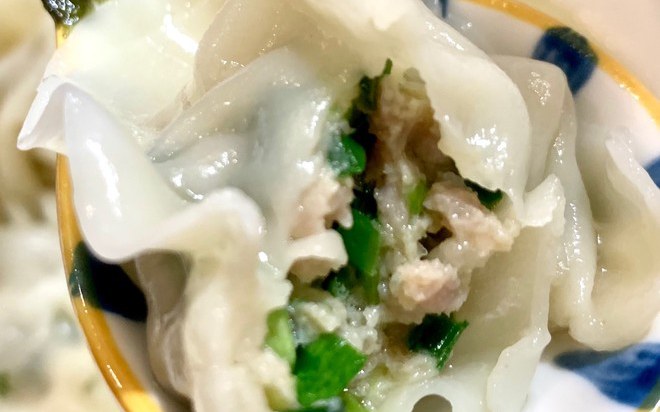
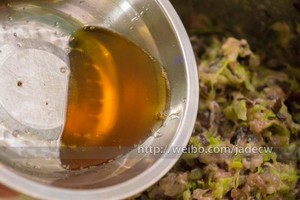
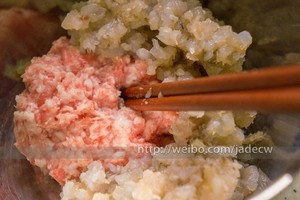 Fold in the cabbage and wood ear until evenly distributed, then drizzle in the shrimp oil and give it a final few strokes. The filling should glisten.
-
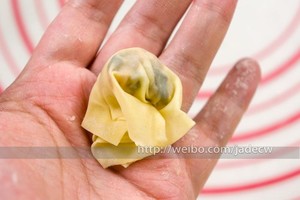
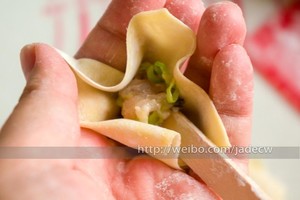
 To wrap, portion about ½ tsp (3 g) of filling — a popsicle stick or small coffee scoop is the perfect tool — onto the center of a wrapper. Lay it in the cupped fingers of one hand, fold the wrapper over the filling, and squeeze the whole wonton in your fist through the gap between thumb and index finger. It pops out looking like a little crinkled goldfish.
-
 Set finished wontons on a cornstarch-dusted tray, not touching. This filling makes about 80-90 mini wontons; to freeze, tray-freeze them until solid and slide them into freezer bags.
-
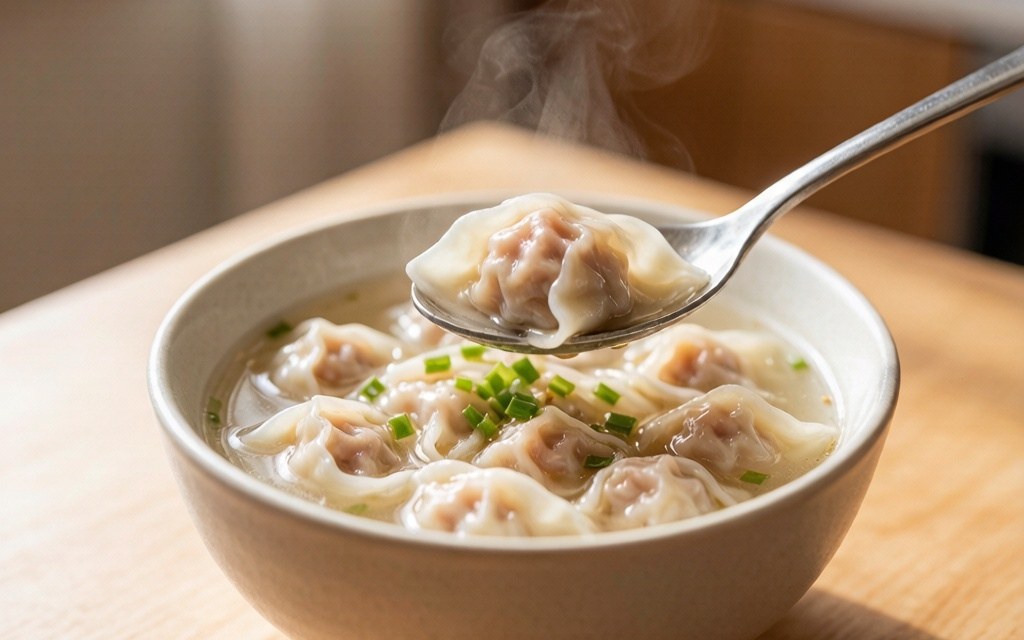
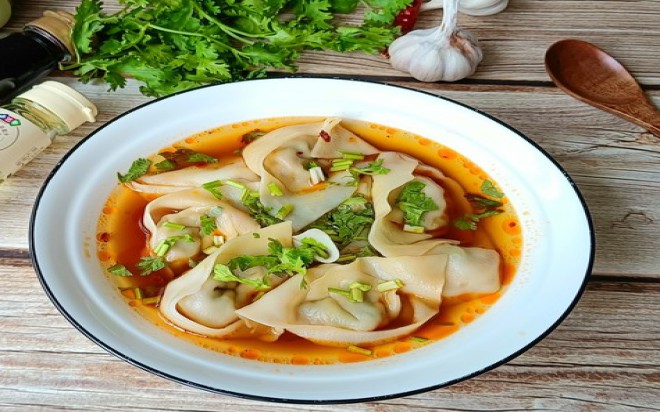
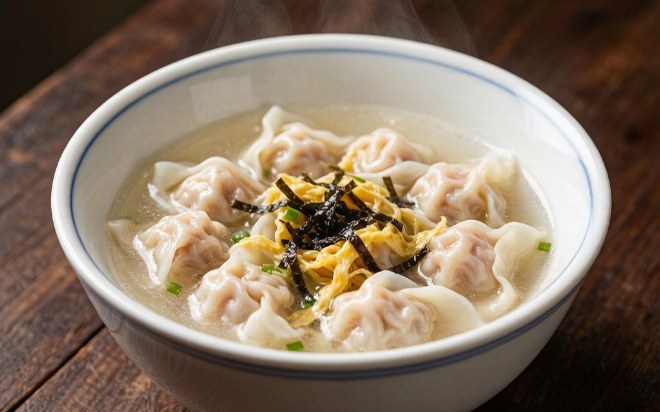
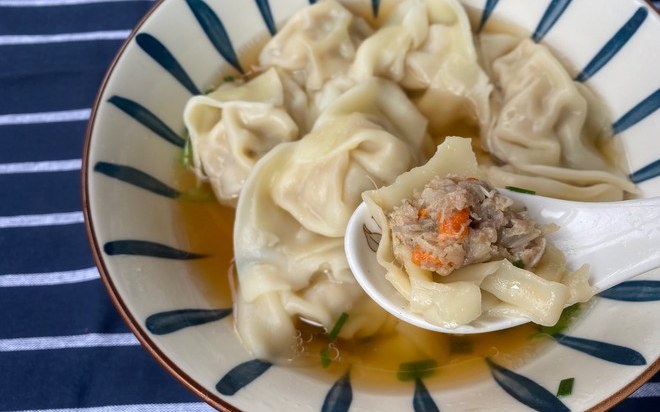
 To cook: drop the wontons into a large pot of boiling water, stirring immediately. When they float, cook 1-2 minutes more — the filling is tiny and cooks fast. Serve 12-15 per person in clear chicken broth with a few drops of the leftover shrimp oil and sliced scallions, or drained with small bowls of black vinegar and light soy for dipping.
Why this recipe works
Every element here exists to survive the freezer, because this is a batch recipe by design — the kind a Chinese home cook makes a hundred of on a Sunday. The wrapper dough uses almost no fat and a modest amount of egg, then rolls out over a thick bed of cornstarch rather than flour. Cornstarch does not absorb into the dough the way flour does, so the sheets stay separate and glassy, and after boiling the wrappers turn translucent instead of opaque and pasty. That translucency is the benchmark for homemade wonton wrappers — if you can read a page through the sheet, it is thin enough.
The filling is beaten hard in one direction before the vegetables go in. That beating extracts the meat proteins until the mixture turns sticky and can hold its own juice — which is why these tiny wontons, with barely half a teaspoon of filling each, still taste plump instead of dry.
The last addition, shrimp oil, is the quiet genius of the recipe. Frying the shells blooms their fat-soluble aroma into the oil, and folding it in at the very end keeps that perfume inside the filling instead of boiling it away in the pot.
About the dish
The "four treasures" are pork, shrimp, wood ear mushroom and cabbage — a meat, a seafood, a fungus and a vegetable, the balance Chinese cooks look for in a well-made filling. This formula comes from a home cook famous for making hundreds of these at a time, bagging them for the freezer, and pulling a dozen out for breakfast all week; the recipe is written to scale cleanly in either direction.
Frying shrimp shells into shrimp oil is an old trick along China's eastern coast, where nothing from the shrimp goes to waste. The oil perfumes the filling from the inside, and a few leftover drops over the serving broth will make the whole bowl taste of the sea without a single extra ingredient.
What to serve with it
These are breakfast food in their natural habitat: 12 to 15 wontons in clear chicken broth with sliced scallions and a few drops of the shrimp oil. For dinner, serve them drained as an appetizer with black vinegar and soy for dipping before a dumpling feast, or float them in a light soup with baby greens stirred through. Either way, keep the chili oil on the table for whoever wants it. And the same pork and shrimp wonton filling makes excellent full-sized boiled dumplings, wrapped a little more generously.
Pro tips
- The cornstarch does two jobs: it keeps the layers separable while you stack and cut, and some of it presses into the wrapper as you roll — part of what makes the skin glossy and translucent after boiling.
- Boiling the wood ear for a full 20 minutes is not optional fussiness — undercooked wood ear stays tough and can be hard to digest.
- Keep a freezer bag of shrimp shells from any shrimp you cook; a 10-minute fry anytime gives you shrimp oil for the filling, the soup, or fried rice.
- The palm-squeeze wrap looks wrong the first ten times and then becomes fast — this is the wrap street vendors use to produce hundreds an hour. Expect about a second per wonton once your hand learns it.
- Halve everything if 80 wontons sounds like a lot. But cooked straight from the freezer, these are the single most useful thing in a Chinese freezer: one pot of boiling water and 3 minutes to a meal.
- A pinch of the sugar is not a Western sweetener habit — it rounds out the shrimp's brininess the way a pinch of salt rounds out caramel.
Storage & leftovers
- Frozen raw wontons keep up to 2 months in freezer bags; cook them straight from frozen, adding 1 minute to the boil.
- The shrimp oil keeps in a small jar in the fridge for up to 1 month and is excellent over rice, noodles or plain soup.
- Cooked wontons keep refrigerated in broth for up to 2 days; reheat to a gentle simmer on the stove — a hard boil makes the wrappers slack.
Frequently asked questions
Where do I find wood ear mushrooms, and can I skip them?
Dried wood ear is in any Asian market's mushroom aisle. Its crisp, almost stem-like crunch is one of the four treasures; in a pinch substitute finely chopped soaked shiitake, though the texture is softer.
Can I use store-bought wonton wrappers?
Yes — the thinnest square wrappers you can find, about 2¼ inches (5.5 cm). Homemade ones are thinner and more translucent, but this recipe is worth making either way.
What if I don't have shrimp oil?
The filling still works with 2 tsp neutral oil, but the oil is the dish's namesake. Save shrimp shells in the freezer and fry them whenever you accumulate a handful — one pan, 10 minutes.
Why is my filling watery?
The cabbage or wood ear was not squeezed dry enough, or the vegetables went in before the meat was beaten sticky. Beat the meat base first until it can hold liquid, then fold in the vegetables.
How spicy are these?
Not at all — this is a mild, family-style recipe. Serve chili oil or black vinegar on the side for anyone who wants heat.
Can I make a big batch like the original?
Yes — the filling and wrapper recipes scale cleanly. Wrap and freeze in meal-size bags, and cook from frozen without thawing.
My wrapper squares keep cracking when I fold them. What went wrong?
They dried out — cornstarch-dusted squares lose moisture within minutes of cutting. Keep every batch under plastic wrap or in a bag while you work, fold with slightly damp hands, and stack dusted squares only right before wrapping.
Can I use this filling for regular dumplings too?
Yes — the same beaten-sticky pork and shrimp filling works for full-sized boiled dumplings or stuffed tofu and peppers. Wrap a little more generously and cook as you would any dumpling; the one-direction beating is what keeps it juicy at any size.