Sichuan · Dumplings & Dim Sum
Sichuan Chili Oil Wontons (红油抄手)
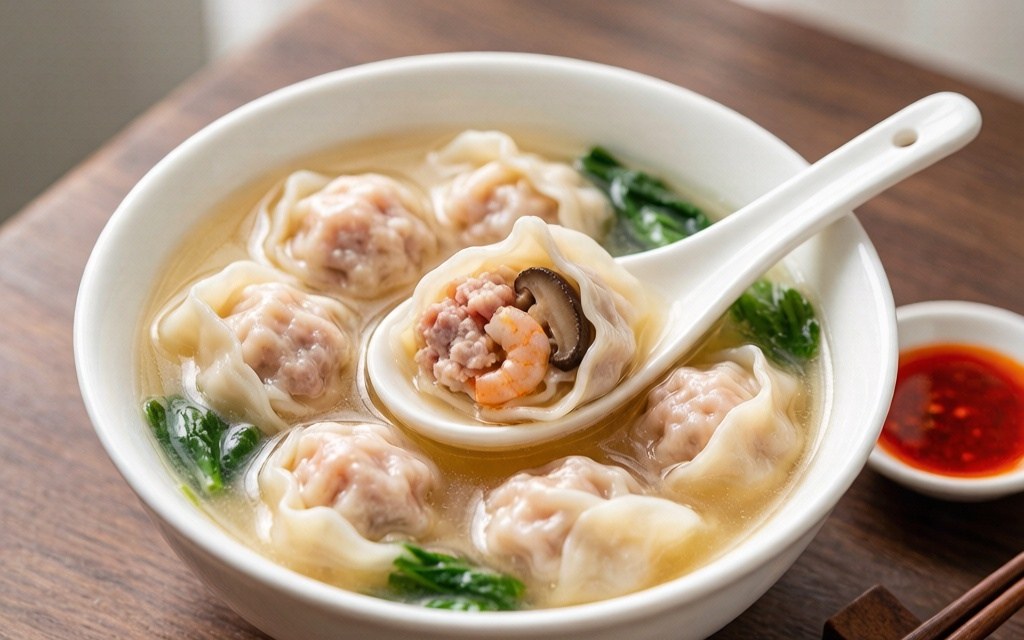
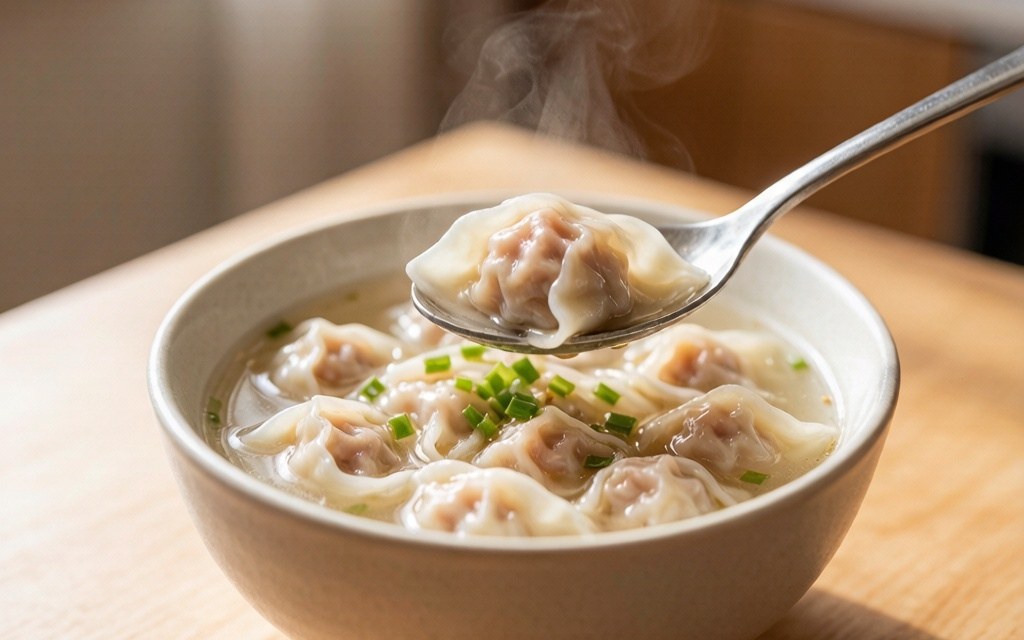
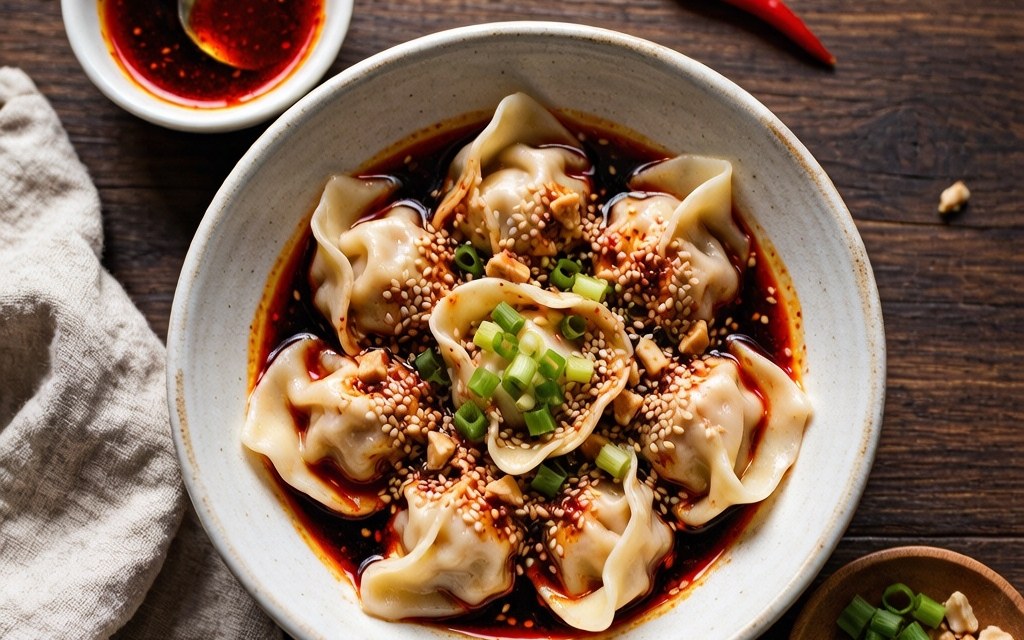
Chao shou: silky pork-and-shrimp wontons in a glossy bowl of chili oil, black vinegar, garlic and a spoonful of lard — wrappers and fold explained step by step.
Instructions
-
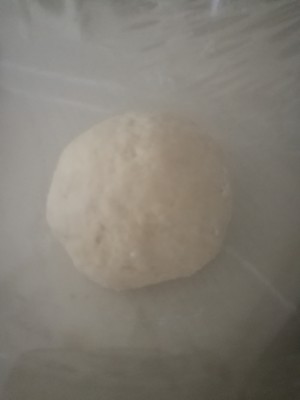 Make the wrapper dough: stir together the flour, cornstarch, beaten egg and water just until no dry flour remains — the dough will be shaggy and soft. Cover and rest at room temperature for 2 hours (or refrigerate up to overnight); this long rest is what lets it roll out thin without fighting back.
-
 Prep the wood ear: soak the dried mushrooms in hot water for 20-30 minutes until plump, trim off any hard root, simmer for 10 minutes, then chop finely.
-
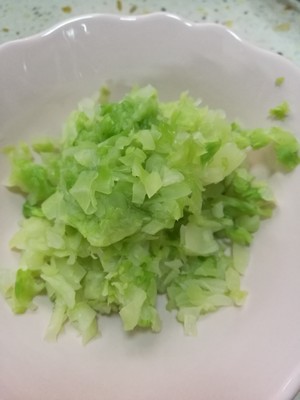
 Prep the cabbage: blanch the leaves for 1 minute, chop finely, and squeeze them in a towel until they stop dripping.
-
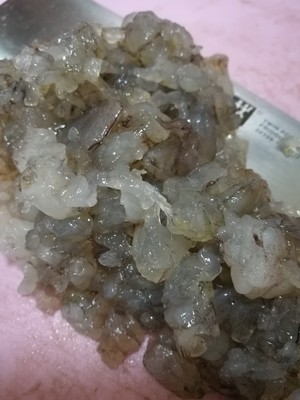
 Prep the shrimp: peel and devein them, keeping the heads and shells. Lay each shrimp flat, smack it with the side of your knife, then chop coarsely — you want visible pieces, not a paste.
-
 Make the shrimp oil: heat 1 Tbsp (15 ml) oil in a small pan over medium heat, add the shrimp heads and shells, and fry for 3-4 minutes, pressing them down, until the shells turn orange-red and the oil turns coral. Strain and set aside 1 Tbsp of the red oil; discard the shells.
-
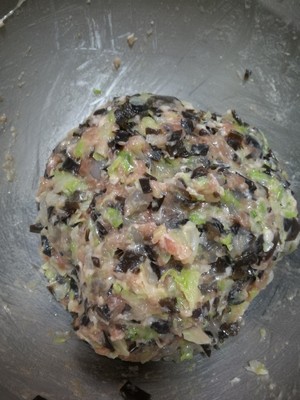
 Make the filling: in a bowl, combine the pork, shrimp, salt, sugar, Shaoxing wine, ground ginger, white pepper and beaten egg — everything except the shrimp oil and cabbage. Grab-mix with your hand, then lift the whole mass and slap it back into the bowl 20-30 times, until it turns sticky and cohesive.
-
 Fold in the cabbage, then the shrimp oil, and mix just until even. Cover and refrigerate while you roll the wrappers.
-
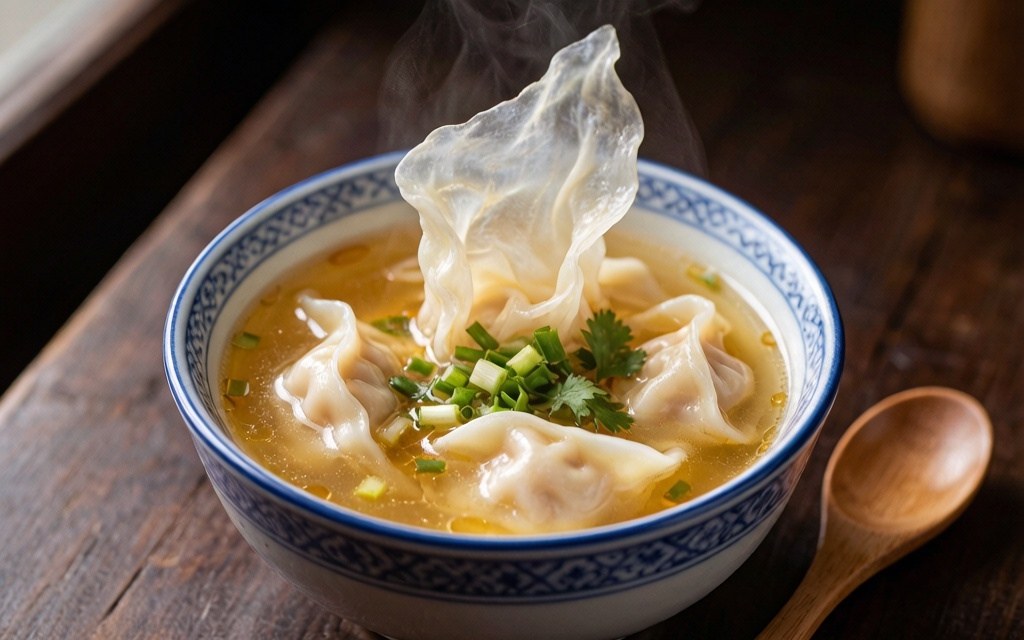
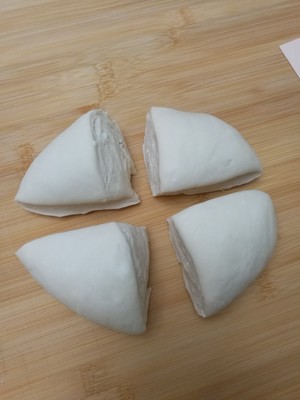
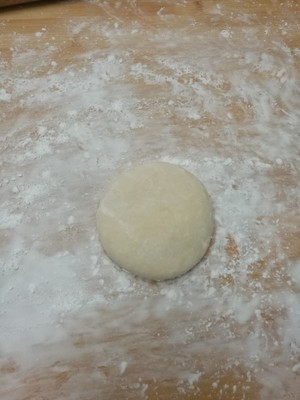
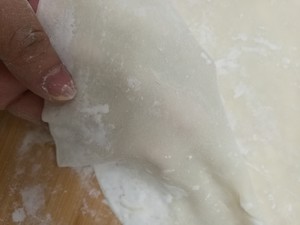
 Roll the wrappers: divide the rested dough into 4 pieces. On a board buried in cornstarch, flatten one piece and roll it from the center out toward 12, 3, 6 and 9 o'clock, then the diagonals — an eight-direction star pattern of passes. Dust, flip, and repeat the full pattern 3-4 times, until the sheet is about 1 mm thick and translucent.
-
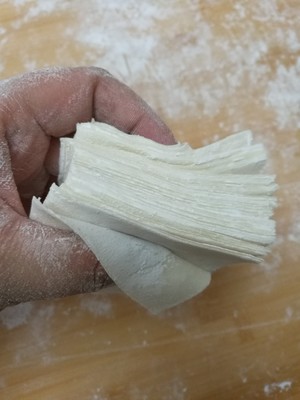
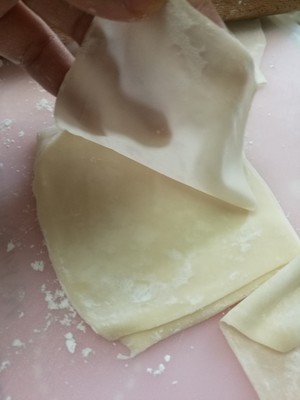 Dust the sheet heavily, cut it into 3-inch (7.5 cm) squares, and slide them into a plastic bag as you cut. Repeat with the remaining dough. If the squares feel thick, stack 8-10 of them, well dusted, and give the stack two gentle passes with the rolling pin just before wrapping.
-
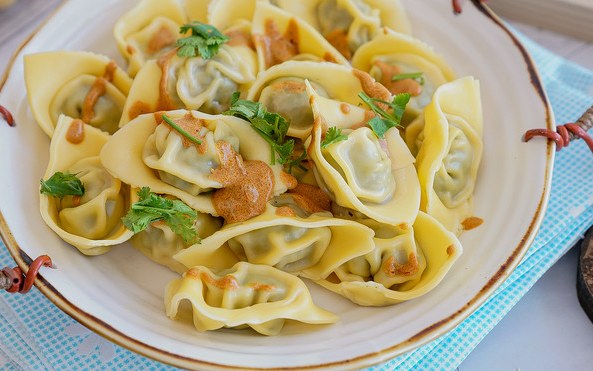
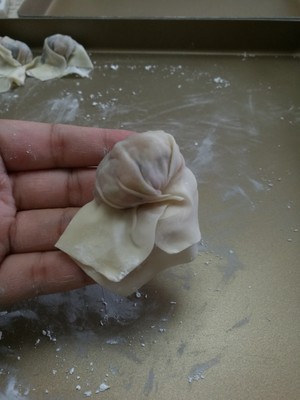
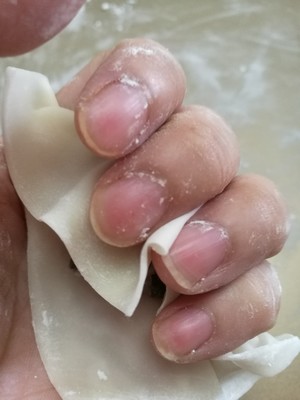 To wrap, put 2 tsp (10 g) of filling just below the center of a square. Fold it in half into a triangle, press the seam closed around the filling and push out the air, then squeeze the whole packet in your fist through the gap between thumb and forefinger and pinch the seam tight. For the classic crossed-hands shape, instead bring the two pointed corners around your index finger and pinch them together — like a tiny tortellini.
-
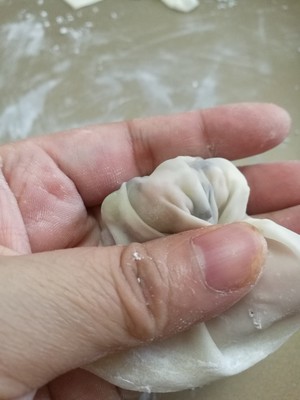 Set the chao shou on a cornstarch-dusted tray. To freeze (recommended — this is a batch recipe), tray-freeze until solid, then bag; they keep 2 months and cook straight from frozen.
-
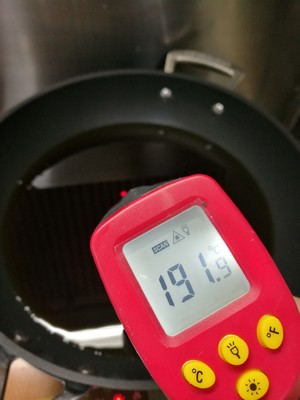
 Make the chili oil: stem the chilies and nick each one with a knife tip so they won't burst in the oil. Pour the oil into a heavy 3-quart saucepan and heat over medium-high until it reaches 450°F (230°C) — just shy of smoking.
-
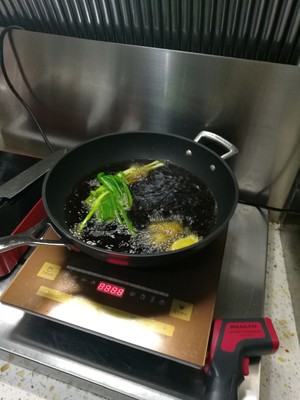
 Off the heat, add the scallion knot and ginger slices and fry them in the residual heat until pale gold and fragrant, 2-3 minutes; fish them out and discard.
-
 Let the oil cool to 350°F (180°C) — a wooden chopstick inserted in it should bubble steadily all over its tip. Add the black cardamom, cinnamon, bay leaves, star anise, Sichuan peppercorns and gromwell root, and let them sizzle gently for 30 seconds.
-
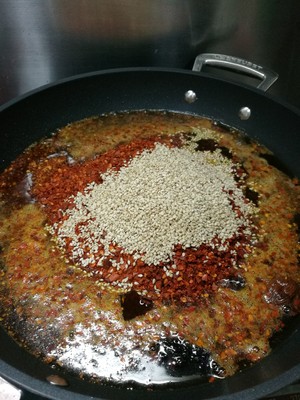 Add the chilies and sesame seeds, set the pan over the lowest heat, and simmer for 10 minutes, stirring now and then — the chilies should blip lazily, not fry violently. Cool completely in the pan; the oil will turn deep ruby. Jar it: you will use about 1 Tbsp per bowl, and the jar keeps for months.
-
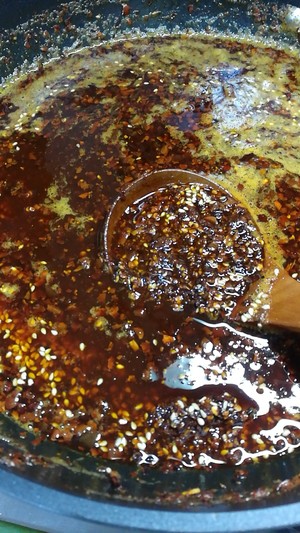 Set out one large bowl per serving, and into each put the chili oil, lard, zha cai, light soy sauce, black vinegar, dark soy sauce, salt, white pepper and minced garlic.
-
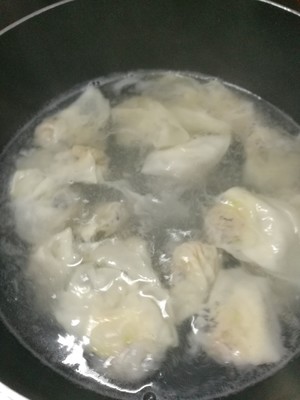 Boil the wontons: bring 4-5 quarts (4-5 L) of water to a rolling boil, drop in the wontons (frozen is fine), and stir immediately. When they float, splash in ½ cup (120 ml) cold water; when the water boils again, splash in cold water once more — two cooling cycles in all. This gentle finish keeps even thin wrappers from bursting.
-
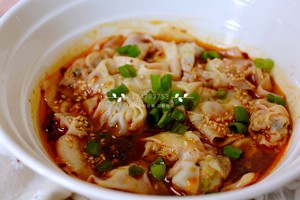 Scoop 2 Tbsp of the hot wonton cooking water into each sauce bowl and stir — the lard melts and the sauce turns glossy. Lift the chao shou straight from the pot into the bowls, shower with sesame seeds and scallions, and eat hot, tossing as you go.
Why this recipe works
The chili oil is built in temperature stages, and each one has a job. The oil goes almost to its smoke point first — hot enough that the scallion and ginger fry quickly into sweetness without soaking up oil. It then cools to about 350°F (180°C) before the whole spices go in: hot enough to bloom their aromatics into the fat, cool enough that nothing scorches and turns bitter. Only at the end do the chilies and sesame meet the oil, simmered gently for ten minutes so the chilies cook soft and edible instead of burning acrid. Rush all of this in one pour and you get oil that tastes of ash.
The wrapper dough kneads cornstarch directly into the flour and then rests a full two hours. The starch weakens the gluten just enough for a paper-thin, tender-chewy skin, and the long rest does most of the rolling work for you.
Finally, the sauce is assembled in the serving bowl and finished with a ladle of hot wonton water: the heat melts the lard and emulsifies the oil, vinegar and soy into a glossy sauce that clings to every wonton instead of pooling at the bottom.
About the dish
Chao shou is what Sichuan and Chongqing call wontons — literally "crossed hands." The story goes that the name comes from the way the wrapper's two corners cross and hug the filling like folded arms, though another telling credits customers who crossed their arms against the cold while waiting for a bowl. Either way, the name travels: the same dumpling is called huntun in the north, yuntun in Guangdong and qingtang in parts of Jiangxi.
Red oil chao shou is the most famous dressed version: a warm bowl painted with chili oil, vinegar, garlic and a spoon of lard, topped straight from the pot. It eats like street food — quick, punchy, warming — and the balance is the point: the vinegar and sugar lean against the chili's burn, and the lard carries it all into something rounder than simply "spicy."
What to serve with it
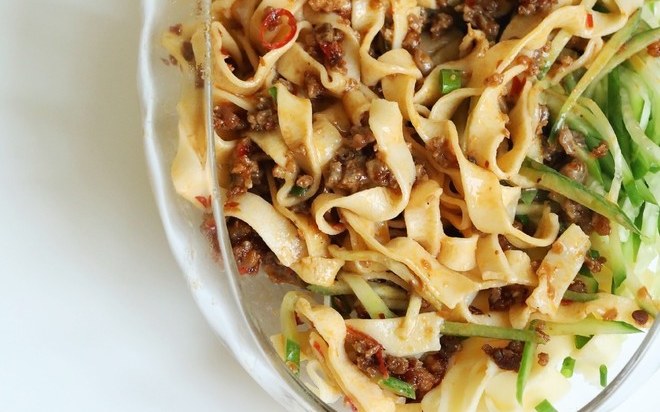
Chao shou is a snack-sized meal: four or five bowls would make plenty for dinner with a cold, crunchy side. The per-bowl formula also doubles as a standalone sichuan wonton sauce recipe — whisk it with hot wonton water and pour it over any boiled wontons on a busy night. A smashed cucumber salad is the classic cooling partner, and if you want to push the street-food theme, a plate of noodles from our street food guide, dressed from the same jar of chili oil, makes the kitchen feel like a Chengdu night market.
Pro tips
- The oil's two temperatures matter: scallion and ginger fried at the smoking-hot stage give sweetness without sogginess, while the whole spices go in at 350°F/180°C so they perfume the oil instead of scorching.
- Gromwell root (zicao) is purely for the jewel-red color Sichuan shops achieve; the oil tastes the same without it.
- Lard sounds old-fashioned but it is the secret to the sauce's silky, clinging texture — it emulsifies with the broth and chili oil. Chicken fat is a fine stand-in.
- Rapeseed oil (caiziyou) is the traditional Sichuan choice, with a nutty, slightly sharp fragrance; if you use neutral canola instead, add ¼ tsp toasted sesame oil per bowl of sauce to compensate.
- This chili oil is a simmered, crisp style — the chilies end up soft and edible, unlike pour-over flake-style oils. Spoon some chili onto every bowl, not just the red oil.
- Freeze the chao shou raw on a tray, then bag; cooked from frozen they need only 1-2 extra minutes and taste no different from fresh.
Storage & leftovers
- The chili oil keeps in a clean jar, refrigerated, for up to 6 months; bring a spoonful to room temperature or warm it briefly before serving for the best aroma.
- Raw chao shou freeze for up to 2 months: tray-freeze until solid, then bag. Boil straight from frozen — never thaw, or the wrappers tear.
- Cooked wontons are best eaten immediately; leftovers keep refrigerated for 1 day and reheat in simmering (not boiling) water for 1 minute.
- The wrapper dough can rest overnight in the fridge; return it to room temperature for 30 minutes before rolling.
Frequently asked questions
How spicy is this?
As written, properly hot — bird's eye chilies bring serious heat. For medium, use 4 oz (110 g) bird's eye and 8 oz (220 g) erjingtiao or Fresno chilies, or simply start with 2 tsp of chili oil per bowl instead of 1 Tbsp.
Can I make the chili oil with dried chilies or flakes instead?
This recipe simmers fresh chilies for a crisp, aromatic, almost sauce-like oil. For a flake-style oil: pour 350°F (180°C) oil over 1 cup (60 g) chili flakes mixed with the sesame seeds and a pinch of salt. Different style, both good.
Where do I find erjingtiao chilies, zha cai and lard?
Erjingtiao is at Sichuan-focused or online stores (Fresno chilies are the closest fresh substitute); zha cai is in every Chinese market's pickles aisle; lard is sold tubbed in most supermarkets.
Can I assemble these ahead?
Yes — that is the design. Wrap and tray-freeze for up to 2 months, and make the chili oil up to 6 months ahead (it improves after a day or two). Dinner becomes a 10-minute boil.
My wrappers keep tearing. What went wrong?
Three usual suspects: the dough rested less than 2 hours, the dusting cornstarch ran out, or the cut squares dried uncovered. Generous cornstarch and a covered stack fix almost everything.
What if I can't eat pork?
Use 9 oz (260 g) total of shrimp and chopped mushrooms in place of the pork, keeping the seasonings the same.
Can I use store-bought wonton wrappers?
Yes — buy thin square wrappers (Shanghai or Hong Kong style), keep the stack covered while you work, and dust with cornstarch. They wrap the same way and cook a little faster; the homemade cornstarch-dough wrappers are simply chewier.
What does chao shou mean?
It is what Sichuan and Chongqing call wontons — literally "crossed hands." One story says the wrapper's two corners cross and hug the filling like folded arms; another credits customers who crossed their arms against the cold while waiting for a bowl.