Cantonese · Braised & Slow-Cooked
Honey Char Siu Pork (蜜汁叉烧)
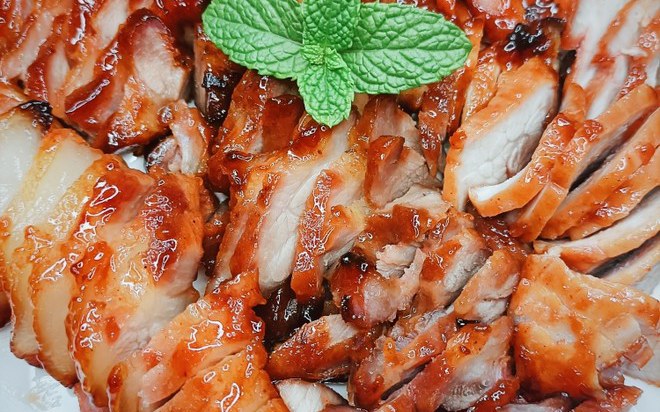
Cantonese honey char siu from the home oven: pork shoulder lacquered in honey and char siu sauce, roasted until the edges caramelize and the inside stays juicy.
Instructions
-
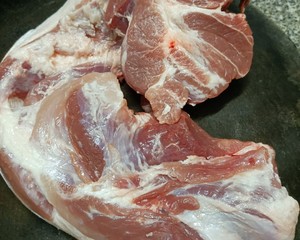
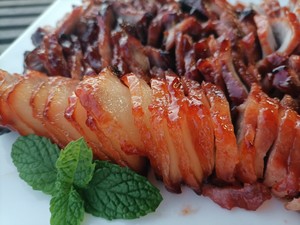 Cut the pork into long, thick strips about 2 inches (5 cm) thick and 4 inches (10 cm) wide, removing any skin first. Wide flat strips mean more caramelized surface — that is where char siu flavor lives. Pat the surfaces dry with paper towels.
-
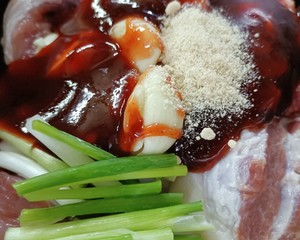
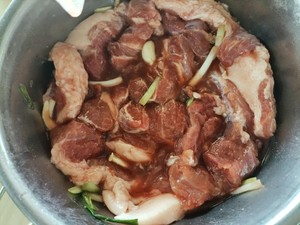
 Marinate: in a large bowl or zip-top bag, combine the ginger, scallions, garlic, honey, char siu sauce and chicken bouillon powder. Add the pork and massage with your hands for a full minute so every face is coated.
-
 Stab the meat all over with a fork — the holes let the marinade reach the center. Cover and refrigerate overnight (at least 4 hours), flipping the strips once halfway so the side sitting in air gets its turn in the sauce.
-
 Set up for roasting: line a rimmed baking sheet with two layers of heavy-duty foil (the honey drips carbonize otherwise) and set a wire rack on top. Position a shelf in the upper-middle of the oven and preheat to 400°F (200°C), top and bottom heat.
-
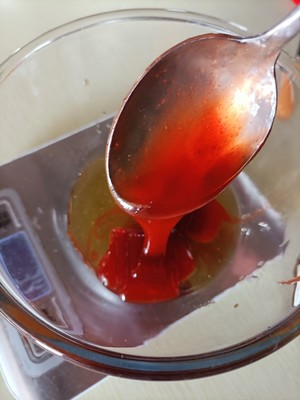 First roast: stir the glaze — the 2 Tbsp honey and 2 Tbsp char siu sauce — until smooth. Lay the strips on the rack, spaced apart, and brush all sides generously with glaze. Roast 20 minutes.
-
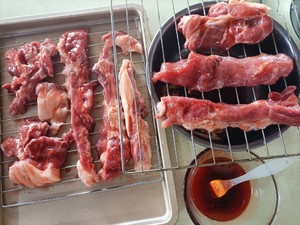 Flip, glaze and finish: turn each strip over, brush the new top with glaze, and roast 25 minutes more (45 minutes total), until the edges are deep mahogany with slightly blackened tips and a skewer at the thickest point releases clear juices.
-
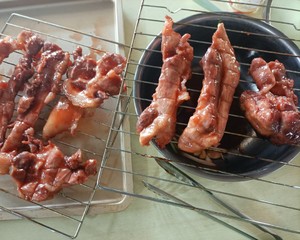 Adjust the color: if the strips look pale rather than lacquered, brush on any remaining glaze and roast 3 to 5 minutes more, checking every 3 minutes — the honey goes from glossy to burnt quickly.
-
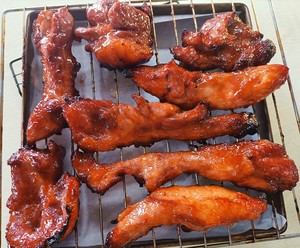 Rest the meat 10 minutes on a cutting board, then slice across the grain about ½ inch (1 cm) thick. Spoon any pan juices over the top and serve.
Why this recipe works
Char siu fails in two predictable ways — dry meat and burnt glaze — and this recipe engineers around both.
1. An overnight, pierced marinade. Stabbing the strips all over with a fork looks crude but does precise work: it opens channels so the salty-sweet marinade seasons past the surface, and those same channels vent steam as the meat roasts, keeping the interior moist. A 4-hour marinade seasons the outside; an overnight one seasons the center.
2. Glazing in stages. Honey caramelizes fast, so the classic method paints it on in coats — one before roasting, another at the flip, more at the end if the color needs pushing. Each coat bakes into the last instead of pooling and scorching, building that lacquered, mahogany shell in layers — proof that real char siu without red food coloring colors itself.
3. Rack roasting. Elevating the strips on a wire rack lets hot air circulate under the meat and drops the burning sugar-drips safely onto foil below. Sitting directly on a pan, the bottoms steam in their own juices and the glaze welds to the metal; on a rack, every face roasts like the top.
About the dish
Char siu (叉烧) translates literally as "fork roasted" — in old Cantonese roast shops, strips of marinated pork hung on long forks over charcoal or in roaring vertical ovens, glazed again and again until lacquered. It is the red-glossed pork hanging in the window of every Chinatown BBQ shop, the one that perfumes the whole block.
The honey version — 蜜汁叉烧, "honey-juice char siu" — is the home oven's answer: the same marinade and the same repeated glazing, minus the rotisserie. Families across Guangdong roast it on weekend afternoons precisely so there will be leftovers for noodles and fried rice all week. Authentic char siu is not the neon red of some Western takeout; the color should be deep brick-red to mahogany from the sauce and caramelization, and the edges just barely charred.
What to serve with it
Slice it over plain steamed rice with a spoon of pan juices — that is the canonical meal. Shred the leftovers into noodles, fold them into egg fried rice, or lay thin slices at room temperature on a table of braised dishes. A clear green-vegetable soup keeps the meal from being all lacquer, and kids will happily trade their greens for extra honey-drizzled slices. Day-old strips are the reason Cantonese families roast on weekends — char siu fried rice the next morning is the classic second life. To reheat, warm the slices in a covered skillet with a spoonful of water — the steam keeps them juicy.
Pro tips
- Choose pork shoulder or neck, not loin. Char siu needs fat threaded through the meat; lean loin roasts into dry, chalky slices no glaze can rescue.
- The rack matters as much as the oven: air under the strips cooks them evenly and keeps the bottoms out of the burning glaze drips. The foil underneath is your self-cleaning plan, not an option.
- If your oven runs hot and the edges blacken before minute 40, tent loosely with foil and drop the temperature to 350°F (180°C) for the remainder.
- Brush in thin coats rather than one thick one — each coat bakes into the last and builds the lacquer instead of pooling and scorching.
- Char siu improves overnight: slice only what you are serving and keep the rest whole — cold strips slice cleaner and taste deeper the next day.
- Discard the leftover raw marinade; it has touched raw pork. The glaze you mix fresh is what flavors the roast.
Storage & leftovers
- Refrigerate whole or sliced in an airtight container for up to 4 days; the flavor is often better on day 2.
- Reheat slices in a covered skillet with 1 Tbsp water over medium-low for 2 to 3 minutes, or microwave at 60% power for 1 minute.
- Freeze up to 2 months, tightly wrapped; thaw overnight in the fridge before reheating.
- Leftover char siu is prime fried rice and noodle material — dice or shred it cold and add it at the end of cooking.
Frequently asked questions
Can I marinate for less than overnight?
Yes — 4 hours is the minimum. But the salt and sugar need a full night to season through the fork holes, and overnight batches roast to noticeably better color and depth.
I can't find char siu sauce. What can I substitute?
Mix 2 Tbsp hoisin sauce + 1 Tbsp honey + 1 tsp soy sauce + ¼ tsp five-spice powder to replace each 2½ Tbsp of char siu sauce. It lands close to the real thing, though the jarred sauce is worth buying — one bottle lasts a year.
Why did my glaze burn?
Honey scorches fast. Keep the rack in the upper-middle position (not the top), brush in thin coats, and tent with foil as soon as the edges go darker than mahogany. If it is already burnt in spots, shave those edges off after resting.
Is char siu spicy?
Not at all — it is sweet, savory and aromatic. There is no chili anywhere in the classic Cantonese version.
Can I do this on a grill?
Yes, over indirect medium heat with the lid closed, glazing only in the last 15 minutes so the honey does not flare. Charcoal gets you closest to the original roast-shop flavor.
Can I make it ahead?
It is a natural make-ahead dish: roast a day early, cool, and refrigerate whole. Slice cold — the slices hold their edge better — then warm in a covered skillet with a splash of water.
Why isn't my char siu red like the roast shop's?
There is no food coloring or red fermented bean curd in this version — the deep brick-red to mahogany comes from repeated honey glazing and caramelization, not dye. If you want the shop-red hue, look for a char siu sauce that lists red fermented bean curd among its ingredients; the flavor here is complete without it.