Chinese home style · Dumplings & Dim Sum
Rainbow Pork Cabbage Dumplings (四色白菜饺子)
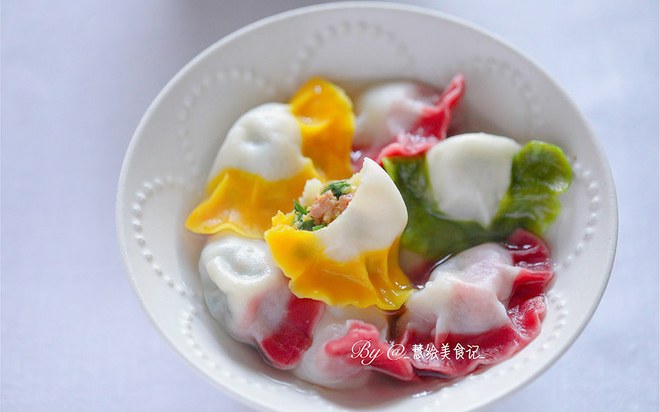
Four vegetable-dyed doughs — pumpkin, spinach, butterfly pea, red yeast — wrap a white core, so every dumpling shows a colored rim over juicy pork filling.
Instructions
-
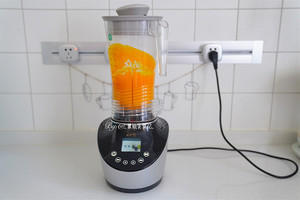 Start the yellow base: steam 100 g peeled pumpkin chunks over boiling water for 12–15 minutes, until a chopstick slides through easily, then mash or blend to a completely smooth puree with no added water. Measure out 35 g (2½ Tbsp).
-
 Make the green juice: blend 60 g (2 big handfuls) spinach leaves with no added water, then strain through a fine-mesh sieve twice — the finer, the better. Measure 33 g (2½ Tbsp) juice and stir in the baking soda, which keeps the green from browning.
-
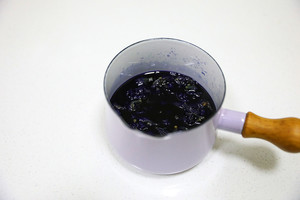
 Make the blue tea: pour ⅓ cup (80 ml) just-boiled water over the butterfly pea flowers, steep 10 minutes, then strain. Measure out 30 g (2 Tbsp) of the deep blue tea.
-
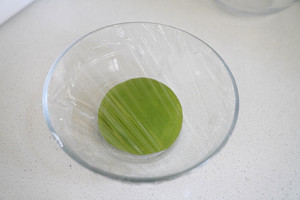 Make the red water: stir the red yeast rice powder into 2½ Tbsp (33 g) warm water until fully dissolved with no gritty specks.
-
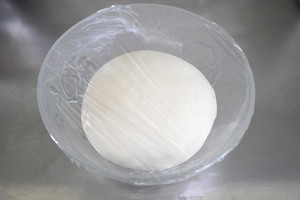
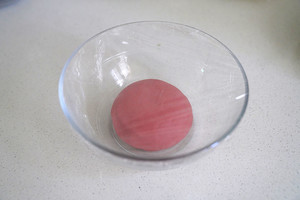 Mix the white dough: combine the flour, ¼ tsp salt and water, knead 3–4 minutes to a smooth, medium-soft ball, and cover with plastic wrap.
-
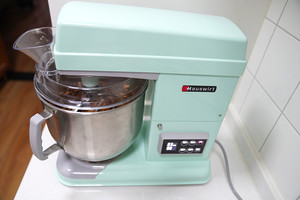 Knead each colored dough in its own bowl: stir its colored liquid into 50 g flour with ⅛ tsp salt, then knead 3 minutes to a smooth ball. Add a few drops of water if crumbly or a dusting of flour if sticky — each puree carries different water. Cover every ball and rest all of them 30 minutes while you make the filling.
-
 Season the pork: in a bowl, combine the ground pork, ginger, both soy sauces, soybean paste, Shaoxing wine, oyster sauce, thirteen-spice, bouillon, white pepper and the Sichuan pepper tea. Stir in one direction with chopsticks for 2–3 minutes, until the mixture turns sticky and paste-like. Divide between two bowls.
-
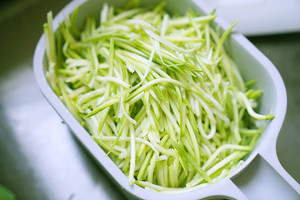
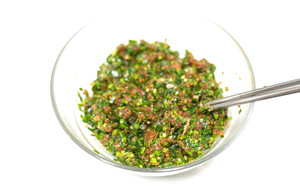 Zucchini filling: toss the shredded zucchini with ¼ tsp salt and rest 10 minutes, then squeeze handfuls hard over the sink until you have about 63 g of dry shreds. Chop them a little, toss with the 1 tsp oil, then fold into one bowl of pork with the sesame oil and scallion.
-
 Chive filling: toss the chopped chives with 1 Tbsp peanut oil to coat every piece, then fold into the second bowl of pork with the sesame oil and ⅛ tsp salt. Cover both bowls and refrigerate while you shape.
-
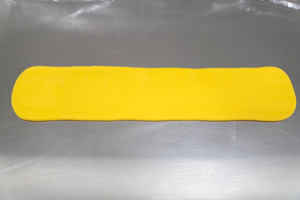 Build the first two-tone rope: roll one quarter of the white dough (about 75 g) under your palms into a rope 15 cm (6 inches) long. Roll the green dough into a rectangle about 16 × 12 cm (6 × 5 inches).
-
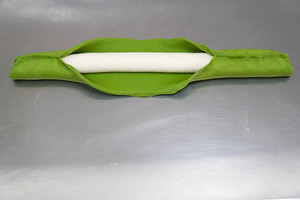
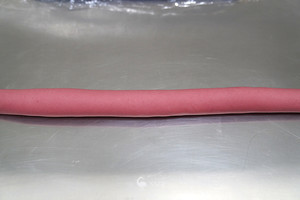 Lay the white rope along one long edge of the rectangle and roll it up snugly so the colored sheet wraps around the white core; pinch the seam tightly closed, then roll the wrapped rope gently on the board a few strokes to lengthen it to about 20 cm and bond the two doughs together. Repeat with the yellow, blue and red, keeping finished ropes covered.
-
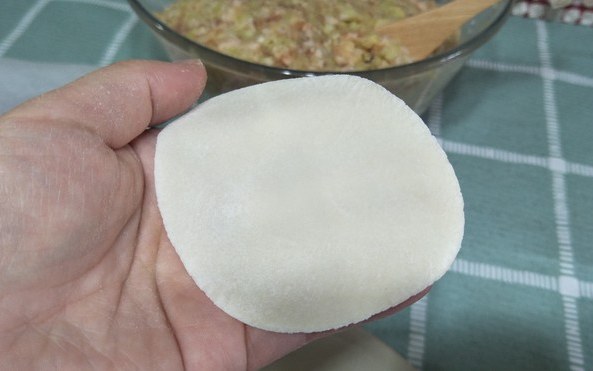
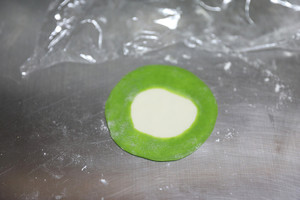
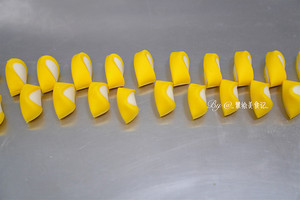 Cut each rope into 10 pieces with the rope standing upright, rotating a quarter turn between cuts so the pieces stay round instead of slumping flat. Flatten each piece with your palm, then roll it into a wrapper 9–10 cm (3½–4 inches) across — you will see a white center and a colored rim.
-
 Shape: hold a wrapper in your palm and add a heaping tablespoon of filling. Fold the circle in half and pinch the center shut, then pleat 3–4 times from each end toward the middle, squeezing with thumbs and index fingers so the pleats fan out like the leaves of a napa cabbage. Simple half-moon pleats work too.
-
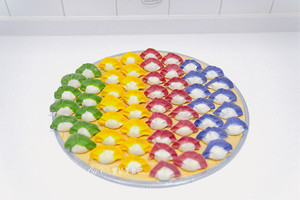 To boil: bring a large pot of water to a rolling boil. Add one third of the dumplings, stirring so they do not stick; when the water returns to a boil, pour in ½ cup cold water (点水), and repeat twice more. The dumplings are done about 1 minute after they float and look puffed, 6–8 minutes total.
-
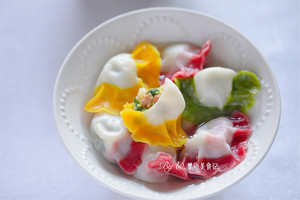 Lift out with a slotted spoon and serve hot. Boiling keeps the colors brightest — steaming noticeably mutes the blue and yellow (see Tips).
Why this recipe works
Colored dumplings look like a pastry project, but each pigment follows its own simple logic once you know it.
1. Match the dye to the plant. Pumpkin's orange is fat-friendly carotene, so it goes straight in as puree — no straining, no fuss. Spinach's chlorophyll is fragile: heat and acid turn it olive-brown, which is why the juice is strained fine and a pinch of baking soda holds the green. Butterfly pea owes its blue to anthocyanins, the same pH-reactive pigments as red cabbage, and red yeast rice brings a stable fermentation pigment that water extracts in minutes. Which means dumpling wrappers without food coloring — every shade comes from a plant, not a bottle.
2. The white core is the engineering. Puree replaces part of the water in colored doughs, and all that plant matter gets in gluten's way — colored dough alone is weaker and tears when you pleat. Wrapping each colored sheet around a plain white rope puts a strong, elastic skeleton inside every wrapper while the color rides on the outside. It also happens to look like a flower when rolled out.
3. The filling is managed for moisture. Pork is stirred in one direction until sticky, so the proteins trap the seasoning liquid instead of letting it pool. Zucchini is salted, squeezed hard, then oiled before it meets the meat — the oil barrier keeps whatever water remains from bleeding out during cooking.
About the dish
Colored dumplings are festive northern Chinese home cooking — the kind of thing families make when children are at the table, because the novelty gets everyone rolling. The Chinese name here is literally "four-color cabbage dumplings", and the cabbage refers to the shape: the pleats are pinched so they fan outward like the leaves of a napa cabbage, a vegetable whose name sounds like "hundred riches" — a favorite homophone at New Year, when dumplings symbolize little ingots of gold.
Spinach-green and pumpkin-gold doughs have been around for decades in Chinese home kitchens. Butterfly pea is the newcomer, borrowed from Southeast Asian desserts, and it is the most temperamental of the four — expect a blue that drifts toward gray as it cooks. Boiling rather than steaming keeps every color closest to raw, which is how the original author serves them.
What to serve with it
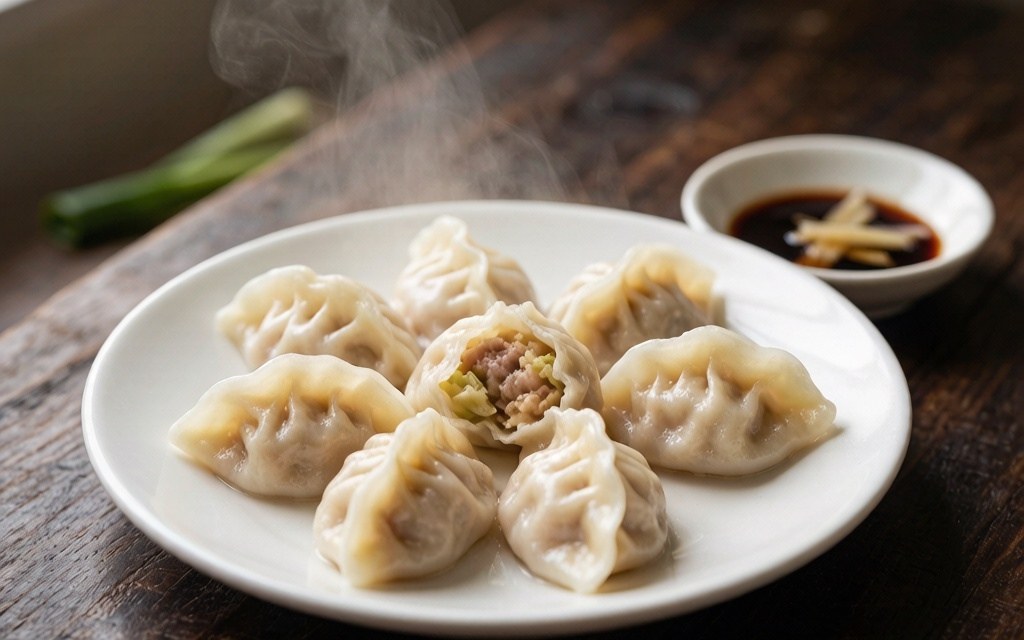
A platter this colorful wants a quiet backdrop: black vinegar with slivered ginger for dipping, plain steamed rice, and something brothy from our soups collection. Leftover boiled dumplings are excellent pan-fried crisp the next morning with a fried egg on the side.
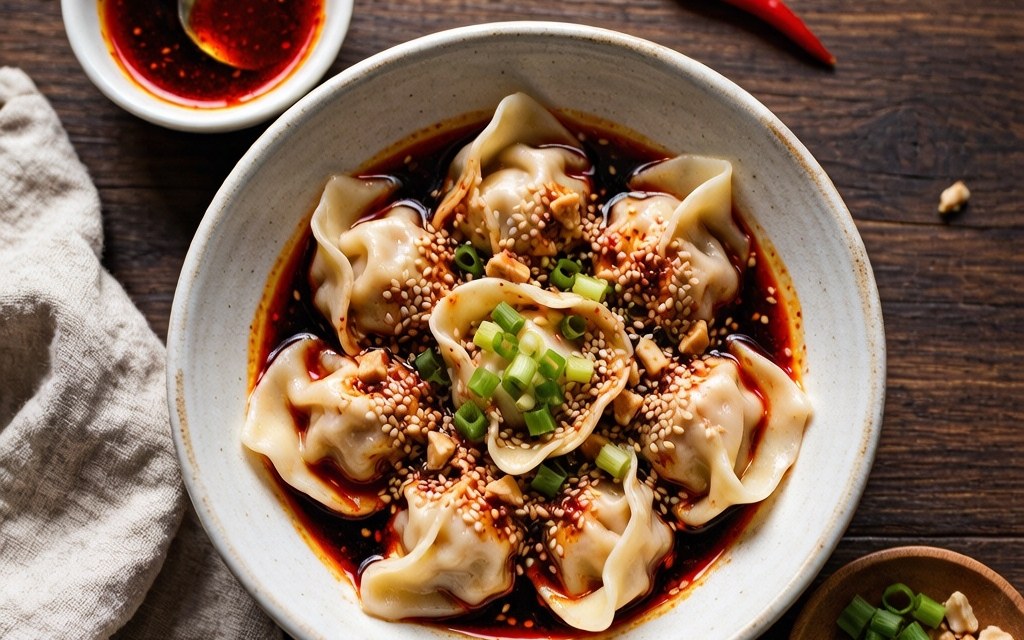
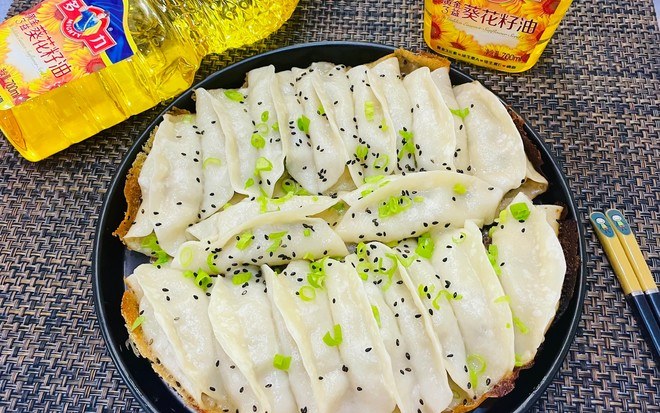
Set out three dips and let everyone choose: black vinegar, chili oil, and a mild sesame-soy for children. Leftover raw dumplings freeze on a tray and boil from frozen in 6 minutes; leftover cooked ones pan-fry into potstickers the next morning — the colored rims look even better crisped. It doubles as a make-ahead Lunar New Year dumpling project for kids — helpers cut ropes and pinch half-moons while you boil.
Pro tips
- The white core is not just for looks: vegetable purees weaken gluten, so a white center gives every wrapper the strength to hold juicy filling while the colored rim brings the looks.
- Always toss watery vegetables with oil before they meet the seasoned pork — the fat coats the shreds so they cannot weep into the filling and make it sloshy.
- Squeeze the zucchini until you think it is dry, then squeeze again; wet filling is the number one cause of dumplings that burst in the pot.
- Colored doughs dry out and crack faster than plain dough. Keep every ball, rope and cut piece under plastic wrap until the second you touch it.
- Boil rather than steam when you can: boiled dumplings keep almost all their color, while steaming dulls the blue and yellow within minutes.
- Butterfly pea is pH-sensitive and may drift gray-blue after boiling — that is normal and the flavor is untouched. A squeeze of lemon in the dipping sauce turns the blue edges lavender.
Storage & leftovers
- Freeze uncooked dumplings on a tray, then transfer to freezer bags for up to 2 months; boil from frozen with 1–2 extra minutes.
- Cooked leftovers keep 2 days refrigerated; pan-fry them the next morning in a little oil — crisped leftover boiled dumplings are a treat.
- Unused colored dough keeps wrapped in the refrigerator for 1 day; knead briefly before rolling.
Frequently asked questions
I cannot find butterfly pea flowers — can I still make the blue dough?
Yes. Simmer a quarter of a small red cabbage, sliced, in 1 cup water for 10 minutes, strain, and stir in ¼ tsp baking soda — the juice turns teal-blue. Or simply make three colors; the technique stays the same.
What replaces red yeast rice powder?
One drop of red food coloring stirred into the water, or ½ tsp beet powder. Red yeast rice powder itself is cheap at Asian markets and keeps for a year.
Can I use a stand mixer?
Yes — the original author does: speed 2 until no dry flour remains, then speed 4 for 3–4 minutes to a smooth ball. Keep the soft colored doughs on speed 2 so they do not over-tighten.
Why did my colored wrappers tear while pleating?
Puree doughs are more fragile than plain dough, and they tear when they dry out. Keep pieces covered, roll each wrapper just before filling it, and rely on the white core for stretch instead of pulling the colored rim thin.
Can I use napa cabbage in the filling instead of zucchini?
Absolutely — salt the chopped napa the same way, squeeze it hard, and toss it with oil before folding it in. This recipe's zucchini and chive versions are simply the author's two favorites.
Can I freeze the shaped dumplings?
Yes — freeze them in a single layer on a floured tray until hard, then bag for up to 2 months. Boil straight from frozen, adding 1–2 minutes.
Why did my colored dumplings fade or turn gray after cooking?
Boiling keeps the most color — steaming dulls the blue and yellow within minutes. Butterfly pea is also pH-sensitive and naturally drifts gray-blue in the pot; a squeeze of lemon in the dipping sauce turns the edges lavender again.
Can children help make rainbow dumplings?
Yes — it is a classic make-ahead Lunar New Year dumpling project for kids. Young helpers can roll ropes, cut pieces, flatten wrappers and pinch simple half-moon pleats while an adult handles the filling.