Sichuan · Stir-Fry Classics
Three-Chili Laziji (山城辣子鸡)
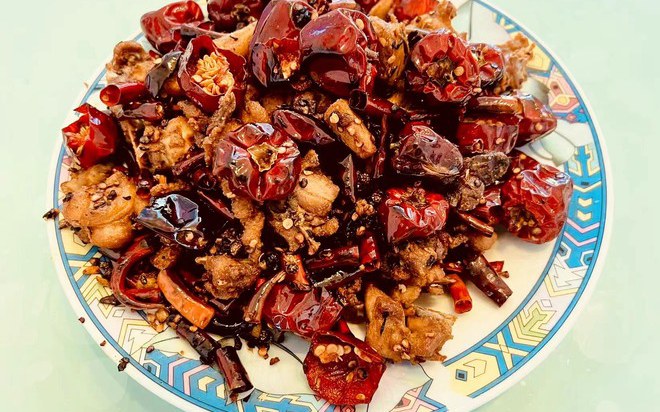
Chongqing-style laziji built on three dried chilies — heat, color and aroma — with egg-yolk-marinated chicken fried twice into crisp nuggets in a mountain of red.
Instructions
-
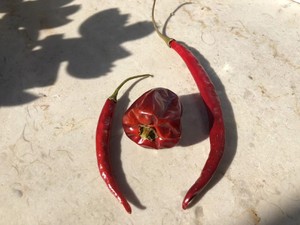 Prep the chilies: snip all three kinds into ¾ inch (2 cm) sections with scissors, shaking out the loose seeds into the trash (they burn bitter). Cut half of the mild color chilies in half and leave the rest whole — a mix of cut and whole peppers looks alive and releases flavor gradually.
-
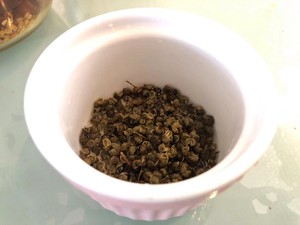
 In a small bowl, stir the Sichuan peppercorns with the baijiu or vodka and let them sit. The alcohol dissolves and carries the numbing, citrusy oils far better than water — this little soak is what makes the tingling actually reach the chicken.
-
 Chop the chicken into even 1 inch (2.5 cm) pieces, straight through the bone where it exists. Small, uniform pieces cook through in the fry and grab more flavor per bite — this is not a dish for big chunks.
-
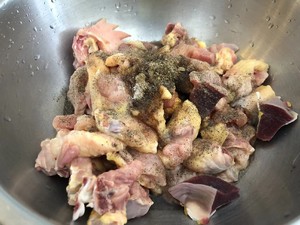 Marinate: in a bowl, mix the chicken with the salt, Shaoxing wine, light soy, five-spice, ground Sichuan pepper, black pepper, MSG (or sugar), and the peppercorn-soaked baijiu. Massage with your hands for a minute until the liquid is absorbed.
-
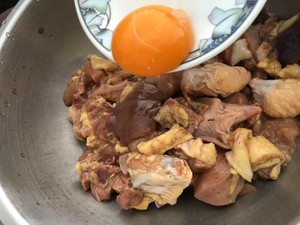 Add the egg yolk and mix until every piece is coated golden — the yolk is why restaurant laziji fries up amber instead of pale. Then add the cornstarch and toss until each piece wears a dry, tacky coat, and finish with the 1 tsp oil so the pieces separate in the hot oil instead of clumping. Cover and refrigerate for 45 minutes.
-
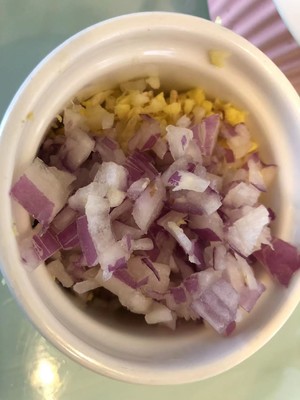
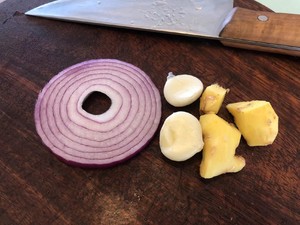 While the chicken marinates, mince the onion, ginger and garlic and keep them beside the stove.
-
 Heat the oil in a wok or heavy pot to 350°F (180°C) — a wooden chopstick inserted should stream steady small bubbles. Fry the chicken in two batches for 5 minutes per batch, until cooked through: pull the largest piece out and cut it open at the bone to be sure. Scoop the chicken out and skim the crumbs out of the oil so they don't burn.
-
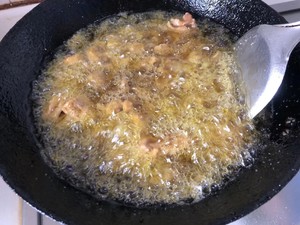 Raise the oil to 400°F (200°C) and return all the chicken for a 30-second second fry, until the crust is deep golden and audibly crisp. Drain well on a rack or paper towels.
-
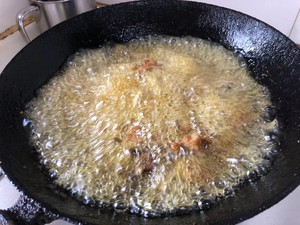 Leave about 2 Tbsp of the frying oil in a clean wok over medium heat and sauté the minced onion, ginger and garlic for 30 seconds, until fragrant but not browned.
-
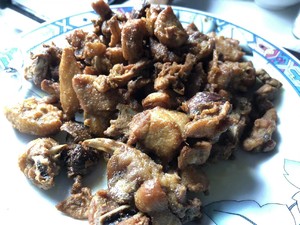 Add the chilies and turn the heat to medium-low. Stir constantly for 2-3 minutes, until they turn glossy brick-red and the kitchen smells intensely fragrant — this is the soul of the dish. Watch them like a hawk: peppers that go past dark red into black will seed the whole wok with bitterness.
-
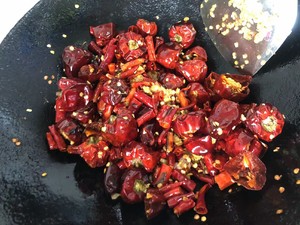 Return the fried chicken, raise the heat to medium, and toss everything for 1-2 minutes so the dry chili perfume coats the hot crust. Transfer to a platter, pile it high, and scatter the sesame seeds or peanuts over the top.
-
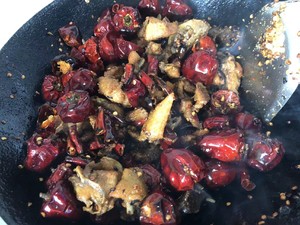 Serve straight away, and tell your guests the truth: this is a hunting dish — the best pieces hide in the chilies, and eating a stray pepper by accident is part of the game.
Why this recipe works
Good laziji is not "chicken with a lot of chilies" — it is an architecture, and this version builds it deliberately.
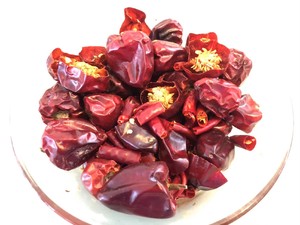
1. Three chilies, three jobs. One kind of dried chili cannot simultaneously be fiery, red and fragrant, so Chongqing kitchens blend them: small bird's-eye-type chilies carry the heat, broad red ones carry the color, and round, wrinkled ones carry a raisiny perfume that survives frying. Blending them means the finished mountain tastes layered instead of flat — you get aroma first, tingle second, burn last — and the ratio is also how to make laziji less spicy: simply shift it toward the mild red chilies.
2. Alcohol blooms the numbing pepper. The signature má of Sichuan peppercorns comes from oils that dissolve far better in alcohol than in water. A teaspoon of baijiu (vodka works) soaked into the peppercorns before the marinade carries that tingle into the meat itself, instead of leaving it stranded in the chili pile.
3. Yolk, starch, oil — then fry twice. The egg yolk coats each piece in fat and pigment for a golden crust; cornstarch over it fries into a shell; the final teaspoon of oil keeps the pieces from welding together. The two-stage fry (5 minutes at 350°F/180°C to cook through, 30 seconds at 400°F/200°C to blister) gives you meat that is done at the bone with a crust that crackles — the same principle as French fries, and just as non-negotiable.
About the dish
Laziji (辣子鸡) means simply "chicken with chilies", but the version the world fell in love with comes from the hills above Chongqing — 山城, the Mountain City, which is the source of this dish's name. The story goes that in the 1990s a roadside restaurant on Gele Mountain started serving fried chicken buried under a landslide of dried chilies, and drivers queued down the mountain for it; clones spread across China within a few years.
The joke every Chongqing person knows: you order laziji and spend the meal hunting for chicken among the peppers. The chili mountain is not waste — it is the cooking medium, the perfume and the theater all at once. Sichuan restaurants keep the ratio of chilies to chicken absurd on purpose; if you can see the chicken immediately, someone skimped.
What to serve with it
Plain rice is the fire extinguisher — put a big pot of it on the table from the rice page before anything else. A cold, vinegar-sharp salad from the cold dishes collection cools mouths between rounds, and an ice-cold drink is not optional, it is strategy. The ritual matters too: most of the chicken is fished out of the chilies, so give everyone a small plate and teach newcomers to hunt. Leftovers keep two days refrigerated and re-crisp in a 180°C/350°F oven for about 8 minutes. The chilies themselves are not for eating whole — they season the oil.
Pro tips
- The three-chili architecture is the whole idea: small hot chilies bring fire, big red ones bring that lacquered crimson look, and round Cascabel-type ones bring a raisiny aroma. All three together taste layered; one kind alone tastes flat or one-note.
- Soaking Sichuan peppercorns in a teaspoon of strong liquor before they go into the marinade is a restaurant trick — capsaicin-adjacent numbing oils are alcohol-soluble, so the tingle lands in the meat instead of floating on top.
- The egg yolk is doing double duty: it colors the crust golden and its fat carries flavor, while the cornstarch over it fries into a shatter-crisp shell that keeps the meat inside juicy through two fry passes.
- Skim the crumbs from the oil between fry batches — stray starch bits burn, turn the oil acrid, and spot the second batch black.
- Nobody eats the chili pile — it is aroma, presentation and a treasure map, not a salad. Still, warn guests: a few peppers are halved and hot inside.
Storage & leftovers
- Refrigerate leftovers (pick out the chicken from the chilies first) in a sealed container for up to 2 days.
- Re-crisp the chicken in a 400°F (200°C) oven or air fryer for 6-8 minutes — the microwave will make the crust chew.
- Freezing is not recommended: the fried crust goes stale and the meat dries out when thawed.
Frequently asked questions
How spicy is this, really?
Hot — it is laziji. The measurable heat lives in the 30 g of small hot chilies; the other 80 g are mild. To serve a mixed table, drop the hot chilies to 15 g and raise the mild ones to 55 g: you keep the look, the aroma and the Sichuan-pepper tingle with half the fire.
Can I use just one kind of dried chili?
Yes. Use 100 g total of guajillo or New Mexico chilies (mild, red, easy to find in US supermarkets) and add the heat back with ½ tsp cayenne in the marinade. You lose a little aromatic complexity but the dish still works.
Can I make this with boneless chicken thighs?
Yes — cut them into 1 inch (2.5 cm) cubes, and cut the first fry down to 3-4 minutes since there is no bone to cook through. Bone-in pieces have more flavor and stay juicier, but boneless is faster to eat.
Do I need a thermometer for the frying oil?
It helps a lot, but the chopstick test works: at 350°F (180°C) a wooden chopstick inserted in the oil streams steady small bubbles; at 400°F (200°C) the bubbles are rapid and violent. If the oil smokes, it is too hot — let it cool a minute.
Why did my chilies turn bitter?
They burned. Chili seeds and skins go from fragrant to acrid fast once they blacken. Fry them over medium-low, pull them the moment they are glossy brick-red, and remember they keep cooking in the residual heat after the wok is off.
Can I prep ahead?
Marinate the chicken in the morning (up to 12 hours) and snip the chilies a day ahead. The double fry and the chili toss take 10 minutes, so it is very doable to serve this fresh-crisp for guests — laziji waits for no one once fried.
Do you eat the chilies in laziji?
Traditionally no — they are the perfume and the theater, and most diners fish around them for chicken. That said, this recipe's 80 g of mild red chilies are nibble-worthy if you like; it is the 30 g of small hot ones (and any seeds inside them) you should respect. Eat what you like, at your own risk.