Chinese home style · Soups
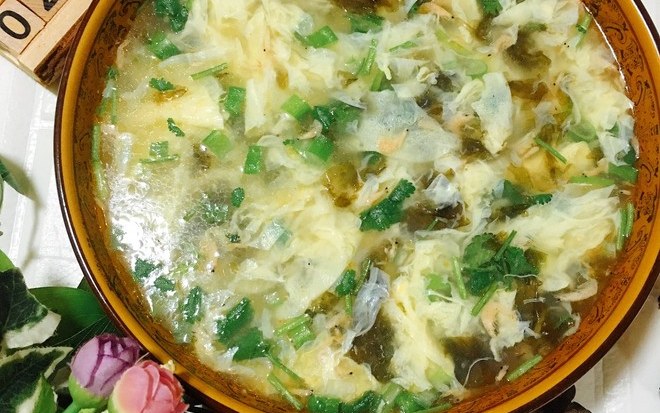
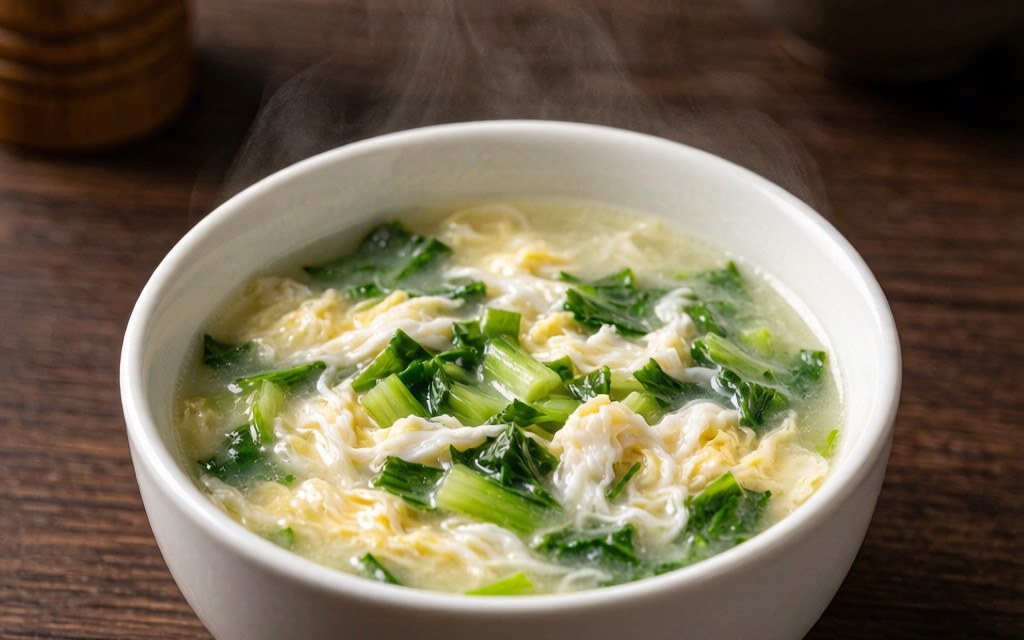
Greens Egg Drop Soup (青菜蛋花汤)
Flour toasted in scallion-shrimp oil is what separates good greens egg drop soup from watery ones: real body and flavor, dinner-ready in 20 minutes.
Instructions
-
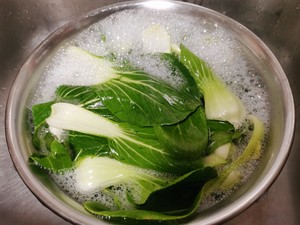 Soak the greens in a sink or basin of cold water for 5 minutes, swish, then rinse and drain well — this lifts off any grit and residue hiding at the base of the stalks. Pat dry so the oil won't spit later.
-
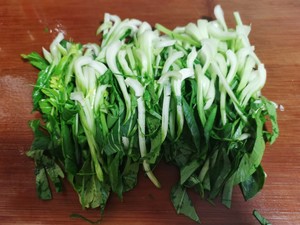 Cut the greens: first into lengthwise strips, then crosswise, then a final rough chop. Finely cut greens cook evenly and turn sweet in the broth instead of stringy.
-
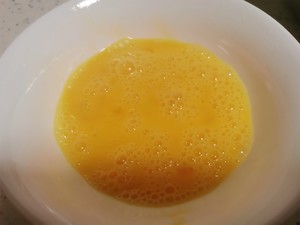
 Beat the eggs in a cup until completely uniform, and keep them beside the stove.
-
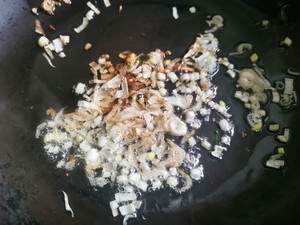
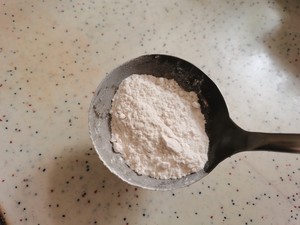 Heat the oil in a pot over medium heat. Add the scallions and dried shrimp and fry about 30 seconds, until the kitchen smells savory and the scallion looks bright green.
-
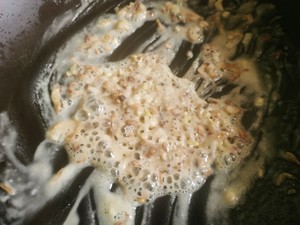 Now the trick: add the flour and stir it into the fragrant oil with the bottom of a ladle for 1–2 minutes, until the flour turns a faint gold and smells like toasted nuts. This mini roux gives the soup its body — stop while it is pale gold; browned flour will taste bitter.
-
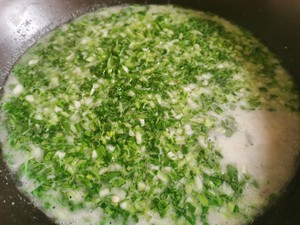 Pour in the water a little at a time, stirring after each addition so no lumps form, then bring to a boil over medium-high heat.
-
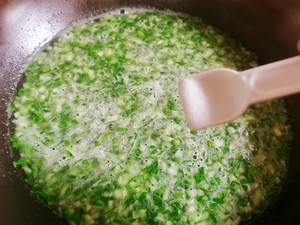 Add the chopped greens and cook 1–2 minutes, until they turn bright green and just tender — leafy greens need almost no time, and overcooking turns them khaki and dull.
-
 Season with the salt and white pepper.
-
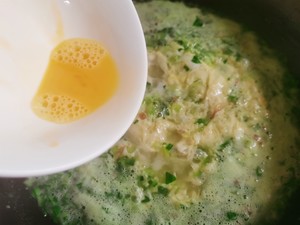 Give the broth a stir so it moves in one direction, then drizzle the beaten egg in a slow, thin stream in circles. Wait 20 seconds for the ribbons to set before your next stir.
-
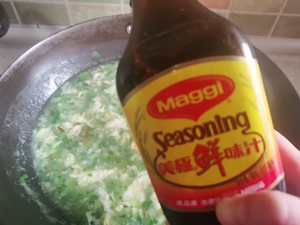 Drop the heat to low, stir in the chicken bouillon, the few drops of Maggi, and the sesame oil. Taste, adjust the pepper, and serve piping hot.
Why this recipe works
Greens egg drop soup is one of those dishes where the difference between memorable and forgettable is a single move the recipe title tips you off to.
1. The toasted-flour mini roux. Plain water plus greens gives you vitamin-rich dishwater. Frying 20 grams of flour in scallion-scented oil until it turns faintly gold creates a light roux — the same principle behind gumbo or gravy, borrowed here in miniature. It thickens the water just enough to carry flavor, and the toasting step converts raw, pasty flour into something nutty and aromatic — and it doubles as the answer to how to thicken egg drop soup without cornstarch. This is the trick the original author put in the recipe title.
2. Fine-cut greens. Chopping the greens into a fine dice after stripping and slicing does two things: more cut surfaces release sweetness into the broth, and the pieces cook in under two minutes, so they stay bright green instead of turning olive and tired.
3. Layered seasoning at the end. Salt early and the greens toughen; instead this recipe seasons in stages — salt and pepper at the boil, then bouillon, Maggi drops, and sesame oil off the heat. Each addition is small but stacked, and the sesame oil added off-heat keeps its perfume instead of boiling it away.
About the dish
Simple vegetable-and-egg soups are the daily backdrop of Chinese home cooking — a pot of them sits beside the main dishes at most family dinners, partly as balance and partly because a grandmother somewhere decided soup must be on the table. The toasted-flour version here comes from a home cook in eastern China who shared it precisely because the flour step is the difference her family noticed.
The technique has deep roots: frying flour in hot oil before adding liquid is essentially what northern Chinese cooks do for certain thickened soups and pastes, and dried shrimp have been the vegetarian-friendly umami shortcut of coastal kitchens for centuries. Nothing here is fancy — that is the point. It is the kind of recipe passed between neighbors, not restaurants.
What to serve with it
Pair this with something boldly flavored — mapo tofu or kung pao chicken — and let the mild, warming broth do its job as the palate-cleanser of the table. A plate of dumplings plus this pot of soup is a complete, honest weekday dinner in under 40 minutes, and the same egg flower soup with vegetables makes a light lunch on its own with rice on the side. Children take it happily if you go light on the white pepper; adults can add chili oil at the bowl. Leftovers keep two days and reheat to a quick boil — whisk first, since the soup settles as it cools.
Pro tips
- The toasted flour is the entire trick this recipe is named for — it thickens the broth and gives it a nutty depth that raw flour never will. Watch for the color change and the smell; that is your doneness signal, not the clock.
- Add the water gradually after the flour. Dumping it all at once traps flour in lumps that never dissolve; a little at a time while stirring builds a smooth broth.
- White pepper here is generous by design — it is a warm, gentle heat that blooms in broth. Start with 1 tsp and offer more at the table.
- Dried small shrimp are the traditional flavor base; without them, add ½ tsp extra salt and a splash more sesame oil.
- If you cook spinach instead of bok choy, skip the 2-minute simmer — drop it in, count to 30, and go straight to the egg.
Storage & leftovers
- Refrigerate leftovers in a sealed container up to 2 days; reheat gently until steaming.
- The greens soften and the flour base thickens overnight — loosen with a splash of water while reheating.
- For planned leftovers, keep the base without egg (up to 2 days) and add fresh ribbons when reheating; freezing is not recommended, as the roux can separate and the greens go limp.
Frequently asked questions
Why toast flour in oil? Can I skip it?
The toasted flour is a light roux: it thickens the water into a broth with actual body and adds a nutty flavor — the author calls it the one trick that makes this soup work. You can skip it for a thinner soup, or substitute 1 Tbsp cornstarch stirred into 2 Tbsp cold water at step 8 (gluten-free too, but less aromatic).
What greens work best?
Shanghai bok choy (the squat, spoon-shaped ones) is the classic — tender stalks, quick cooking. Chard, gai lan cut thin, napa cabbage, or spinach all work; just adjust the simmer so greens cook 1–2 minutes max.
My soup came out with flour lumps. What went wrong?
The water went in all at once, or the heat was too high while adding it. Pour slowly in 3–4 additions, stirring each time, and keep the flour from clumping before the boil. If lumps already formed, whisk hard at a boil for a minute — most break up.
Is this soup spicy?
No — mild and warming. The white pepper gives a soft, slow warmth rather than chili heat; use ½ tsp if you are very sensitive, or finish each bowl with chili oil to spice up individual servings.
Can I make it ahead?
The soup is at its best right after the egg goes in. The broth base (through step 8) can be made in the morning and refrigerated; reheat to a simmer and drizzle fresh egg at serving — reheated egg ribbons turn rubbery.
Where do I find dried small shrimp?
Asian groceries sell them in clear bags near the dried mushrooms and seaweed. Look for pale pink, whole, headless shrimp about 1 cm long. Store them in the freezer and they keep for months.
How do I get long, silky egg ribbons instead of flakes?
Keep the broth at a steady simmer, stir it in one direction, and drizzle the beaten egg in a slow, thin stream — then wait about 20 seconds for the ribbons to set before your next stir. Dumping the egg in or stirring hard right away gives you small flakes instead.
Can I make it vegetarian?
Yes — skip the dried shrimp and use vegetable bouillon instead of chicken. Brighten the seasoning with an extra ½ tsp salt and the sesame oil; a few drops of soy sauce at the bowl add back the savory depth the shrimp would have provided.