Chinese home style · Street Food & Snacks
Leftover Boiled Eggs, Two Ways (茶叶蛋和香煎蛋片)
Got boiled eggs to use up? Simmer half into marbled tea eggs and pan-fry the rest into golden slices with tomato and chili — two recipes, one pot of eggs.
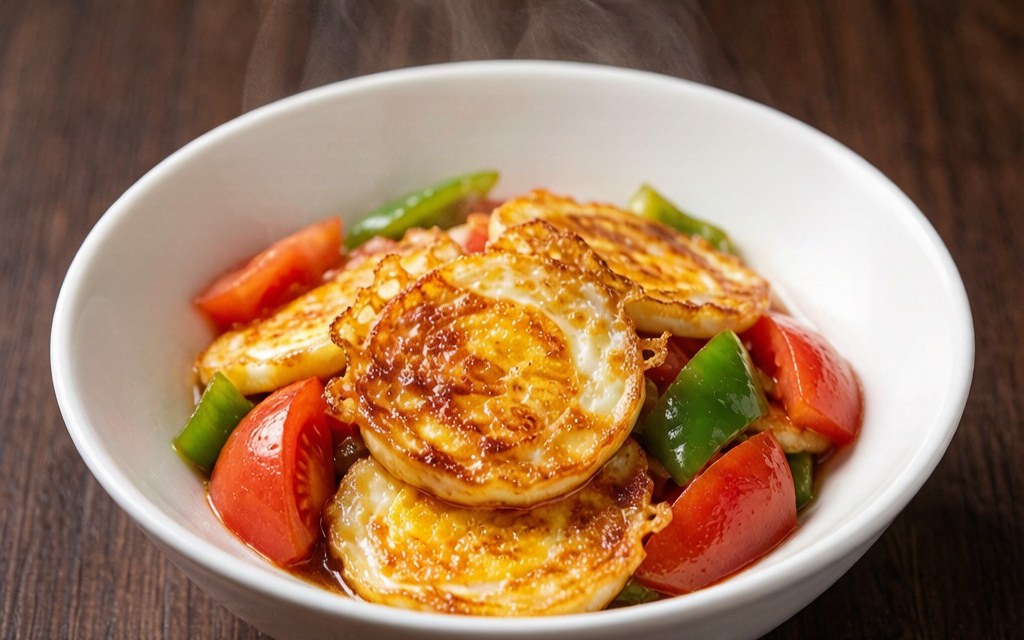
Instructions
-
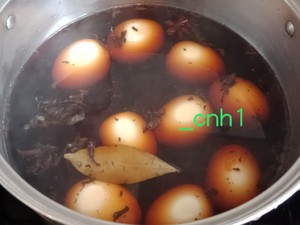 Cook the eggs: put all 15 in a pot, cover with cold water by 1 inch, and bring to a boil. Boil 8 minutes for fully set yolks, then lift the eggs into cold water. Peel them while barely warm — day-old boiled eggs also peel more cleanly than fresh ones.
-
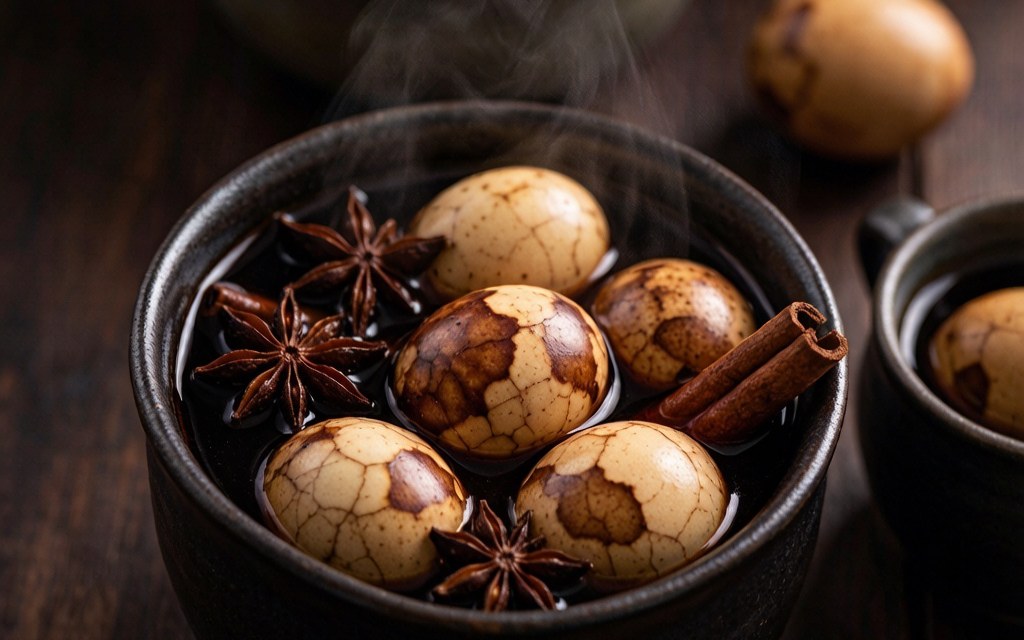
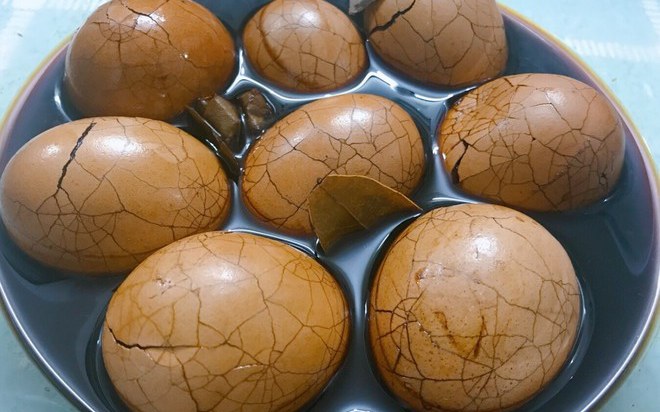
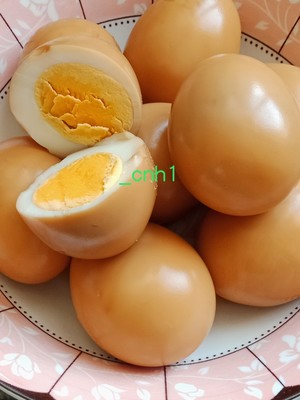
 Make the tea egg brine: in a pot just wide enough to hold 9 eggs in one layer, combine the water, both soy sauces, the salt, cinnamon, bay leaves, star anise and black tea. Add the 9 peeled eggs.
-
 Bring the brine to a boil over high heat, then lower to a steady medium simmer for 10 minutes. Turn off the heat and let the eggs steep in the liquid for 1–2 hours; for deep marbling, leave them overnight in the fridge, still submerged.
-
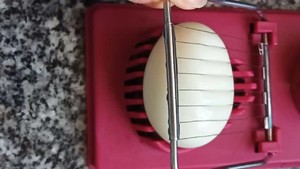
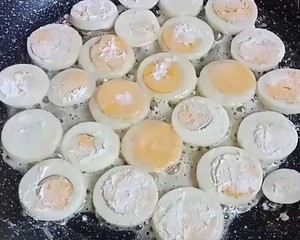 Slice the remaining 6 eggs with an egg slicer or a loop of dental floss — a knife tends to crush the white. Aim for slices about 1 cm (⅜ inch) thick; thinner slices crisp better and drink up more sauce.
-
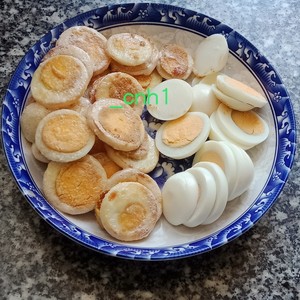 Spread the cornstarch on a plate. Press both faces of each slice lightly into it, then shake off the excess. You want a bare film of starch — a thick coating turns pasty in the pan.
-
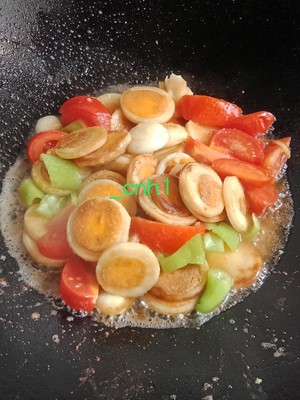 Heat 1 Tbsp oil in a nonstick or well-seasoned skillet over medium-low heat. Fry the slices in a single layer until pale golden, about 2 minutes per side, then flip gently with a thin spatula. Fry in batches, adding the remaining Tbsp of oil between batches, and move the done ones to a plate.
-
 Wipe out the pan, add any remaining oil, and cook the ginger and garlic over medium heat for about 20 seconds, until fragrant but not browned. Add the tomato wedges and chilies and stir-fry 1 minute, until the tomatoes slump and start releasing juice.
-
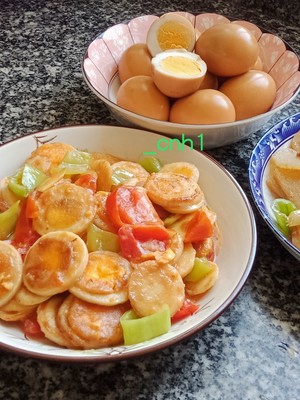 Return the fried egg slices, pour in the water and 1 tsp light soy sauce, and simmer gently for 1 minute so the slices soak up sauce. Season with the salt, toss once, and serve hot, with the tea eggs alongside or over rice.
Why this recipe works
A pot of leftover boiled eggs is not a problem — it is an ingredient that has already done the hard part. This recipe splits it into two very different dishes, and each one leans on a small piece of kitchen physics.
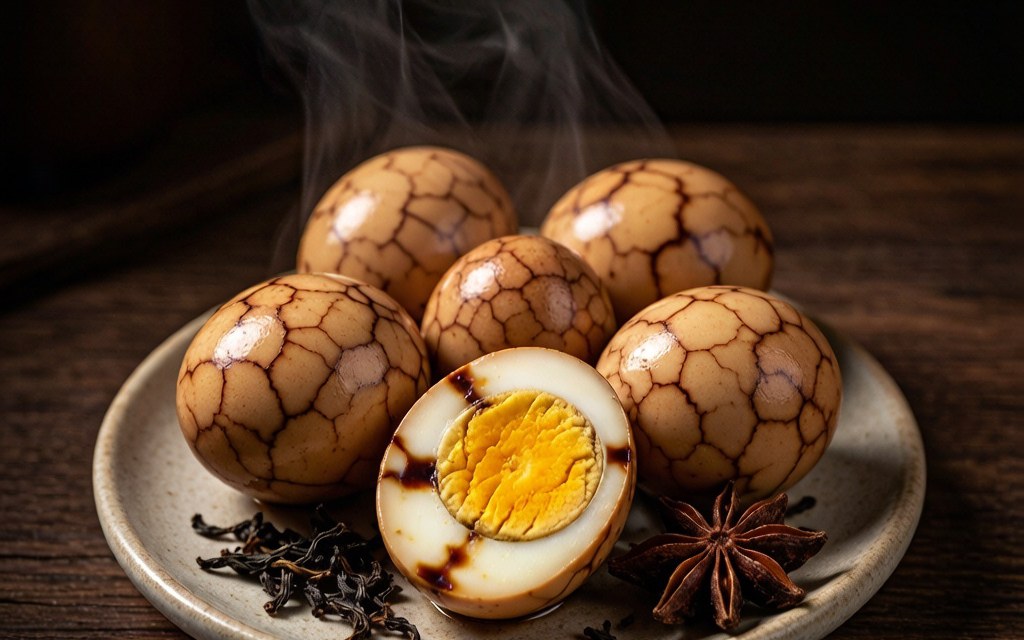
1. Peeled eggs soak fast. Classic tea eggs crack the shell and still need overnight soaking because the shell and membrane slow the brine down. Peel the eggs first and the marinade reaches the white directly — 1 to 2 hours of steeping gives you a properly seasoned, faintly marbled egg. Simmer 10 minutes, steep, done.
2. Starch armor for fried slices. Boiled egg white is delicate and watery; in a hot pan it weeps and sticks. A whisper-thin coat of cornstarch dries the surface, fries into a lace-crisp skin, and holds the slice together when it meets the saucy tomato later. The trick is shaking off every bit of excess — you want a film, not a batter. It is the same move behind golden coin eggs, the Hunan street snack of starch-dusted fried egg slices.
3. Tomato as the sauce. Instead of a heavy seasoning, the pan sauce is just ripe tomatoes broken down with ginger, garlic and chili, loosened with 2 Tbsp water. The fried slices reheat in it and pick up sweet-and-savory flavor without going soggy.
About the dish
In many Chinese families, hard-boiled eggs are a festival staple — the story goes that eggs are traditionally eaten around the Qingming spring festival, and every household ends up with a bowl of them nobody wants to eat plain. This recipe is exactly that rescue: one batch of peeled eggs becomes tea eggs (茶叶蛋), the beloved street-stall breakfast simmered in tea and soy, and the other becomes 香煎蛋片 — slices pan-fried until golden, then tossed with tomato and chili for a quick home-style supper.
It is humble cooking at its most practical: no new shopping, no waste, and two dishes that taste nothing alike from the same starting point. Tea eggs keep improving over days; the fried slices are a fresh-from-the-pan dish. Together they cover a breakfast and a dinner from one pot.
What to serve with it
Steam a pot of rice and you have dinner — the tomato slices are built for it. Drop a tea egg into a bowl of noodle soup for breakfast the way Chinese street vendors do, or slice one over congee. Both egg dishes also pack well for lunchboxes. And however many leftover hard boiled eggs you have, the split still works — steep a few in the brine, fry the rest that same night.
Tea eggs keep a week in their brine and get more flavorful by day three; the tomato-fried slices are best eaten fresh. Barley tea or hot soy milk rounds out either plate.
Pro tips
- An egg slicer or dental floss gives clean cuts; a knife compresses the tender white and it crumbles. Press the floss down in one smooth motion.
- The cornstarch film does two jobs: it crisps the surface and shields the fragile white, so the slices hold together when you toss them in the sauce.
- Peeled eggs absorb brine far faster than in-shell ones — that is why 1–2 hours of steeping is enough here, where classic in-shell tea eggs want a whole night.
- Reserve the cooled tea brine: it can be boiled and reused once for a second batch. Refresh it with 1 tsp salt and 1 Tbsp light soy sauce.
- Fry the slices in batches and never let them touch much — crowding steams them instead of crisping, and they tear when you flip a clump.
Storage & leftovers
- Tea eggs keep 4 days refrigerated, submerged in their brine in a covered container; the flavor keeps deepening.
- The fried egg slices are best eaten fresh. Leftovers hold 2 days refrigerated and reheat best in a skillet over medium heat for 2 minutes rather than the microwave.
- Freezing is not recommended — boiled egg whites turn rubbery and watery when thawed, in either version.
Frequently asked questions
I don't have boiled eggs already. Can I start from raw?
Yes — step 1 is just standard hard-boiling. Boil from cold water for 8 minutes after the water boils, chill briefly, and peel. Everything else stays the same.
How spicy is the tomato-chili stir-fry?
Very mild — two fresh chilies sliced into a saucy tomato base read as a warm background note, not heat. Use one chili or swap in a pinch of black pepper for heat-free plates.
My egg slices fell apart in the pan. What went wrong?
Usually one of three things: slices cut too thick so they break under their own weight, too heavy a starch coat, or the heat too high before the underside set. Keep the pan at medium-low and give each side a full 2 minutes.
Can I make the tea eggs ahead?
That is the ideal way — they are best after a full night in the brine and keep 4 days refrigerated in the liquid, getting darker and more savory every day.
What can I serve the fried egg slices with?
Anything tomato loves: steamed rice, noodles, or toast for a fusion breakfast. The author of the original recipe drops a tea egg into her morning noodle soup — that pairing works too.
Are these fried egg slices the same as golden coin eggs?
Close relatives. Golden coin eggs (jīn qián dàn) are the Hunan street version: boiled egg slices dusted in starch, pan-fried, then tossed with chili and scallions. This recipe simmers the same crisp slices in a tomato sauce instead — same physics, gentler sauce.
My boiled eggs tear every time I peel them. What helps?
Age and water. Eggs a few days old peel far more cleanly than very fresh ones, and cracking them gently all over, then peeling under a thin trickle of cold running water lets the water lift the membrane off in sheets. Peel while barely warm, not straight from the fridge.