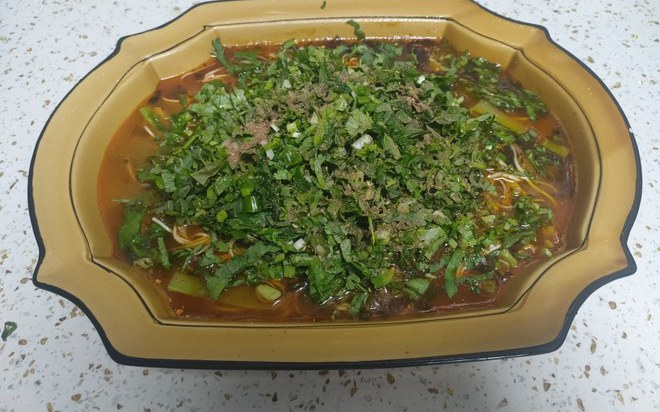
Chinese home style · Soups
Loofah Egg Drop Soup (丝瓜蛋花汤)
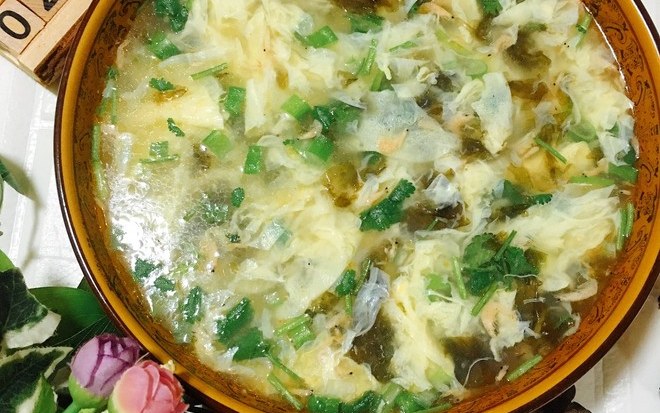
Silky Chinese summer soup: loofah (silk gourd) simmered with dried shrimp until it melts into the broth, thickened with flour water and finished with egg ribbons.
Instructions
-
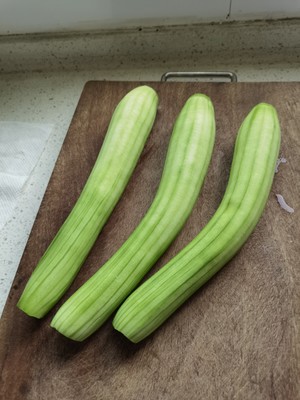
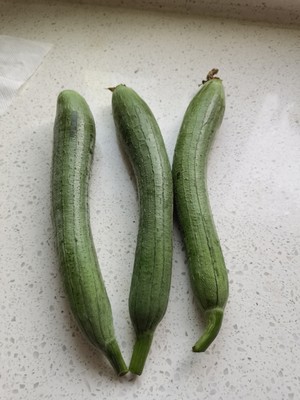 Peel the loofah: cut off both ends, run a vegetable peeler down the length to take off the ridged green skin, then halve each gourd lengthwise and slice it crosswise into half-moons about 3 mm (⅛ inch) thick. If the gourd is young and the skin is soft, you can leave it on.
-
 Rinse the dried shrimp and, if they feel hard and dry, soak them in 2 Tbsp of warm water for 10 minutes. Keep that soaking water — it is pure flavor and goes into the pot with the rest.
-
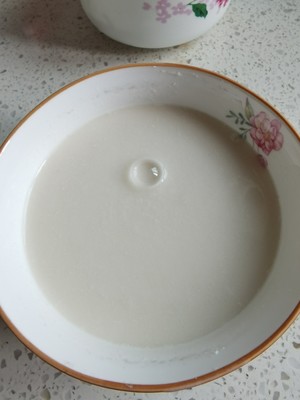
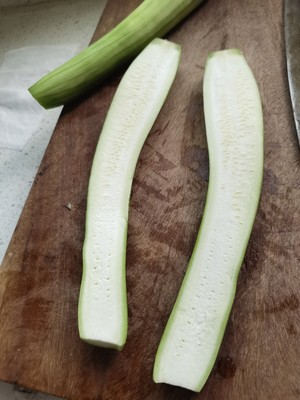 Beat the eggs in a cup until completely uniform, with no streaks of white left. Whisk the flour and the cold water in a small bowl until smooth, and set both within reach of the stove.
-
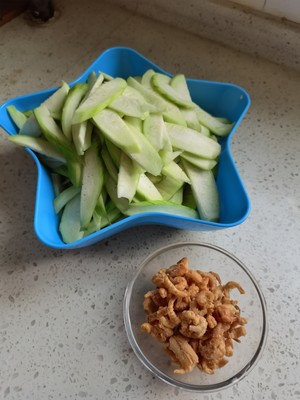 Heat a wok or a 3-quart pot over medium-high heat until a drop of water sizzles on contact, then add the oil. Heating the pan first and adding the oil second is what keeps the aromatics from sticking and scorching.
-
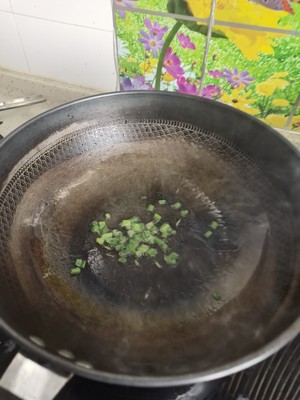 Add the chopped scallion and the dried shrimp and stir for about 30 seconds, until the scallion smells sweet and the shrimp smell toasted and briny.
-
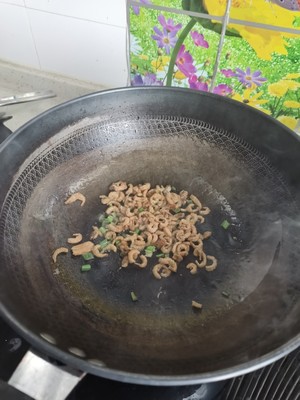 Add the loofah slices and stir-fry for 2 minutes. They will turn a brighter green and start to look glossy as they release their own juice — that juice is the sweet base of the whole soup.
-
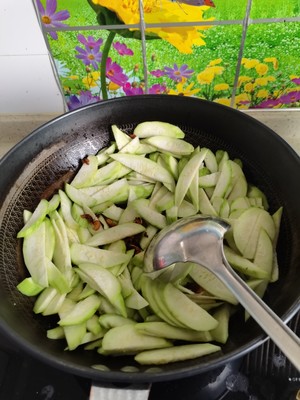 Pour in the seasoned soy sauce and toss once, then add the 4 cups of water plus the shrimp soaking water and bring it to a rolling boil.
-
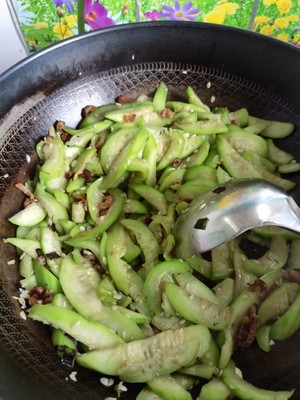 Lower the heat to a steady simmer and cook, uncovered, for 10 minutes. The loofah should be completely soft and slightly translucent and the broth should taste faintly sweet — this is the one soup where you want the gourd to collapse rather than stay snappy.
-
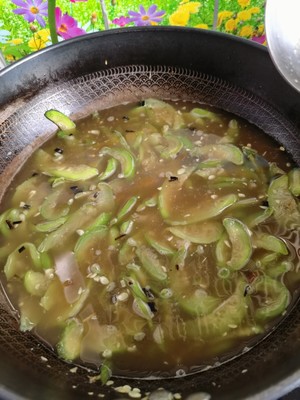 Stir the flour water once more, then pour it in slowly while stirring the pot. Simmer for 2 minutes: the broth will turn silky and slightly opaque and thicken just enough to coat the back of a spoon.
-
 Add the salt and stir it in. Dried shrimp vary a lot in saltiness, so if your broth already tastes well seasoned at this point, leave part of the salt out.
-
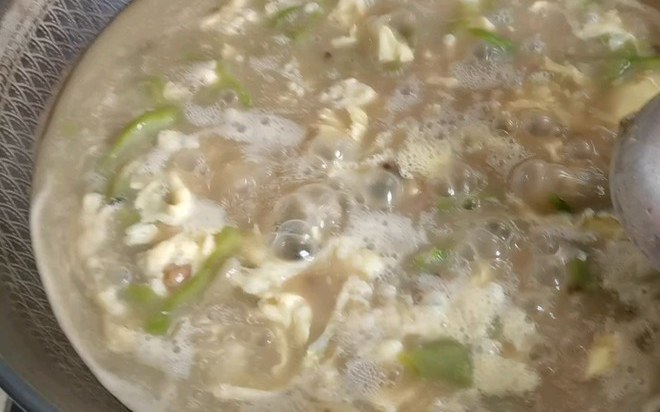
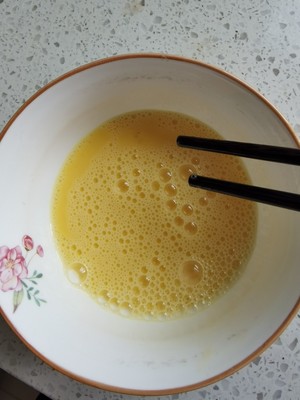 Turn the heat down until the soup is barely bubbling, stir the broth in one direction to get it moving, and drizzle the beaten egg in a thin stream in a slow circle. Count to three before you touch it, then stir once — that pause is what turns the egg into wide ribbons instead of confetti.
-
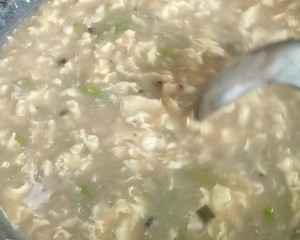 Take the pot off the heat, stir in the sesame oil, and ladle into bowls straight away. The loofah keeps softening in the hot broth, so this soup should go from stove to table without a stop.
Why this recipe works
Three small decisions separate this soup from a thin, forgettable bowl of vegetables in water.
1. The gourd is cooked until it collapses. Loofah is mostly water held in a spongy, fibrous structure, and its sweetness only comes out when that structure breaks down. Ten minutes of gentle simmering does it: the slices go translucent, the fibers soften, and the broth picks up a faint sweetness you could not get from a stock cube. This is the opposite of how you treat zucchini, which turns to mush if you look at it too long.
2. The body comes from a flour-water slurry, not cornstarch or cream. Whisked cold, the flour granules stay separate, so the slurry cannot lump when it meets the hot broth. It thickens into something soft and slightly opaque rather than glassy — the texture of a light cream soup, with no dairy in it. Cornstarch would set shiny and gelatinous; a flour roux would need fat and taste nutty.
3. Dried shrimp and seasoned soy do the seasoning. A gourd brings water and sweetness and nothing else. Reconstituted dried shrimp supply salt and deep savory notes, and a spoonful of seasoned soy rounds it out, so a four-ingredient soup tastes finished.
Then the egg: heat down, thin stream, three-second pause, one stir. That is the whole trick to egg flowers.
About the dish
Loofah is a summer gourd, and in Chinese home cooking summer is gourd season — the season of soups that are meant to cool you down rather than fill you up. The logic behind the dish is the seasonal one: the gourd is at its best for only a few weeks, it costs almost nothing, and it cooks in the time it takes to set the table.
The flour-water trick is worth knowing beyond this recipe. In home kitchens where there is no stock simmering on the stove and no cream in the fridge, a spoonful of flour whisked into cold water is how a vegetable soup gets body and a little richness — it turns a broth into something that eats like a meal.
Dried shrimp are the other pantry habit at work here: a small handful, soaked for a few minutes, gives a plain vegetable soup the savory depth that would otherwise take an hour of simmering bones. Together they are a complete, cheap, weeknight answer to a hot day.
What to serve with it
This is a breakfast soup in many Chinese homes, drunk from a bowl alongside steamed buns or plain rice, and it works just as well as the first course of a heavier dinner — the sweetness resets the palate before something rich and oily arrives. Ladle it over a bowl of steamed rice to make it a full meal, or serve it with a simple stir-fry and a plate of cold greens. It is light enough that you will want a second bowl, which is exactly the point. Browse more like it in our soup recipes. On a hot day this is the Chinese summer soup at its simplest — one gourd, a handful of dried shrimp, dinner done.
Pro tips
- Loofah is the one gourd you actually want to overcook. Zucchini is done in a minute; loofah needs ten, because the whole point is for the flesh to melt into the broth and sweeten it. Pull it early and you get a bland, watery soup.
- The flour water does the job cornstarch usually does, and it behaves differently: it gives a soft, almost creamy body that carries the gourd's sweetness instead of a glassy shine. Mix it cold and pour it in slowly, and it cannot lump.
- Pick loofah that feels heavy for its size and gives slightly when you press it. Once the ridges harden and the skin starts to yellow, the flesh inside turns fibrous and spongy.
- Rinse the dried shrimp but never throw away the soaking water — that cloudy liquid is the umami backbone of the whole pot. If you use the small dried shrimp instead, add 1 tsp more, since they are milder.
- Season the broth after the flour goes in, not before. The slurry changes how salty the soup tastes, so a broth that was perfect at step 8 can taste flat by step 11.
- No loofah? Zucchini works but cooks in 2 minutes instead of 10, so add it in step 8 and simmer only until it is just tender. Opo or bottle gourd is the closest match in texture and behaves exactly like loofah.
Storage & leftovers
- Refrigerate leftovers in a sealed container for up to 2 days. The loofah will have gone soft and the broth will have thickened further, which is normal.
- Reheat in a saucepan over medium-low heat for 3 to 4 minutes, stirring gently, and add a splash of water if the flour has made it too thick. Avoid the microwave, which turns the egg ribbons rubbery.
- Do not freeze this soup. The flour-thickened broth separates and turns grainy on thawing, and the loofah collapses into a pulp.
- If you can, store the leftover broth and any unadded egg separately. Egg ribbons are the first thing to suffer in the fridge, so a bowl built fresh from reheated broth beats a reheated complete bowl.
Frequently asked questions
What is loofah, and where do I find it?
Loofah, also sold as silk gourd, Chinese okra or angled luffa, is a mild, watery summer gourd with soft ridges, stocked at Asian groceries and many farmers' markets. Choose ones that are firm, heavy and pale green. The mature fruit of the same plant is dried and sold as a bath sponge, which is why you only ever see it sold young.
Can I use zucchini instead?
Yes, and it is the best substitute, but the cooking changes completely. Zucchini is ready in 2 minutes and turns mushy past that, so add it late and simmer only until it is just tender. The soup will taste fresher and noticeably less sweet than the loofah original.
Why is my soup thin and watery?
Either the flour water was left out, or the loofah was not cooked long enough to give up its juice. Simmer the gourd for a full 10 minutes, and always whisk the flour into cold water before it goes in — a slurry added hot or dry will lump instead of thickening.
How do I get egg ribbons instead of scrambled egg?
Three things: bring the heat down to a bare simmer, pour the egg in a thin stream from a few inches above the surface, and wait three seconds before stirring. A rolling boil, or stirring immediately, shatters the egg into specks.
Is this soup vegetarian?
The base is not, because the dried shrimp carries the entire savory backbone. For a vegetarian version, skip the shrimp and simmer 4 slices of dried shiitake in the water for 10 minutes, then use 1 tsp light soy sauce plus a pinch of sugar in place of the seasoned soy.
Can I make it ahead?
Not really — it is at its best in the first 30 minutes, and both the loofah and the egg keep softening as it sits. If you need a head start, peel and slice the loofah up to 4 hours ahead, keep it in a sealed bag in the fridge, and do the cooking just before you eat.