Chinese home style · Buns & Pancakes
Steamed Pork Rolls (肉龙)
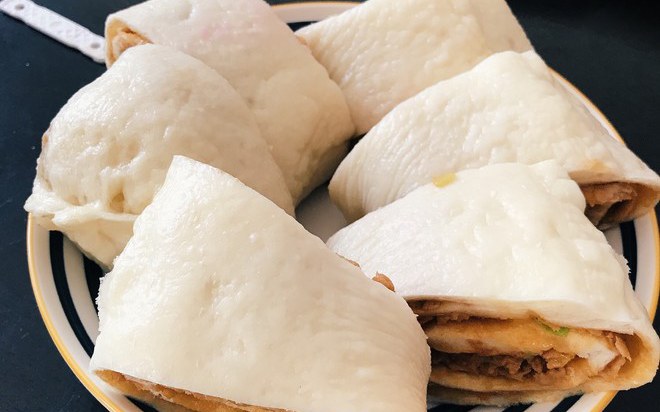
Steamed pork rolls (肉龙): soft yeasted dough swirled around juicy seasoned pork, steamed as one big roll and cut into spirals — a northern Chinese lunchbox legend.
Instructions
-
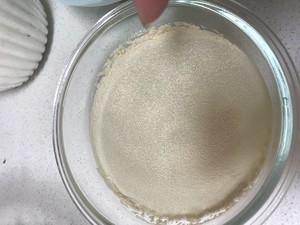
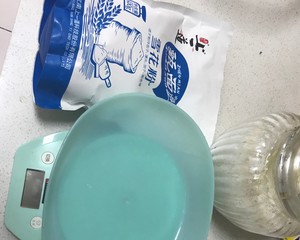 Wake the yeast: stir it into the warm water and let it stand 5 minutes — foam or small bubbles on top mean the yeast is alive. Put the flour and sugar in a large bowl, pour in the yeast water in three additions, stirring with chopsticks or a fork between each one.
-
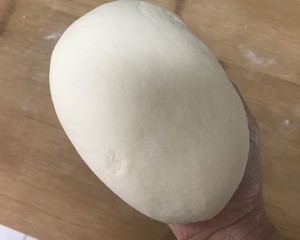
 Knead 8–10 minutes, scraping the bowl clean as you go, until the dough is smooth and elastic with no dry bits. It should feel soft but not sticky, like a firm earlobe.
-
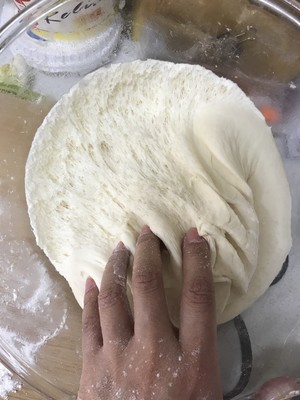
 Press a deep dimple into the center of the dough ball, cover the bowl with plastic wrap, and let it rise somewhere warm for about 1 hour, until doubled. The dimple filling back in is your proof gauge; pull a corner open and it should look honeycombed.
-
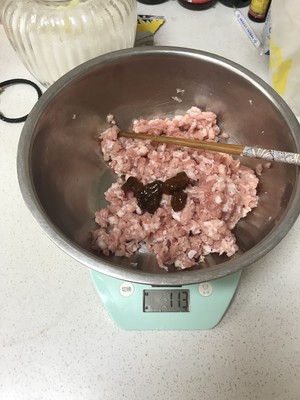
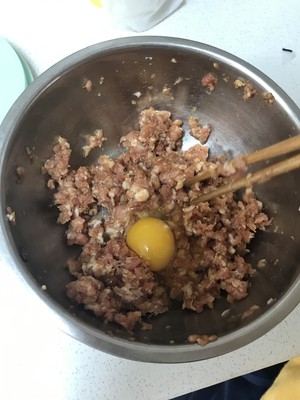
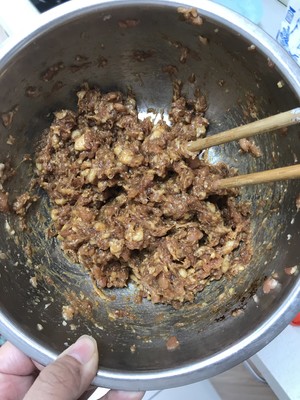
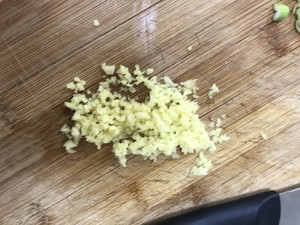 Meanwhile make the filling: break the ground pork up in a bowl, then add the salt, doubanjiang, light soy sauce, dark soy sauce, egg, ginger and sugar. Stir in one direction for about 2 minutes, until the meat turns sticky and glossy.
-
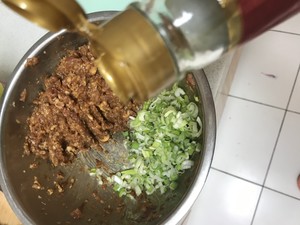
 Pile the minced scallions on top of the meat — do not stir them in — and pour the sesame oil over the scallions. Cover and set aside. The oil seals the scallions, mellows their sharpness and makes the filling spread easily later.
-
 When the dough has doubled, turn it out onto a lightly floured board and knead for 2 minutes to press out the big air bubbles.
-
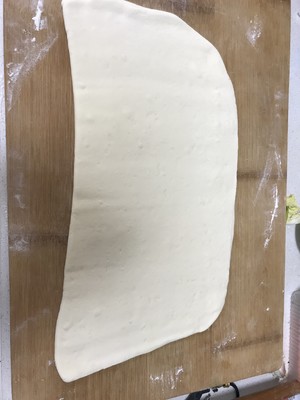
 Roll the dough into a large rectangle about 40 x 30 cm (16 x 12 inches) and 5 mm (¼ inch) thick — wide and even, but not paper-thin, or it cannot hold the juices.
-
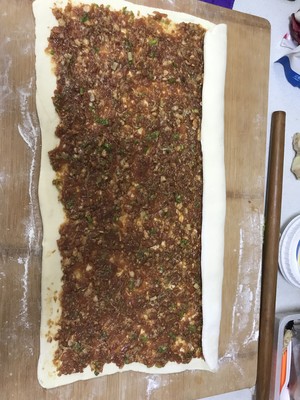
 Stir the filling once, then spread it in an even layer over the dough, leaving a 2 cm (1 inch) bare border along the long edge farthest from you.
-
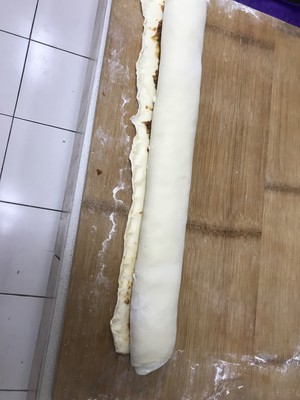
 Roll the dough up around the filling, starting from the long side nearest you, into a snug log. It does not need to be a perfect cylinder — the source calls it the lazy dragon for a reason.
-
 Seal the seam: dab a finger in water, wet the final edge of dough, press it down to glue the log shut, then pinch both ends closed so the juices cannot leak out.
-
 Line a steamer with parchment or brush it with oil, lift the logs in with space to expand, cover, and rest for 10 minutes while you bring the water to a boil.
-
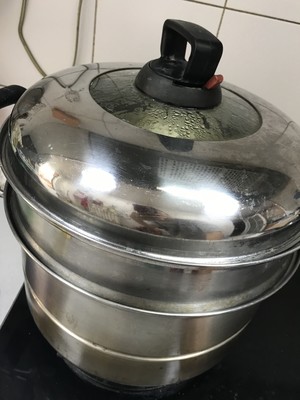
 Steam over medium heat for 15 minutes after the water boils. Turn off the heat and let the rolls sit, lid on, for 3 more minutes before opening, so they do not wrinkle.
-
 Cut each roll into 4 fat pieces on the diagonal and serve while the juices are still pooling in the swirl — that is the whole point.
Why this recipe works
This is everything people love about pork buns, engineered for a tired cook.
1. One roll instead of thirty wrappers. A pork bun's magic lives in the combination of soft yeasted dough and juicy meat filling. Shaping that into one long spiral gives you the same contrast — tender bread against savory, broth-release filling — in a fraction of the labor. You shape once, steam once, and slice. That is the old Beijing lazy dragon logic: maximum payoff from minimum shaping.
2. The sesame-oil-on-scallions trick. Piling the raw scallions on top of the meat and pouring sesame oil over them (instead of stirring everything together) does two jobs: the oil coats the scallions so their bite mellows and their aroma blooms during steaming, and the oily filling spreads into a thin, even layer instead of tearing the soft dough.
3. Sealing against the juices. A wet seam, pinched ends, and a 10-minute rest before steaming work together. The water glues the dough to itself; the pinched ends stop the broth running out sideways; the rest relaxes the gluten and gives the yeast one last rise, so the skin steams up fluffy instead of dense.
About the dish
Rou long — "meat dragon" — is a northern Chinese steamed staple, also called lan long, "lazy dragon", because the coiled log looks like a fat dragon at rest and because it is the lazy cook's answer to dumplings. An old Beijing custom has families eating it on the 19th day of the first lunar month, when the New Year festivities wind down and the kitchen needs one hearty, simple meal before returning to work.
It is beloved as a children's lunch: the filling is usually mild, the spiral unrolls bite by bite, and every piece carries both bread and meat. Home cooks argue about the details — some fold a little doubanjiang in for adults, some add cabbage — but the architecture never changes: roll, seal, steam, slice, and watch the juices pool.
What to serve with it
For breakfast, pair a piece with warm soy milk or millet porridge; for lunch, add a simple smashed cucumber salad for crunch. More soft steamed bread lives in our buns collection, and a pot of steamed rice is unnecessary here but welcome for soaking up any escaped juices.
Cooked rolls keep three days in the fridge and re-steam in five minutes, which is why the batch always seems worth doubling. Slice thick coins for children's lunchboxes — they hold together beautifully — and keep the adult slices for dipping in vinegar and chili oil at dinner. It stays the easy steamed pork roll it promised to be — one dough, one pan, no wrapping.
Pro tips
- The 10 g of sugar is not for sweetness — it feeds the yeast so the dough proofs reliably even in a cold kitchen.
- The dimple-in-the-dough trick is a built-in proof gauge: when the dent springs back level, the dough is ready to shape.
- Do not skip the water-sealed seam. It is the difference between a juicy roll and a puddle on the steamer floor.
- Spread the filling slightly thinner at both ends of the log — filling pressed all the way to the edge bursts out while steaming.
- Keep the water warm, not hot: above about 40°C / 104°F the yeast starts dying and the dough will stall.
- Leftover pieces are excellent pan-fried the next morning — cut-side down in a little oil until golden.
Storage & leftovers
- Refrigerate leftover pieces in a sealed container for up to 3 days.
- Re-steam for 5 minutes to bring the dough back to pillowy, or pan-fry cut pieces in 1 tsp oil until golden for a crispy-bottomed second life.
- Freeze after steaming for up to 1 month; re-steam from frozen for 8–10 minutes. Do not freeze the raw roll — the filling weeps as it thaws.
Frequently asked questions
Why is it called lazy dragon (lan long)?
The long meat-filled coil looks like a fat dragon curled in its den — and the recipe is lazy in the best way: all the flavor of meat buns with none of the wrapping, one big roll instead of thirty pleated little ones.
Can I make it less spicy for kids?
Yes — skip the doubanjiang and use 1 tsp oyster sauce instead. This is a classic children's lunch in northern China, and the mild version is the traditional one.
My dough did not rise. What went wrong?
Dead yeast or water that was too hot are the usual culprits. Check that the yeast foams in step 1, and in a cold kitchen proof the covered bowl inside a switched-off oven with just the light on.
Can I use a different filling?
Yes. Ground beef with extra scallion, or pork mixed with finely chopped napa cabbage (salt it, wait 10 minutes, and squeeze dry first) both follow the same dough and method.
I have no steamer. Can I still make this?
Put a heatproof rack or an inverted heat-safe plate in a wide pot, add water to just below it, and steam the roll on a parchment-lined plate under a lid. Cut the log in half if it does not fit.
Can I freeze them?
Yes — cool completely, freeze in a sealed bag for up to 1 month, then re-steam straight from frozen for 8–10 minutes.
How is rou long different from baozi?
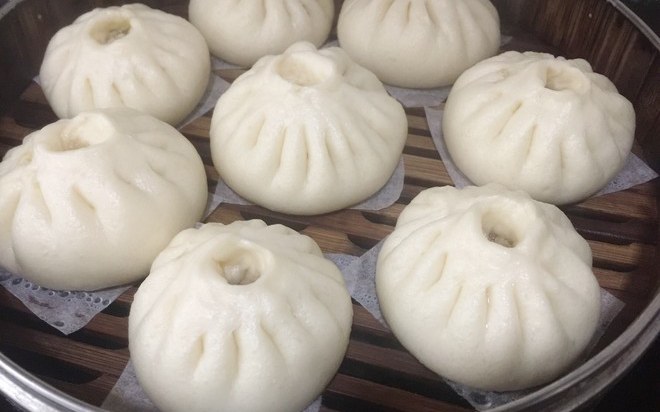
Same dough-and-pork idea, opposite workflow: baozi are individually wrapped buns, while rou long is one big filled log you roll once, steam once, and slice. You trade the pinched pleats for speed and juicier bread-to-meat seams.
What do you serve with steamed pork rolls?
In northern China, a slice of rou long plus warm soy milk or millet porridge is the classic breakfast; at lunch, add a sharp smashed cucumber salad for crunch. Vinegar and chili oil at the table are the adult accoutrements.